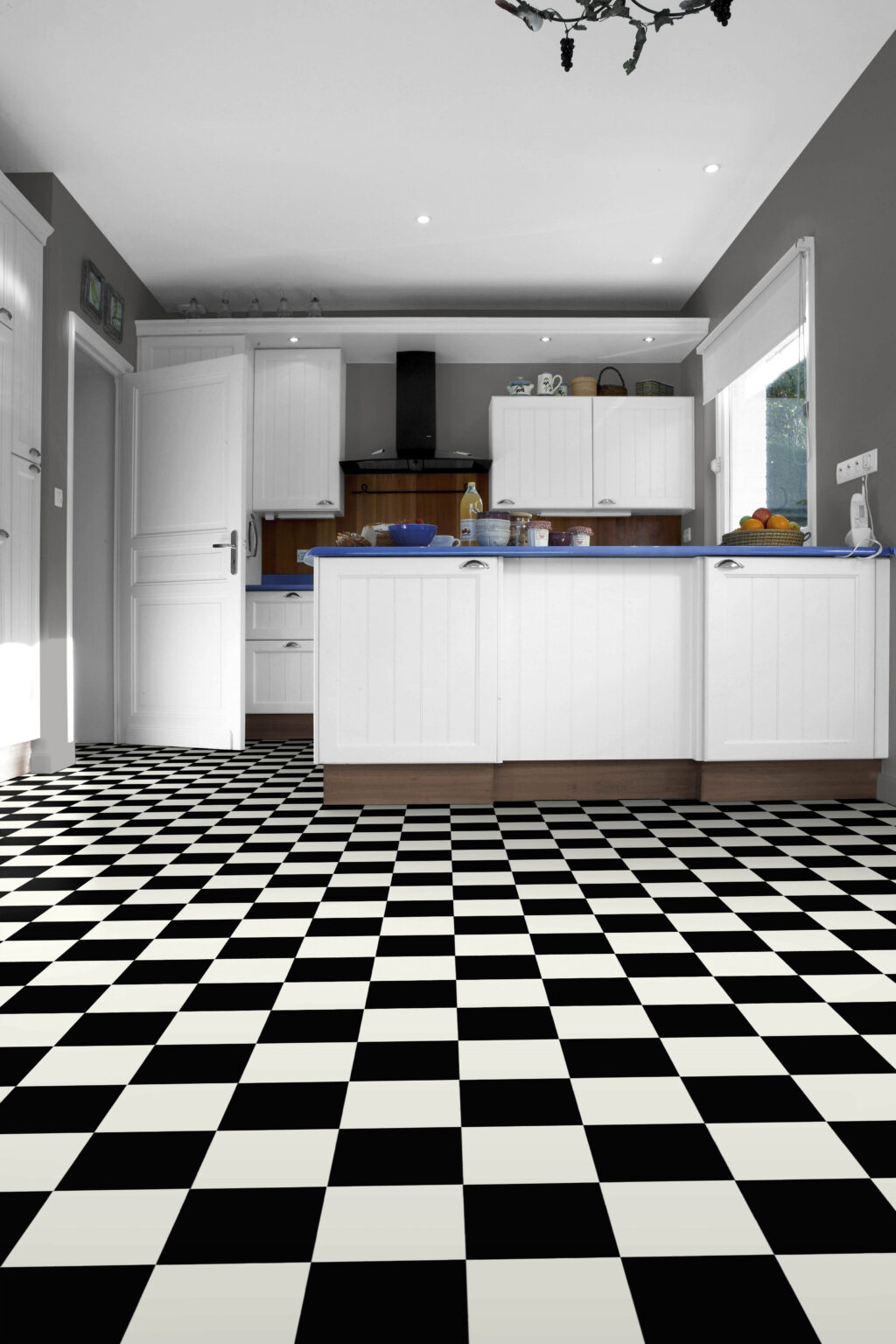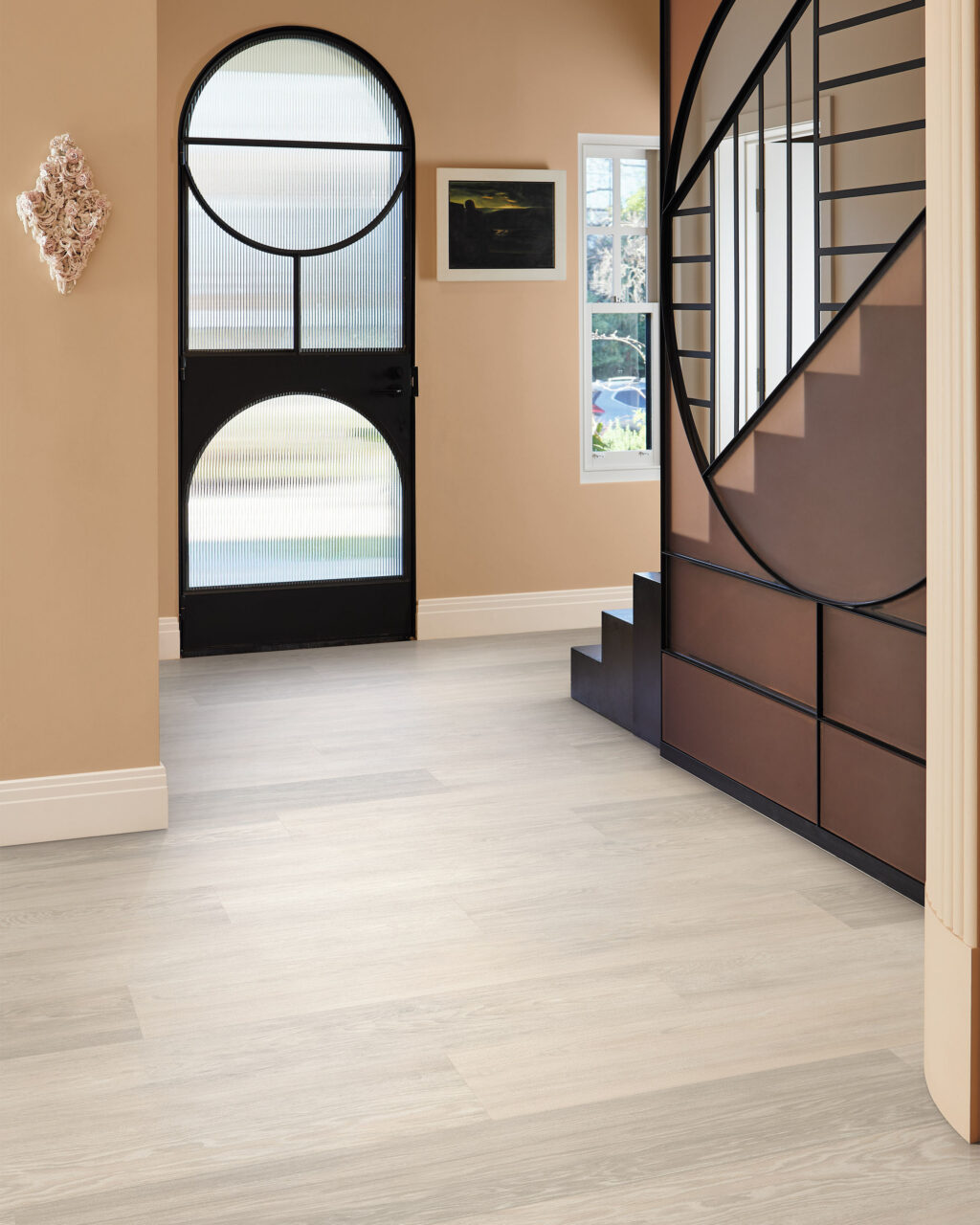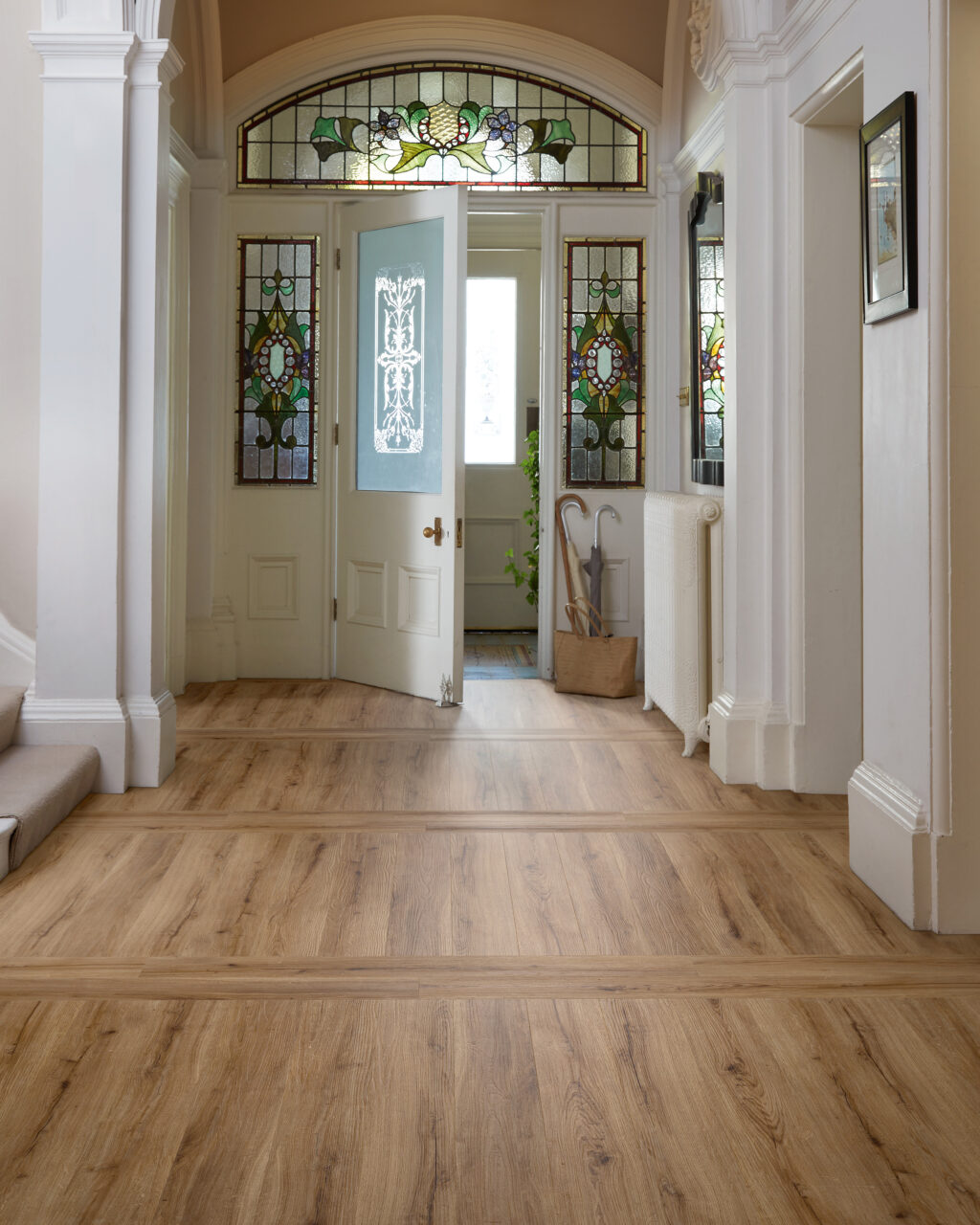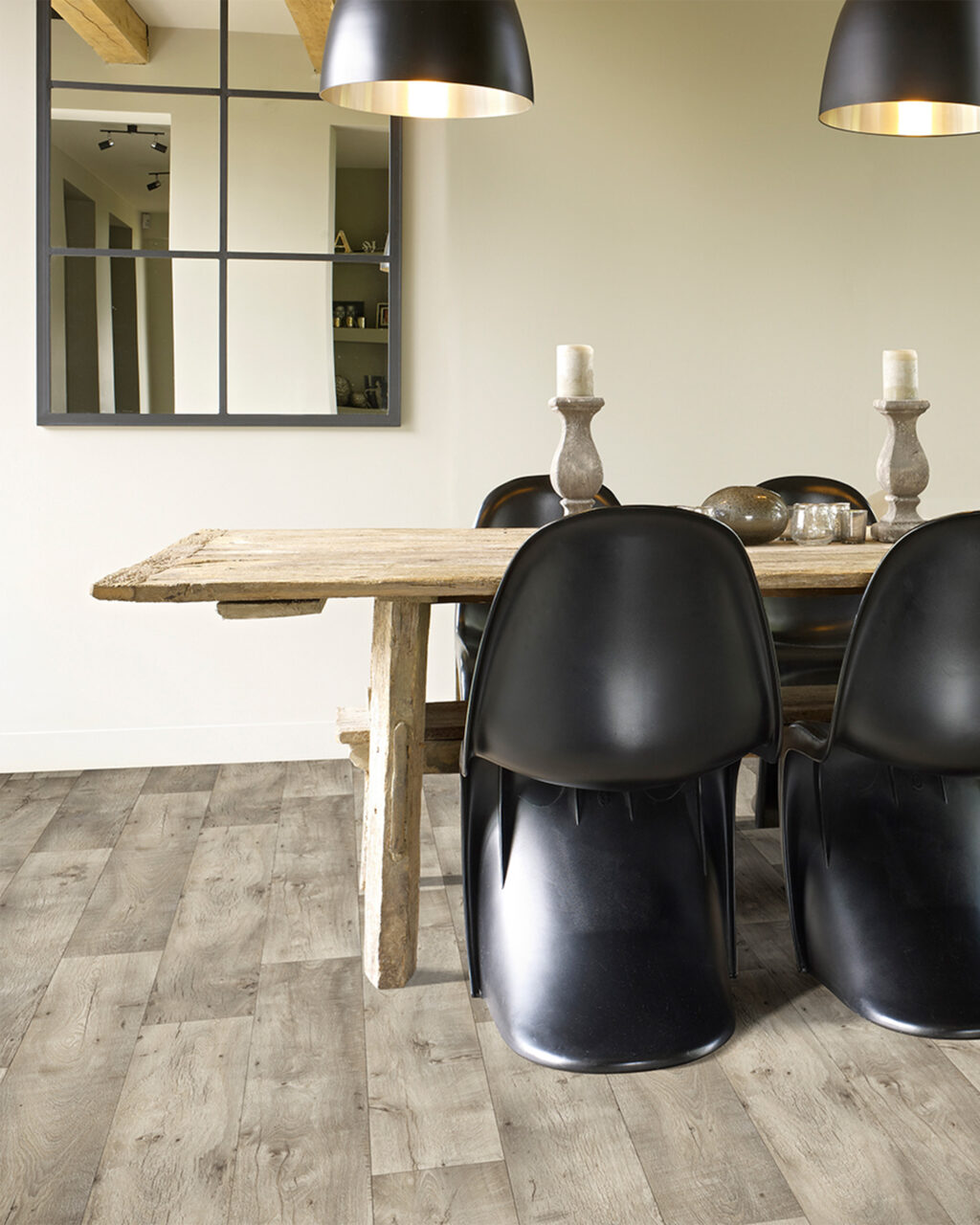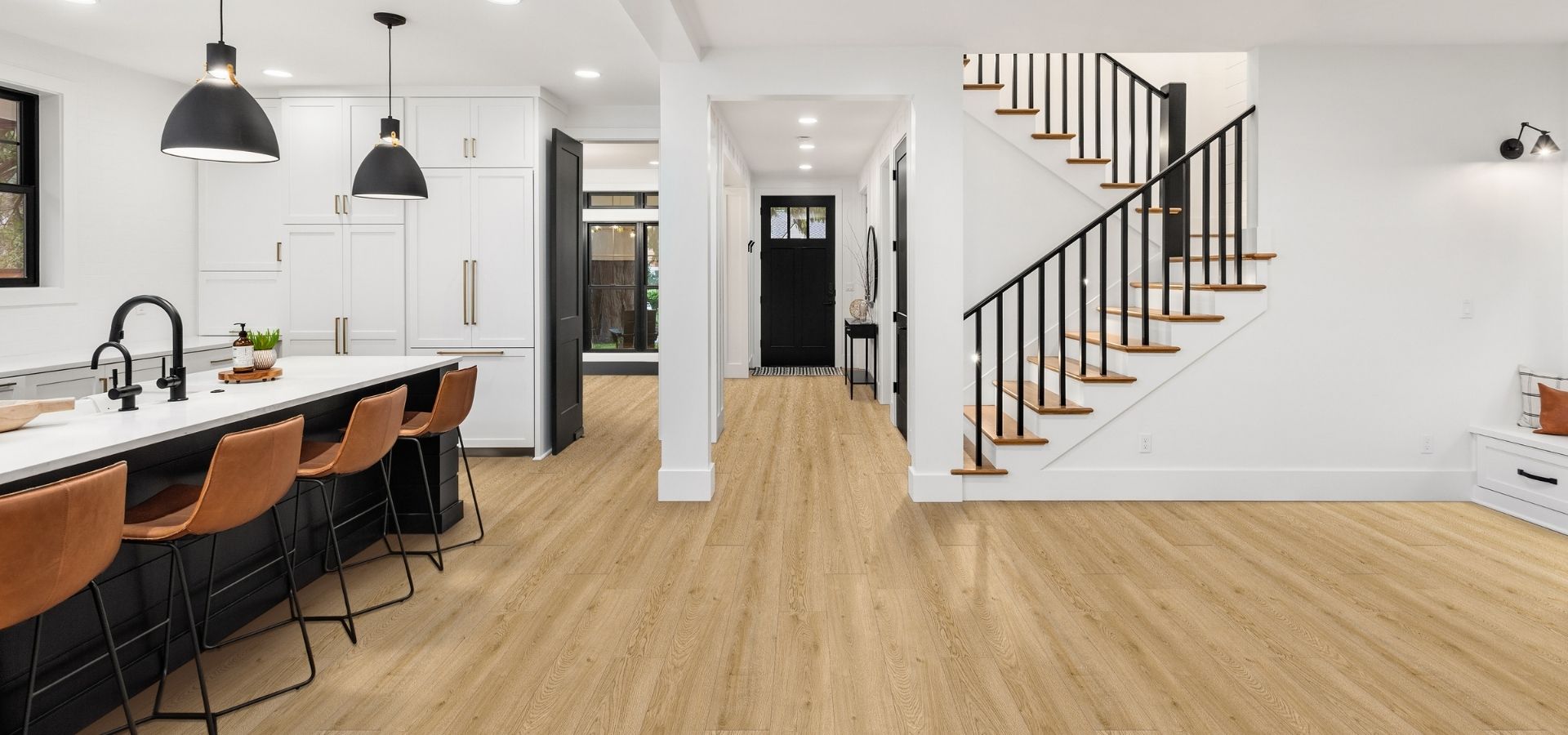
Your foyer and hallway set the first impression of your home while also taking more punishment than almost any other space.
Shoes on and off, bags dropped, wet weather tracked in from outside, and every person in the household passing through multiple times a day.
The right floor here needs to be tough, easy to clean and still look good doing it.
Unlike the kitchen or living room, the hallway has no downtime. It takes the full traffic load of the household every single day, in a narrow space where wear concentrates fast. Grit and moisture come in from outside before spreading to the rest of the home. Getting this floor right protects everything beyond it.
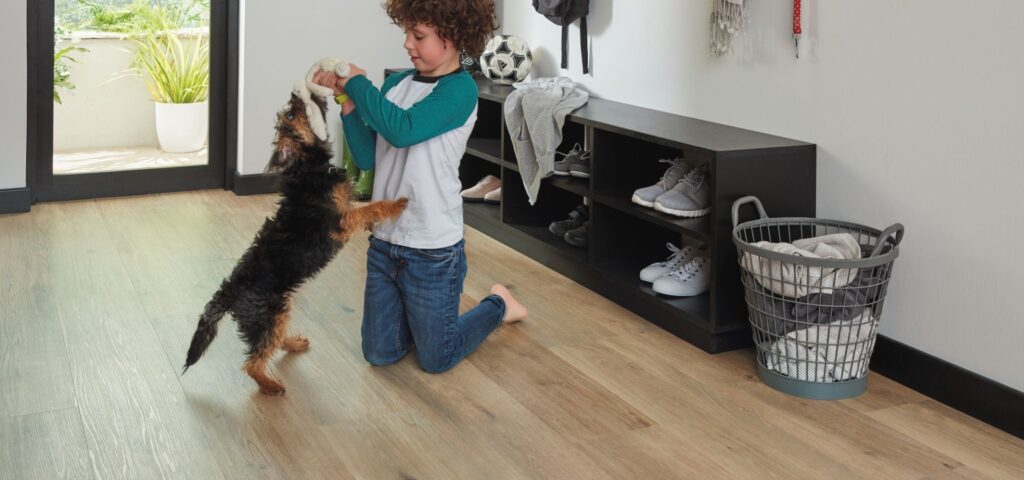
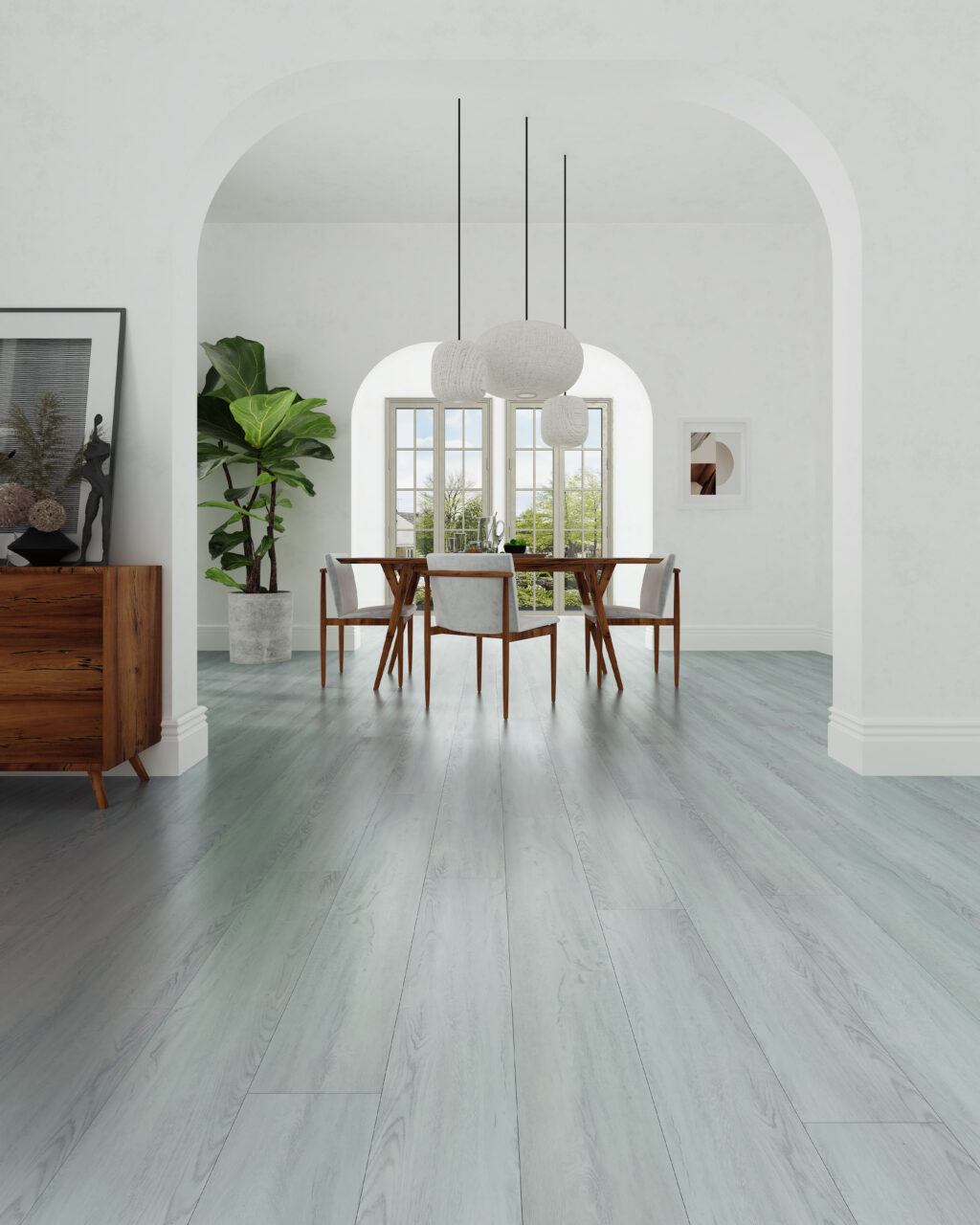
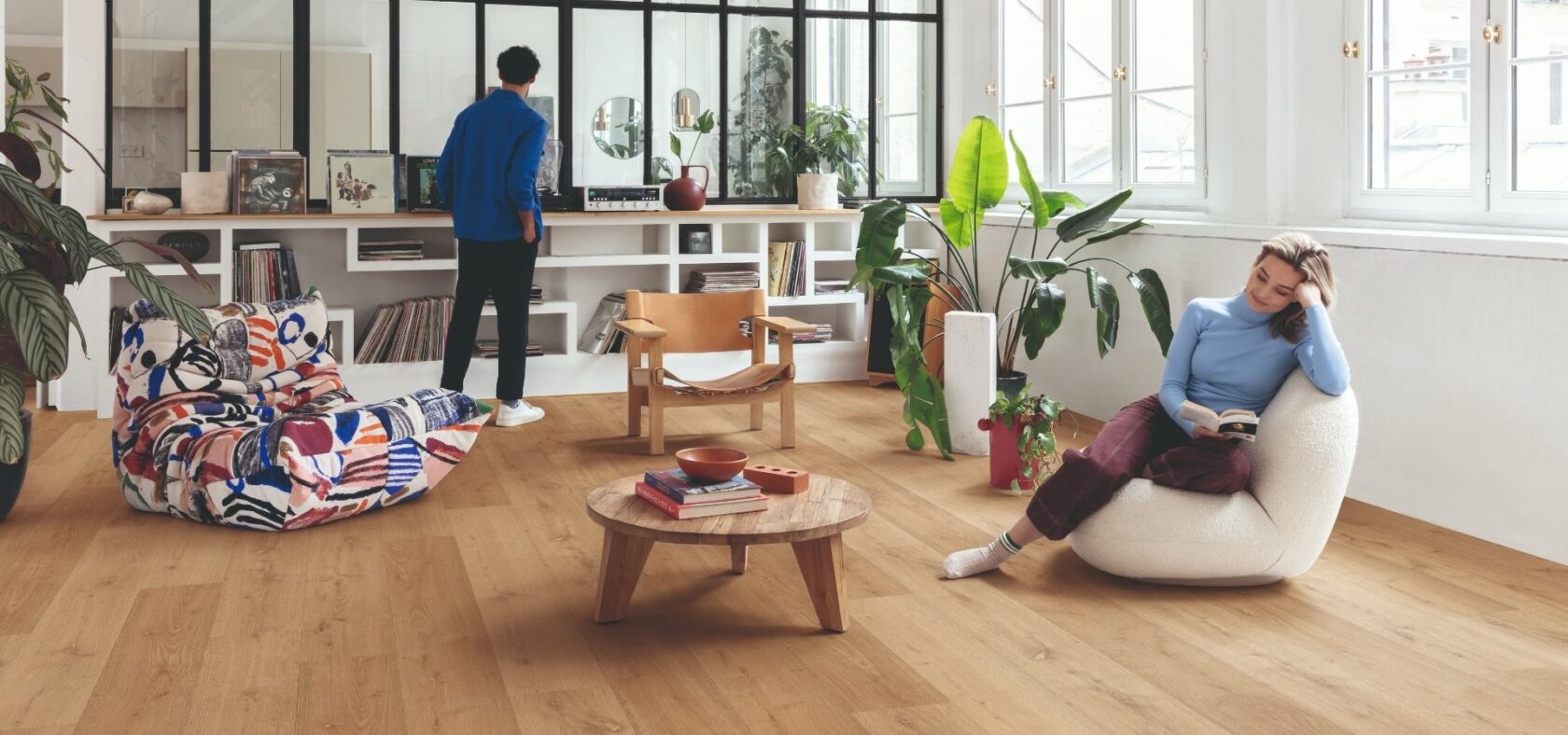
Hybrid flooring is the most practical choice for entry and hallway areas.
Water-resistant, scratch-resistant and easy to clean after wet shoes and muddy days. Choose a product with a wear layer of 0.5mm or above. Hallways and entries see more concentrated foot traffic per square metre than any other room in the home, and a thinner wear layer will show wear sooner than the same product would in a living area.
Engineered timber creates a strong first impression and suits entries where the floor is part of the home’s design statement.
A herringbone or chevron pattern in the entry zone creates an immediate sense of quality and intention that a standard plank format cannot replicate. Choose a species with a harder wear layer for areas that see heavy use. Running the boards in the same direction as the hallway length visually extends the space.
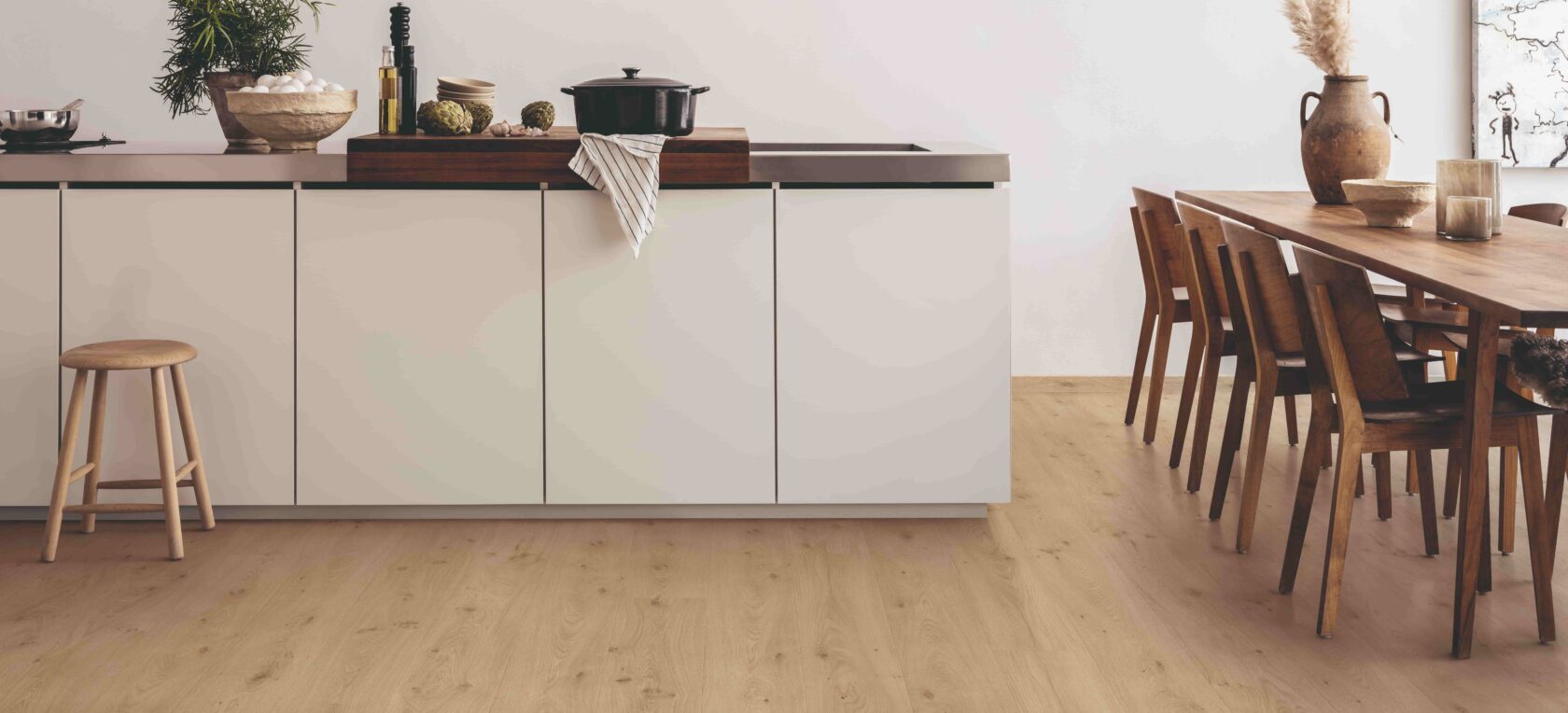
Vinyl plank is durable, practical and an affordable option for hallway runs, particularly in rental properties or high-traffic homes. Running the same product from the entry through to the main living areas creates a seamless, expansive feel and avoids the visual break that comes with a product change at the threshold.
Lighter tones help smaller entries and hallways feel more open. The finishing details matter here too. Skirting profiles, threshold transitions and door clearances done properly are what separate a floor that looks intentional from one that looks installed in a hurry.
Carpet in main entries and high-traffic hallways. It traps dirt, shows wear quickly and is difficult to keep clean without regular professional cleaning.
Light-coloured smooth-finish floors without a doormat at entry. These show dirt and wear fastest in the first metre inside the door, which is exactly the area every visitor sees first.
Wear layer thickness. Hallways and entries see concentrated foot traffic from the whole household every day. For hybrid flooring in these areas, 0.5mm wear layer or above is the recommended minimum. A product that performs well in a living room may show surface wear in a hallway much sooner if the wear layer is thinner.
Doormat zone. Plan for a recessed or flush doormat near the entry to catch grit and moisture before it reaches the main floor. Entry mats are the single most effective way to extend the life of any hallway floor and reduce the wear that reaches the rest of the home.
Transition to adjacent rooms. A single continuous product running from the entry through to the living areas avoids jarring transitions and makes the whole ground floor feel more cohesive and spacious.
Stair-to-hallway connection. If your hallway connects to stairs, ensure your flooring choice is available in a compatible stair nosing or step profile before you order. This is easier to plan before installation than to solve after.
Making a Statement With Entry Flooring
While practicality drives the decision, the entry and hallway are also the first flooring your guests see. Engineered timber in a herringbone or chevron pattern creates an immediate impression of quality and intention. A clean, consistent timber-look hybrid running from the front door through to the main living areas makes the home feel larger and more cohesive. For narrower hallways, running the flooring in the same direction as the hallway length visually extends the space. Lighter tones also help smaller entries and hallways feel more open. The finishing details matter here too — skirting profiles, threshold transitions and door clearances done properly are what separate a floor that looks intentional from one that looks installed in a hurry.