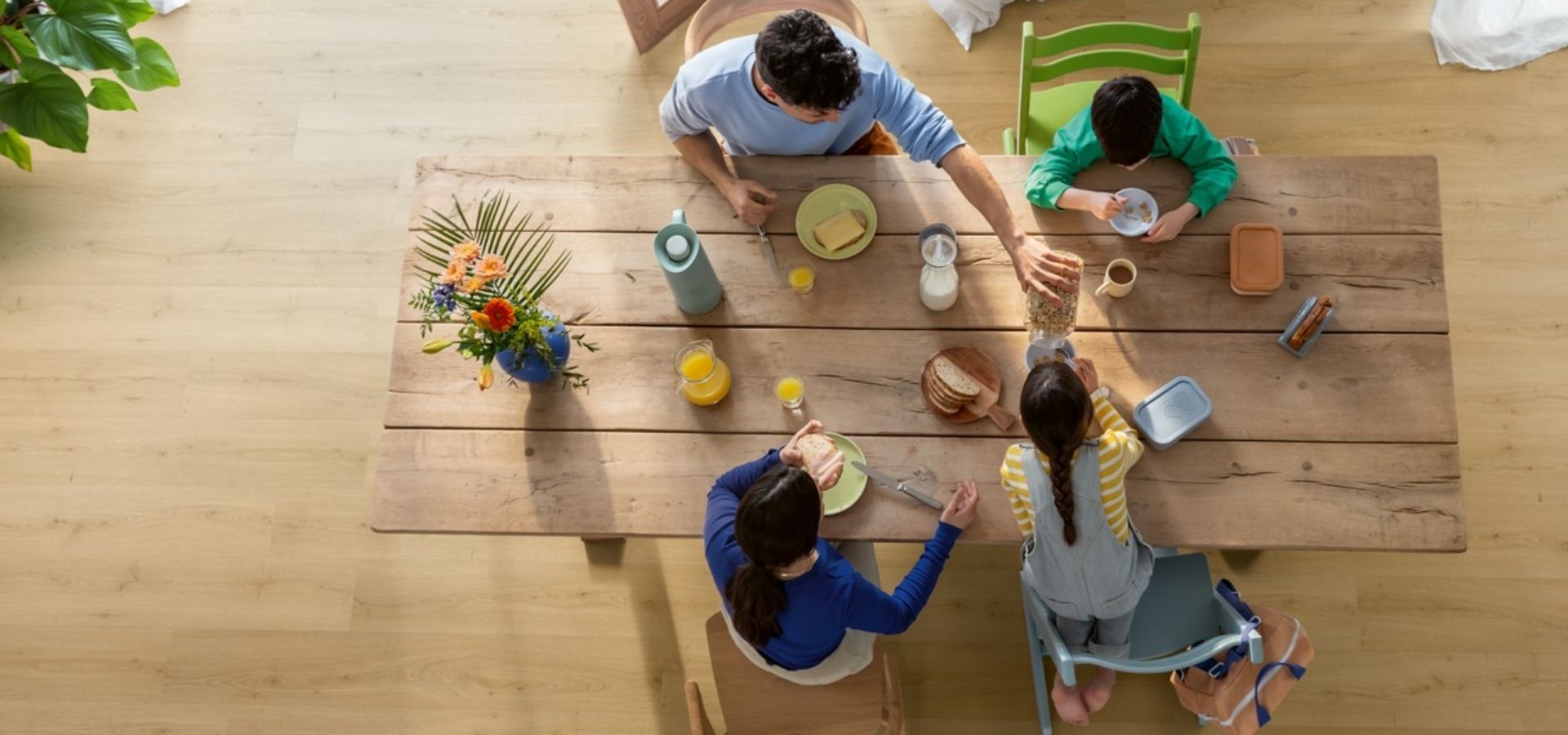
Dining room floors take more punishment than they look like they do.
Spills, chair legs dragging back and forth multiple times a day, food drops, and the weekly vacuum that moves furniture around, it adds up.
Hard flooring is almost always the right call here. The question is which hard floor suits your home, your style and how you actually eat.
The dining room sits at the intersection of practical and presentable. It needs to handle mealtimes with a family on a Tuesday and still look right when guests arrive on Saturday.
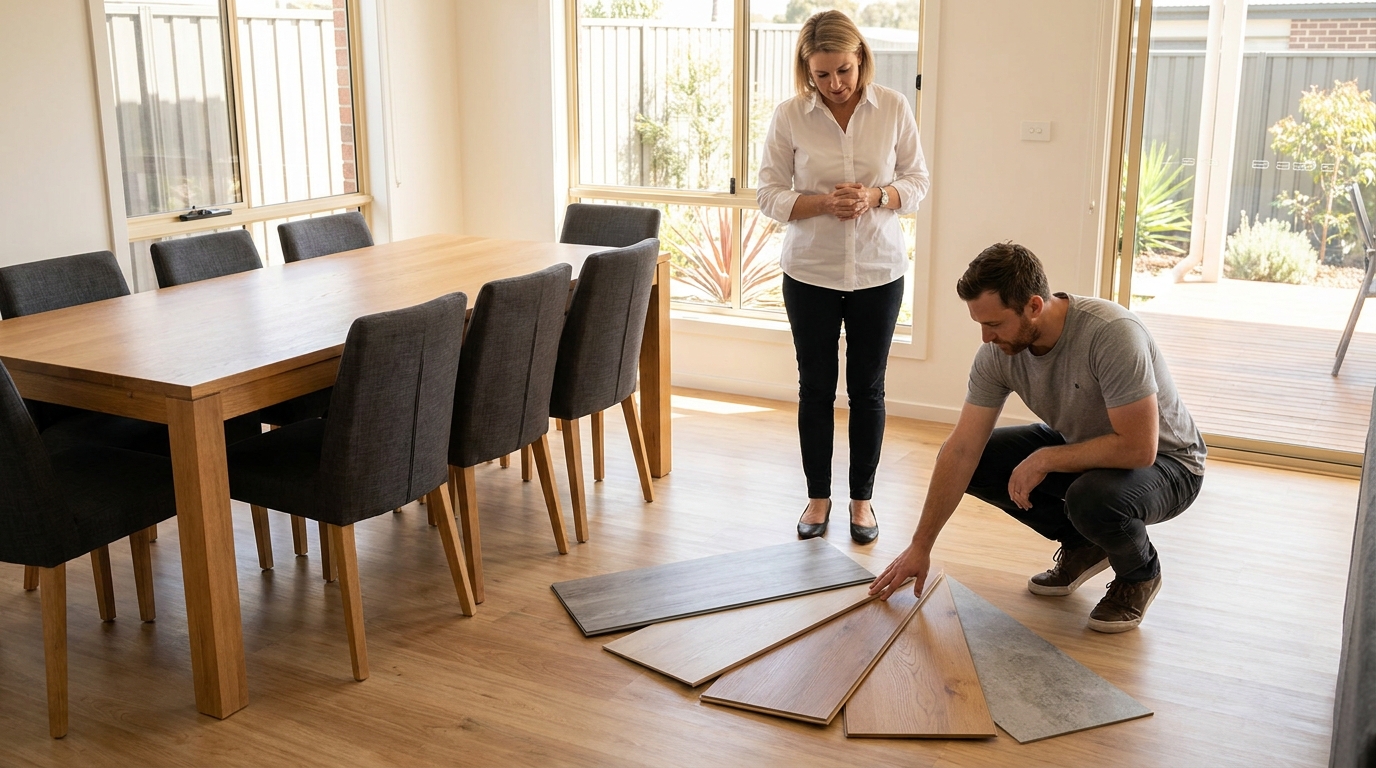
Hard flooring handles both. The choice between hybrid, engineered timber and vinyl plank comes down to your budget, your dining chairs, and whether your dining area connects to the kitchen or sits as its own defined space.
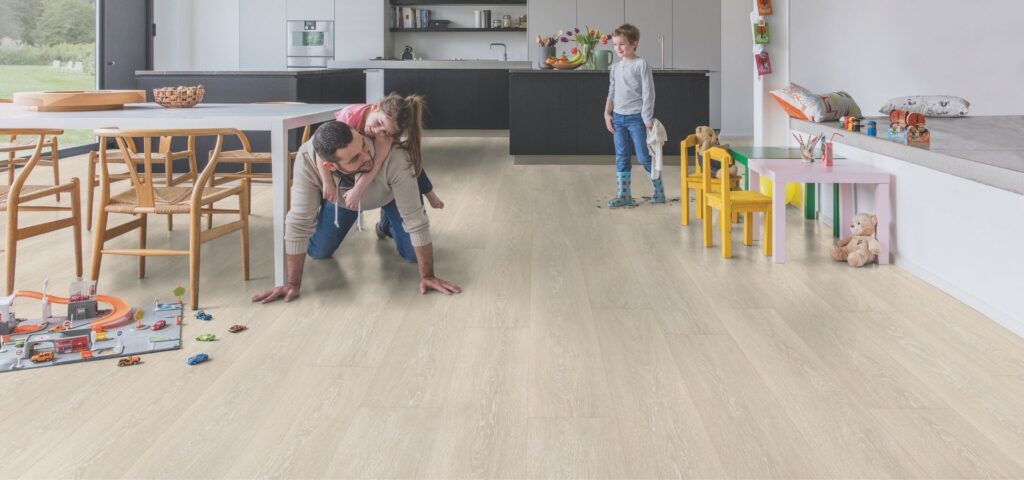
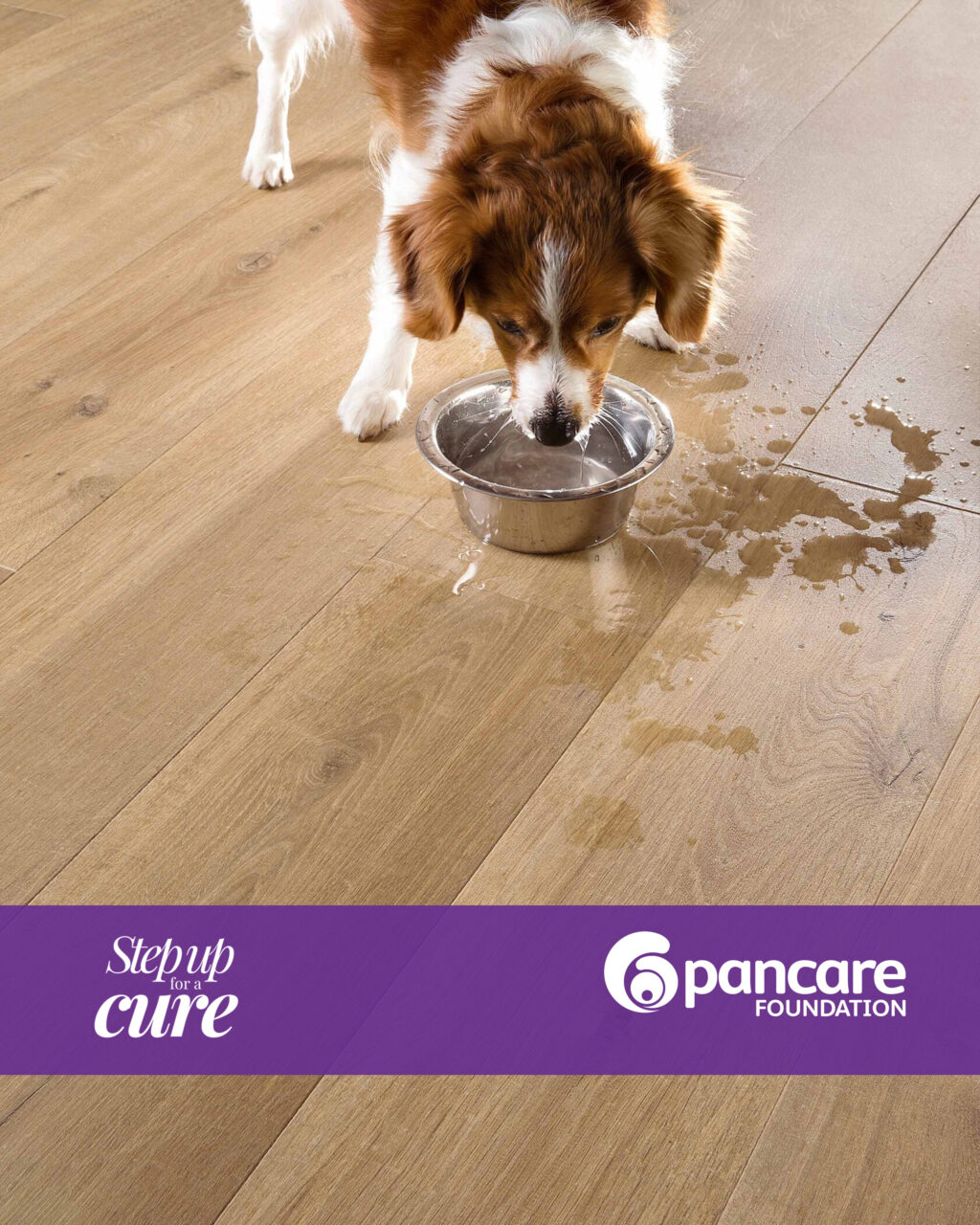
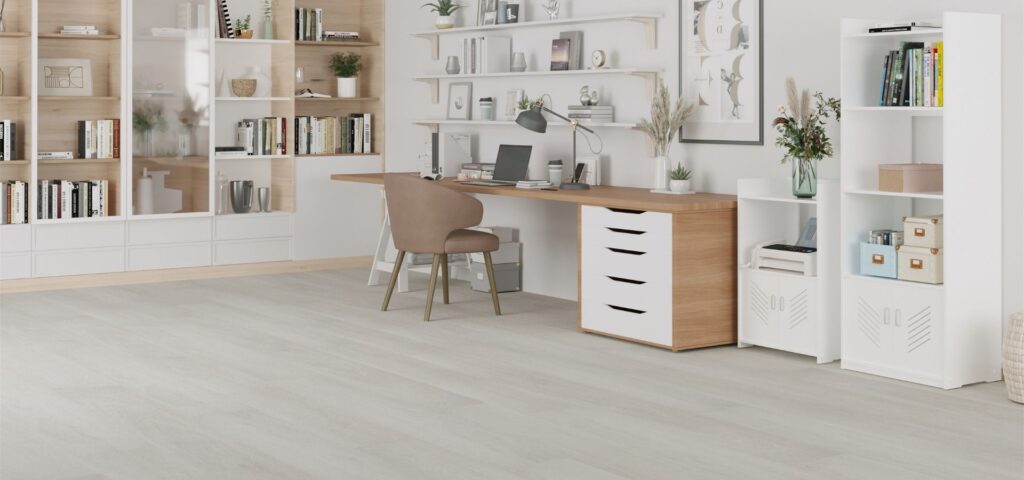
Hybrid flooring is the most practical dining room choice. It handles spills and chair movement well, cleans easily and suits everything from modern to classic interiors.
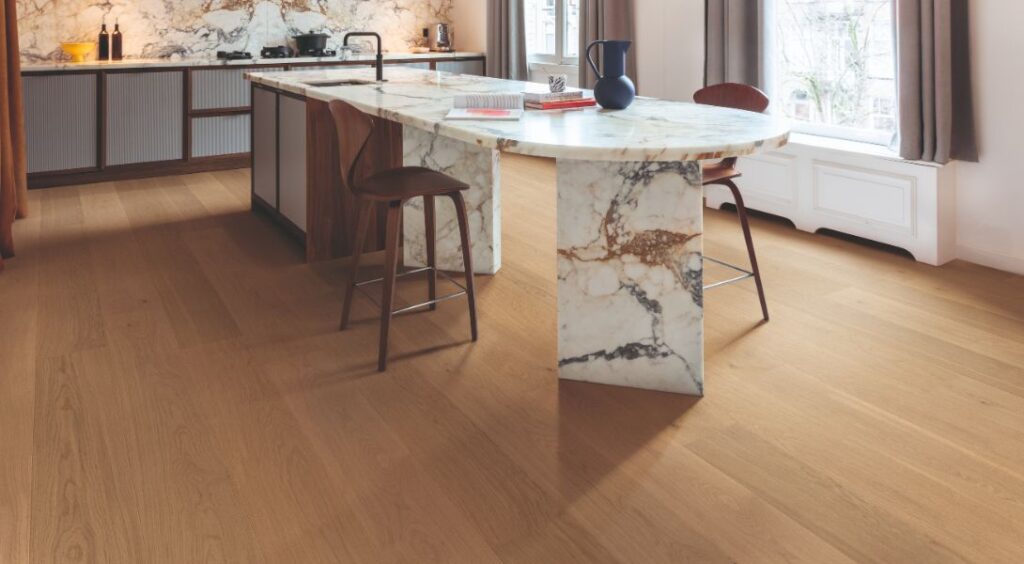
Engineered timber suits formal dining rooms where the floor is a design feature. It offers better durability than solid timber and a premium look that rewards the investment in a room used for entertaining.
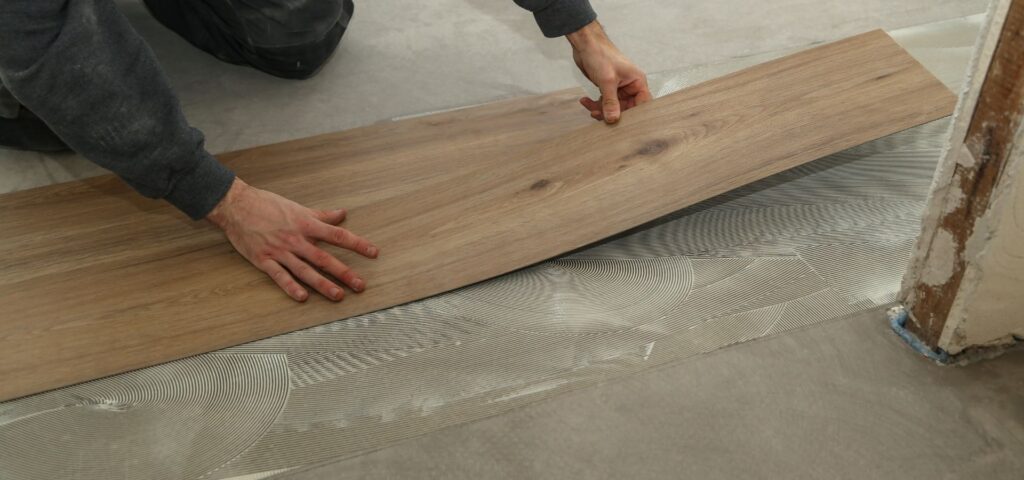
Vinyl plank is comfortable underfoot, easy to clean and available in a wide range of timber-look and stone-look designs. A strong mid-range option for busy family dining areas.
Running the same product from the kitchen through to the dining area creates a seamless open-plan feel and avoids the visual break that comes with a product change at the threshold.
For dining rooms that can carry a design moment, herringbone timber or parquet-style flooring adds visual interest and a sense of occasion that a standard plank cannot. It works particularly well where the dining space sits within a larger open-plan area and needs its own identity. If a full herringbone installation feels like too much commitment, a feature rug over a clean hard floor achieves a similar effect.
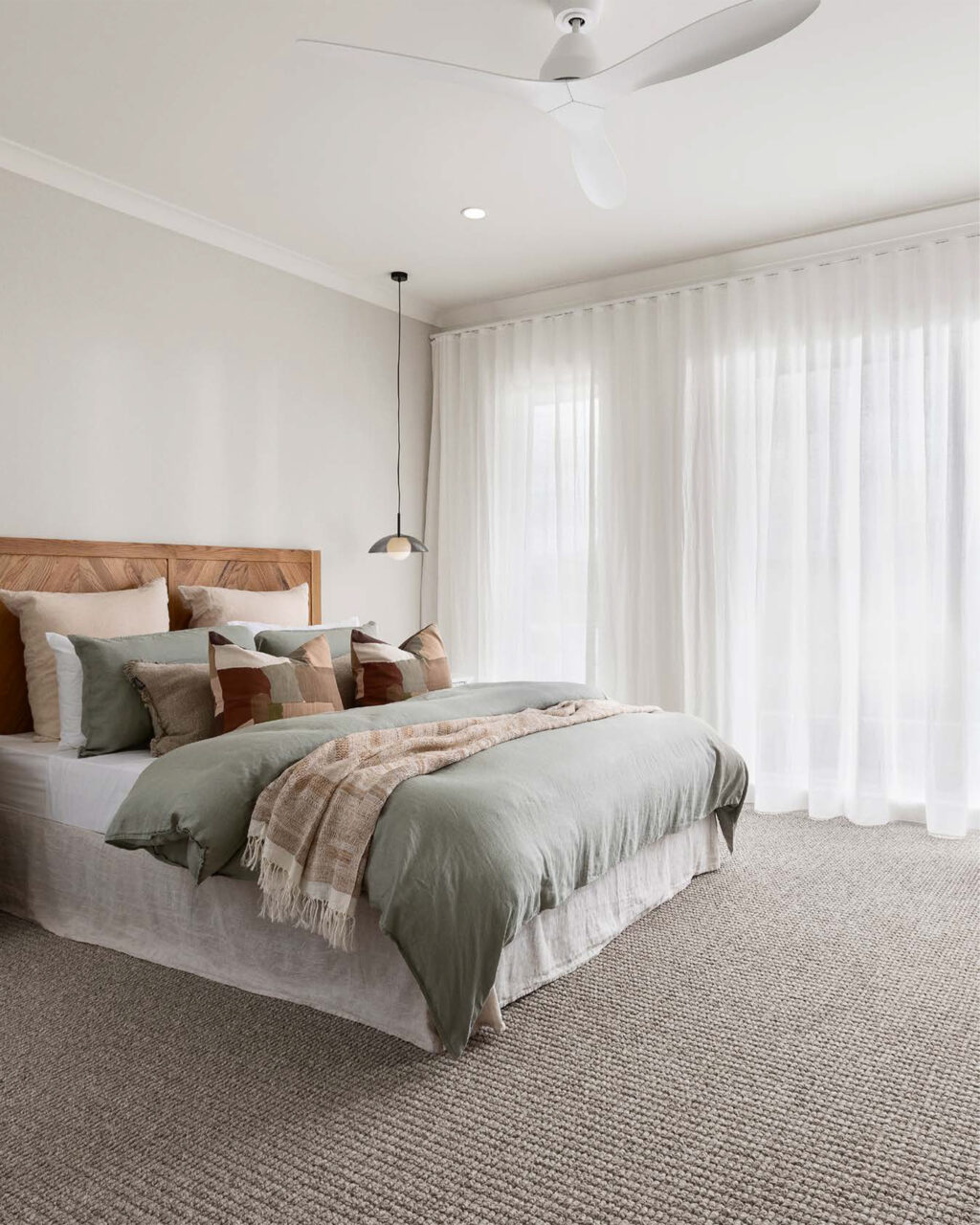
Carpet under dining tables – Food debris, liquid spills and daily chair movement make it a poor choice regardless of fibre type.
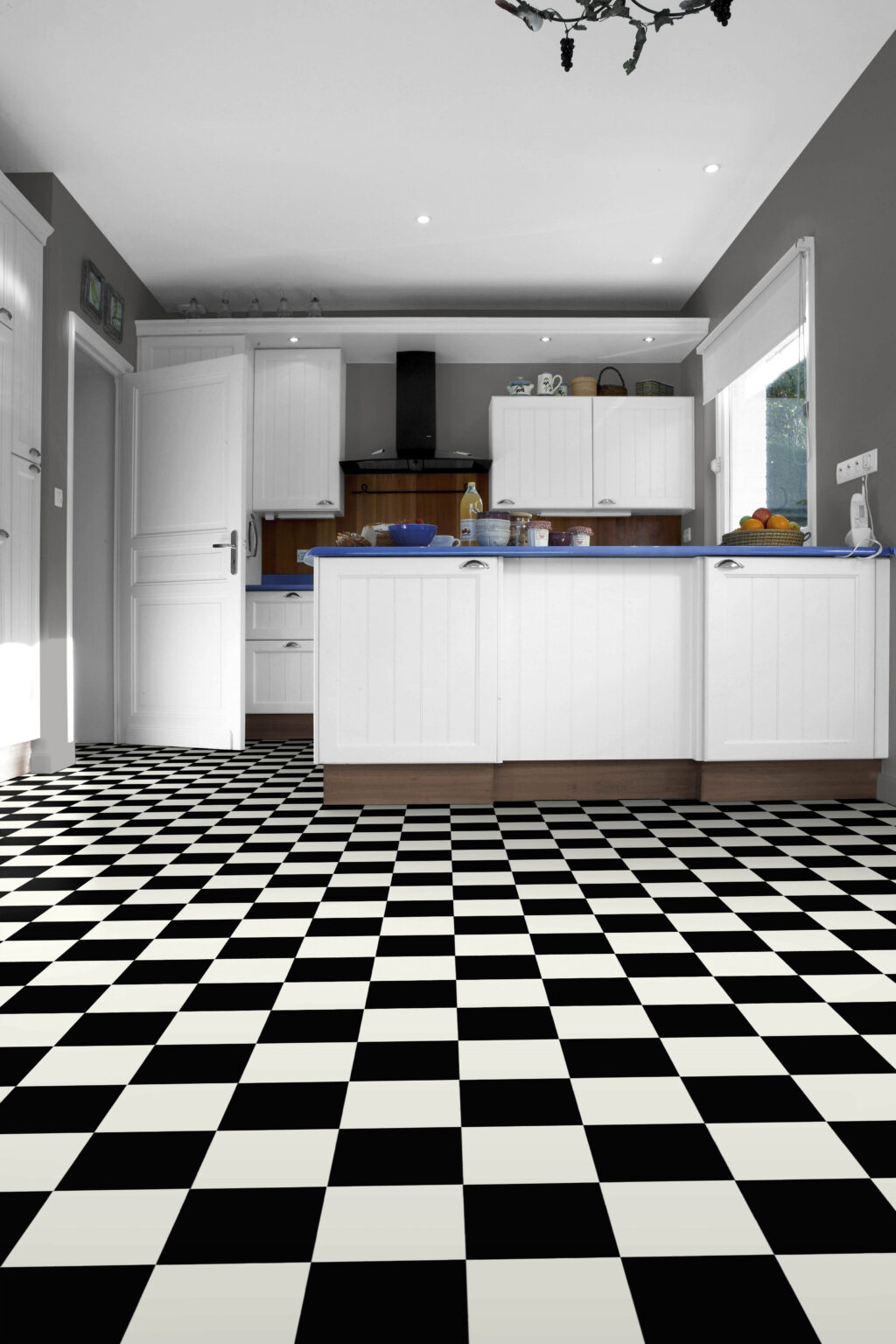
High-gloss hard flooring – It shows chair drag marks, scuffs and footprints more readily than matte or satin finishes, and the marks are visible from across the room.
Chair castors – Dining chairs with hard plastic or metal castors drag across the floor surface every day and will mark softer or lower-rated surfaces over time. Ask your Floorworld team which products are best suited to your chairs before you decide. Felt pads under chair legs are a simple, inexpensive step that significantly reduces surface wear on timber and laminate.
Finish choice – Matte and satin finishes are more practical in dining areas than gloss. They hide everyday marks better and don’t show the footprint and scuff pattern that gloss surfaces accumulate.
Rug layering – Many homeowners place a rug under the dining setting on top of hard flooring. This protects the floor directly under the chairs and adds warmth to the space. Confirm the product is compatible with rug placement before ordering.
Open-plan flow – If your dining area connects to the kitchen or living room, running one consistent floor through all three zones creates a cohesive, spacious result and eliminates transition strips between rooms.
Hybrid and vinyl plank flooring are the most popular choices for Australian dining rooms because they handle spills and chair movement well, clean up quickly and come in realistic timber-look designs that suit both contemporary and classic dining spaces. Engineered timber is the premium option for formal dining rooms where the floor is a design feature in its own right, particularly in herringbone or wide-plank formats.
Yes, the dining room is one of the best locations in a home for a herringbone floor. It can be seen from multiple angles when seated and creates a sense of occasion and considered design that a straight-lay floor does not achieve in the same way. Herringbone engineered timber or timber-look vinyl in a dining zone, particularly where the space is defined within a larger open-plan area, is one of the most effective design decisions in a premium renovation.
For open-plan dining rooms, the strongest design outcome is a single consistent floor running through the kitchen, dining and living areas without interruption. This makes the whole space feel larger and more resolved. If you want the dining zone to feel distinct within the open plan, a rug under the dining setting is more effective than changing the floor product, because it defines the zone without creating a visual break in the floor surface.
For statement timber dining rooms, GRANDOAK HERRINGBONE by Australian Select Timbers creates a premium parquet-style effect suited to formal dining rooms. HICKORY HOMESTEAD by AST offers a warm, textured matte timber finish for both contemporary and traditional dining spaces. For practical open-plan dining areas, CLEVER HYBRID SUPERIOR 9mm by Clever Choice is a thicker-profile hybrid that handles daily dining room use well. Ask your Floorworld store for current samples and pricing on any of these products.
Your saved products will appear here.
Add floors you love to compare and share with your nearest Floorworld store.