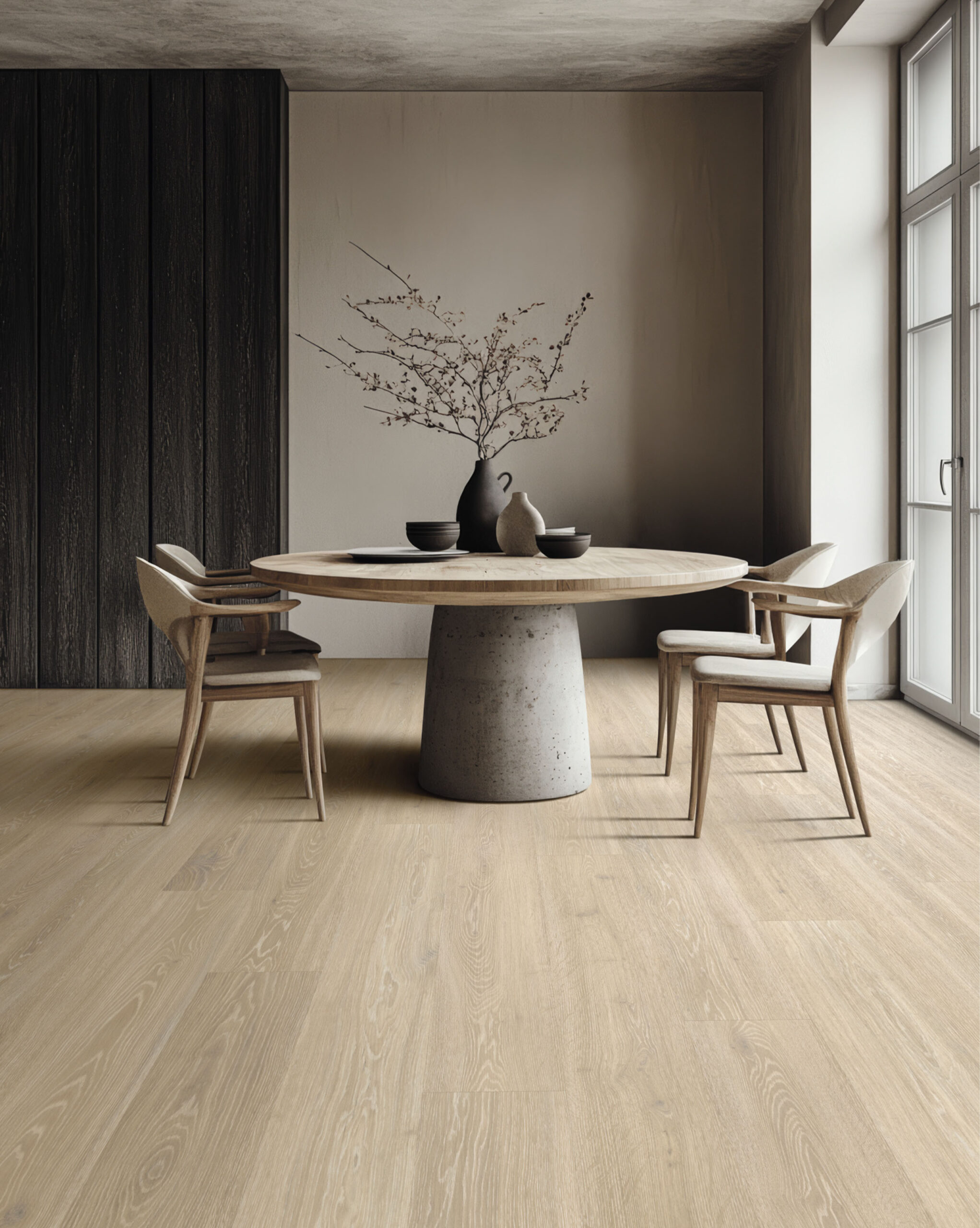
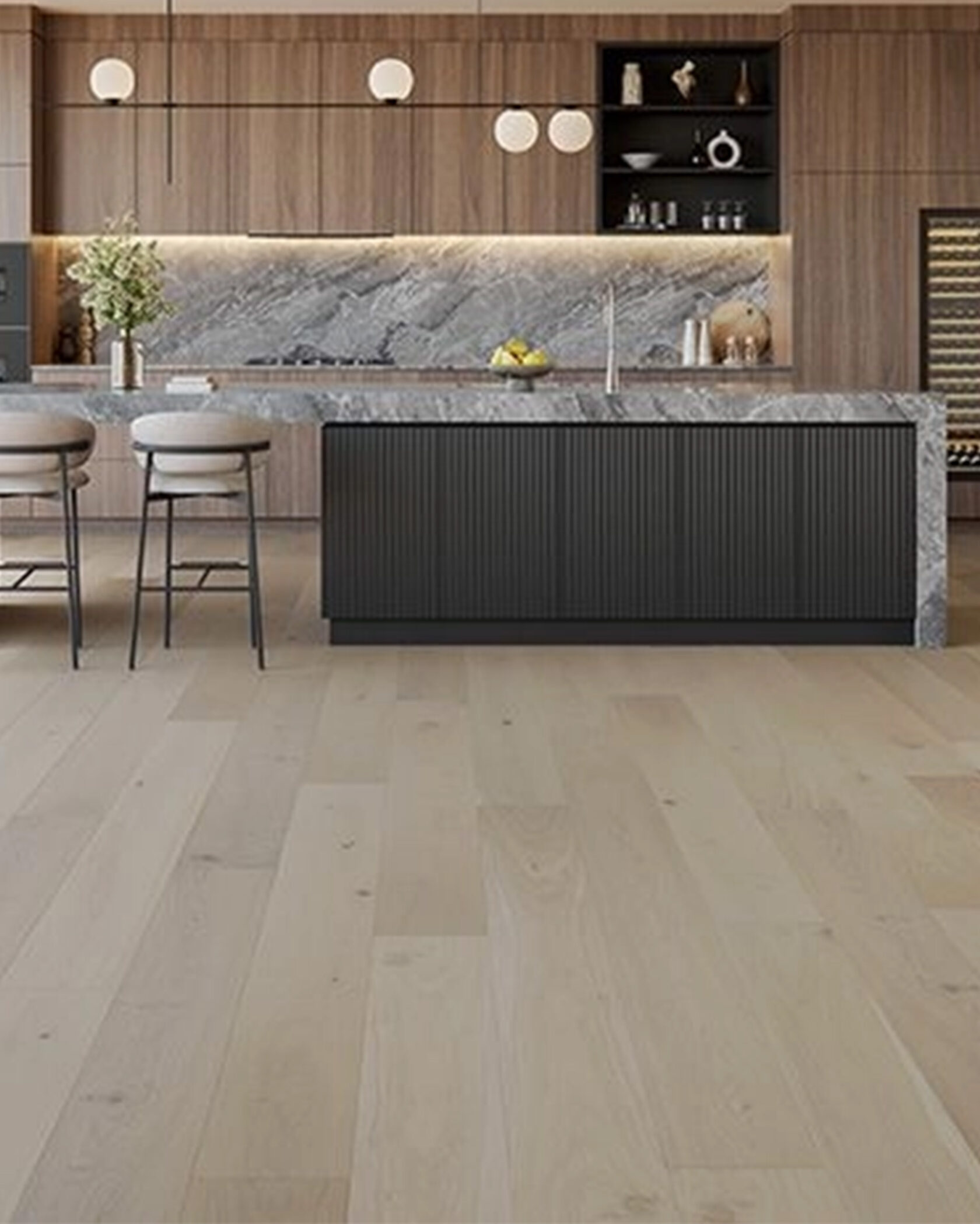
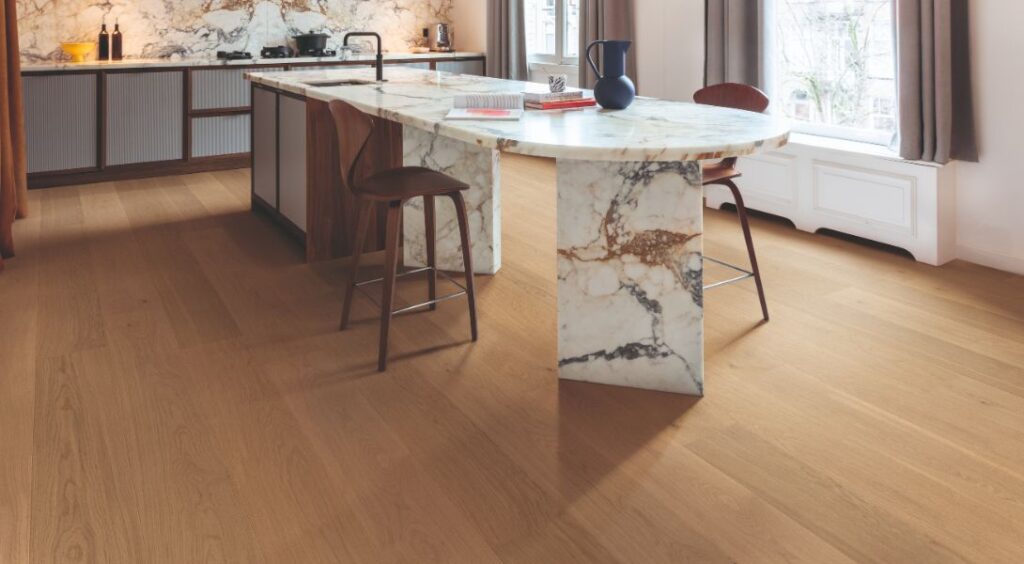
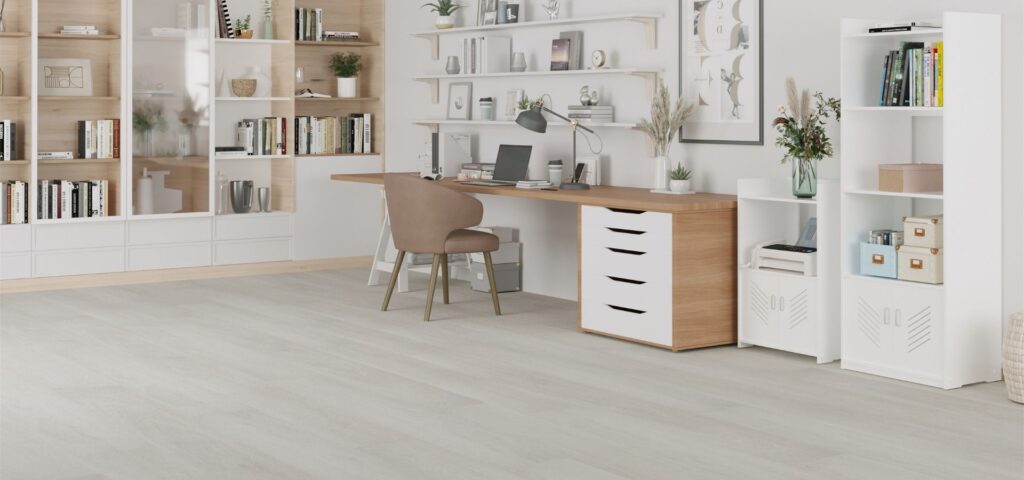
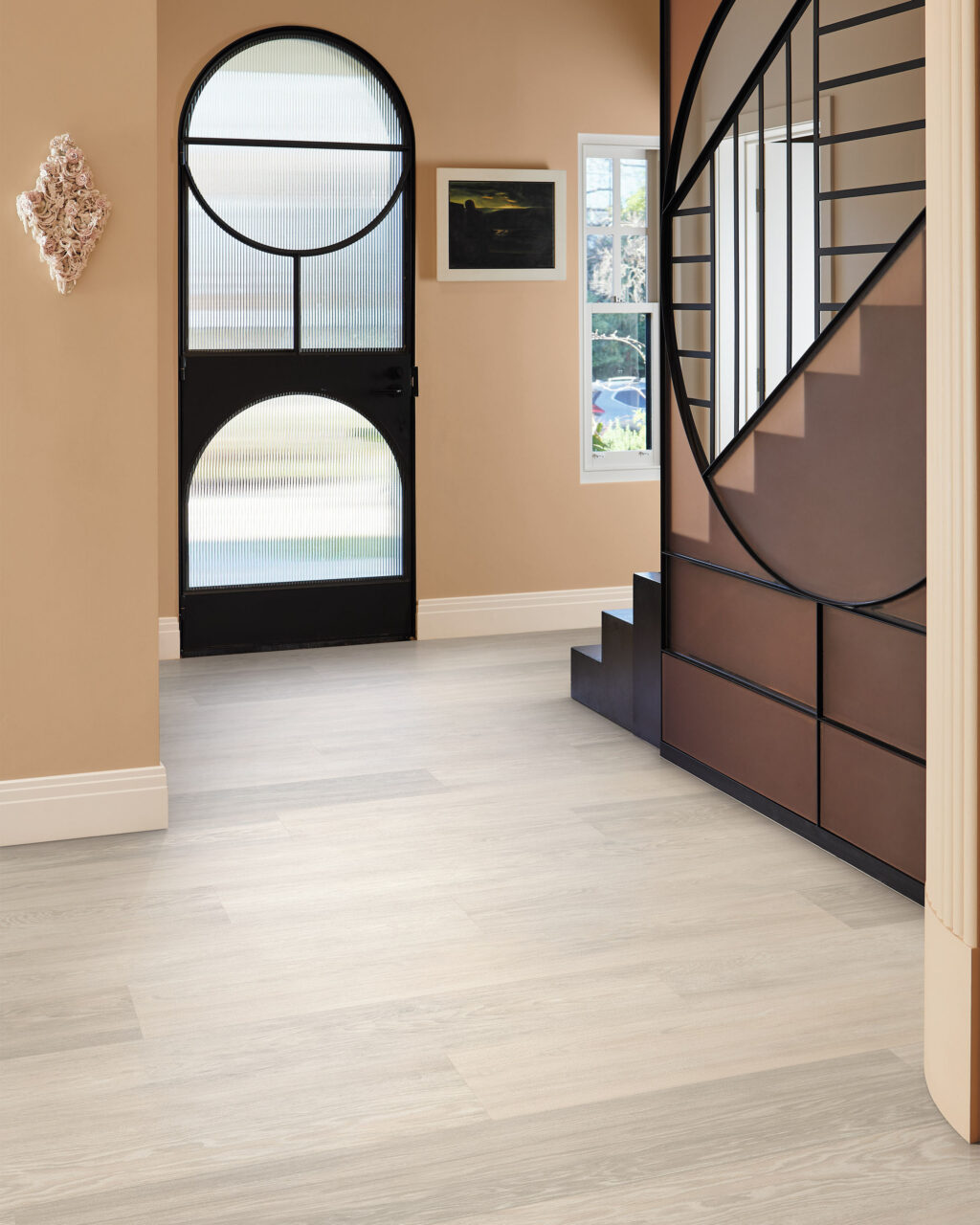
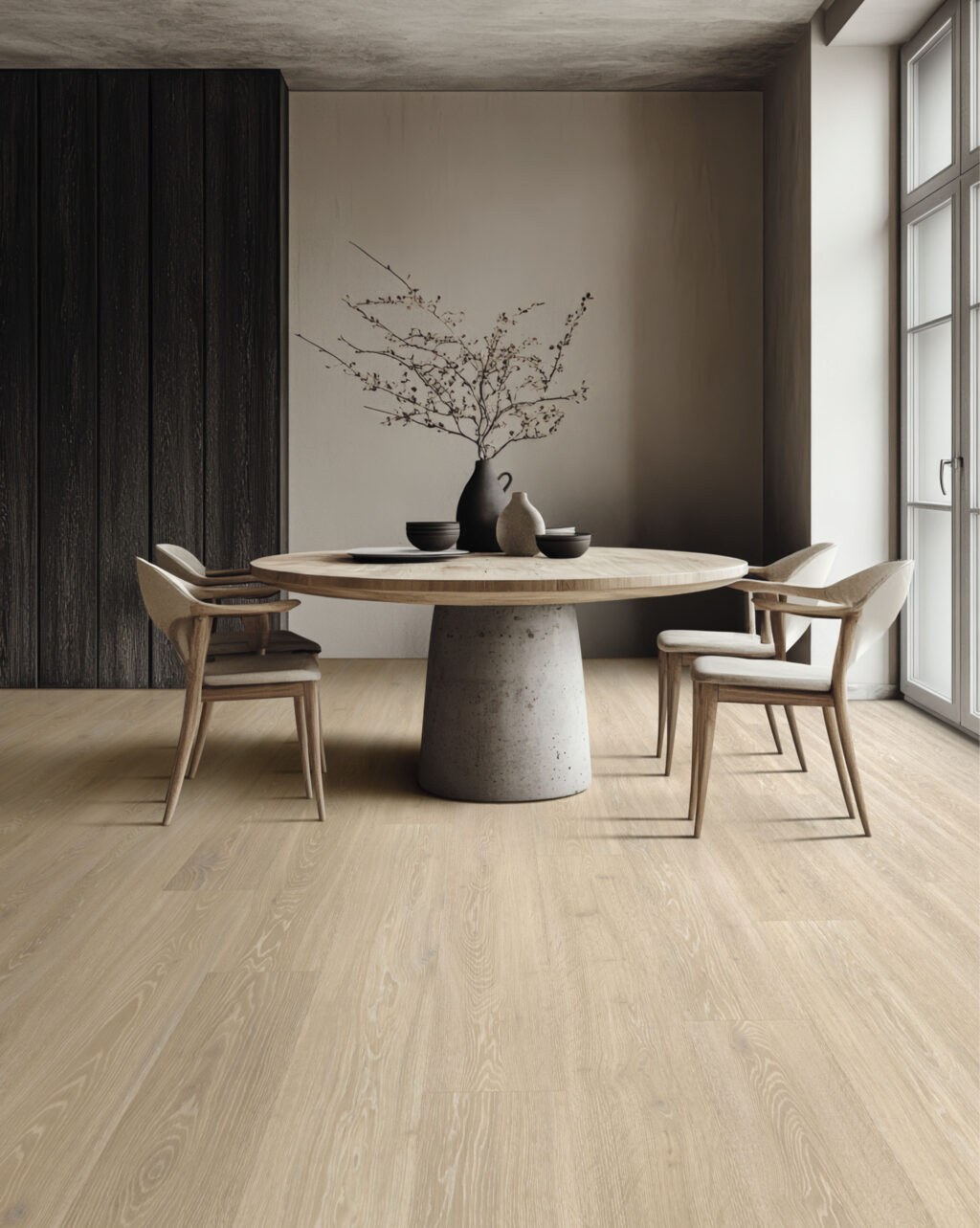
Plank width is the variable that most significantly affects how a dining room floor reads from across the room. Narrow planks, below 140mm, create visual complexity that pulls the eye downward and fragments the floor surface. Wide planks, 180mm and above, create fewer joins, a calmer surface, and a sense of generosity that suits a room designed for gathering.
In a formal dining room, wide planks do something specific: they make the floor feel like a deliberate design choice rather than a standard installation. A 190mm European Oak plank running beneath a formal dining table reads as considered. A 130mm plank in the same room reads as default.
This matters most in dining rooms that aren’t very large. The counterintuitive truth about wide planks is that they can make smaller rooms feel bigger, not smaller, because the reduced number of joins eliminates the visual fragmentation that makes a room feel confined.
Quick tip: wide plank looks best when you view it in your real lighting, not just showroom lighting. Dining rooms often change character at night under warm pendants and downlights.