-
  • Easy to maintain
  • Water resistant
  • Hybrid
  • Vinyl Plank

Best Kitchen Flooring Types for Australian Homes 

Surani Sahabandu
15 min read  ·   Published: Apr 5th, 2026   ·   Updated: Apr 13th, 2026
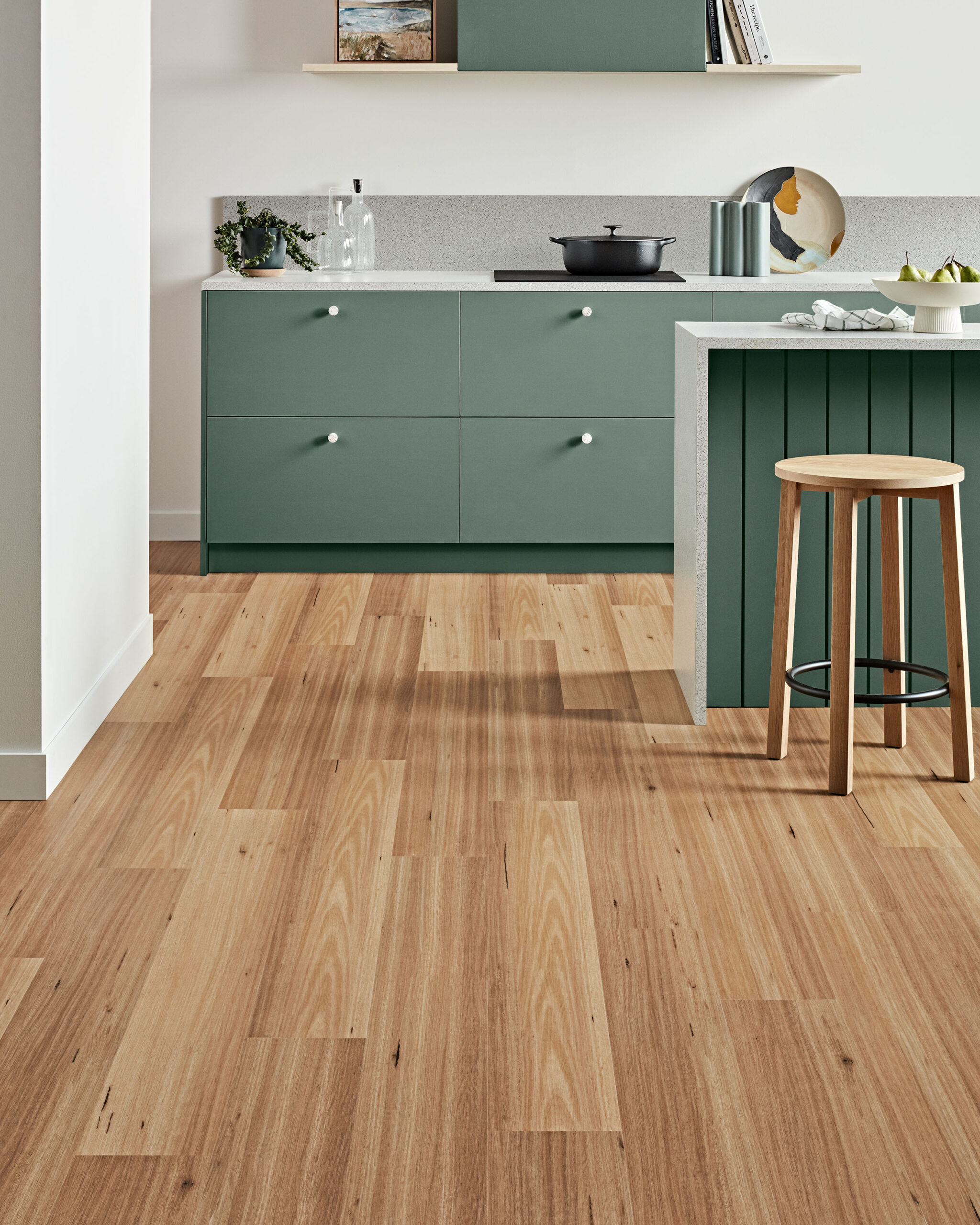
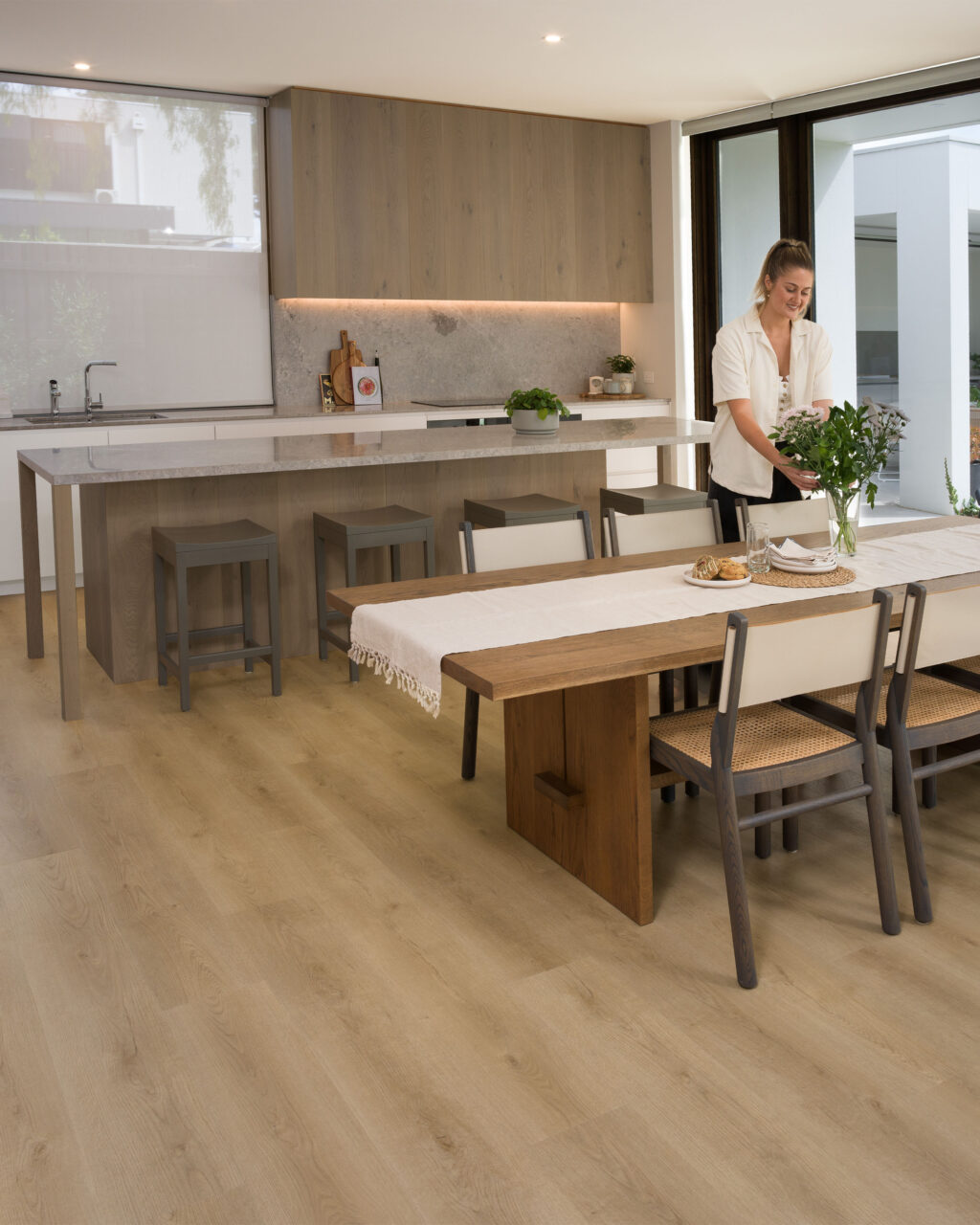
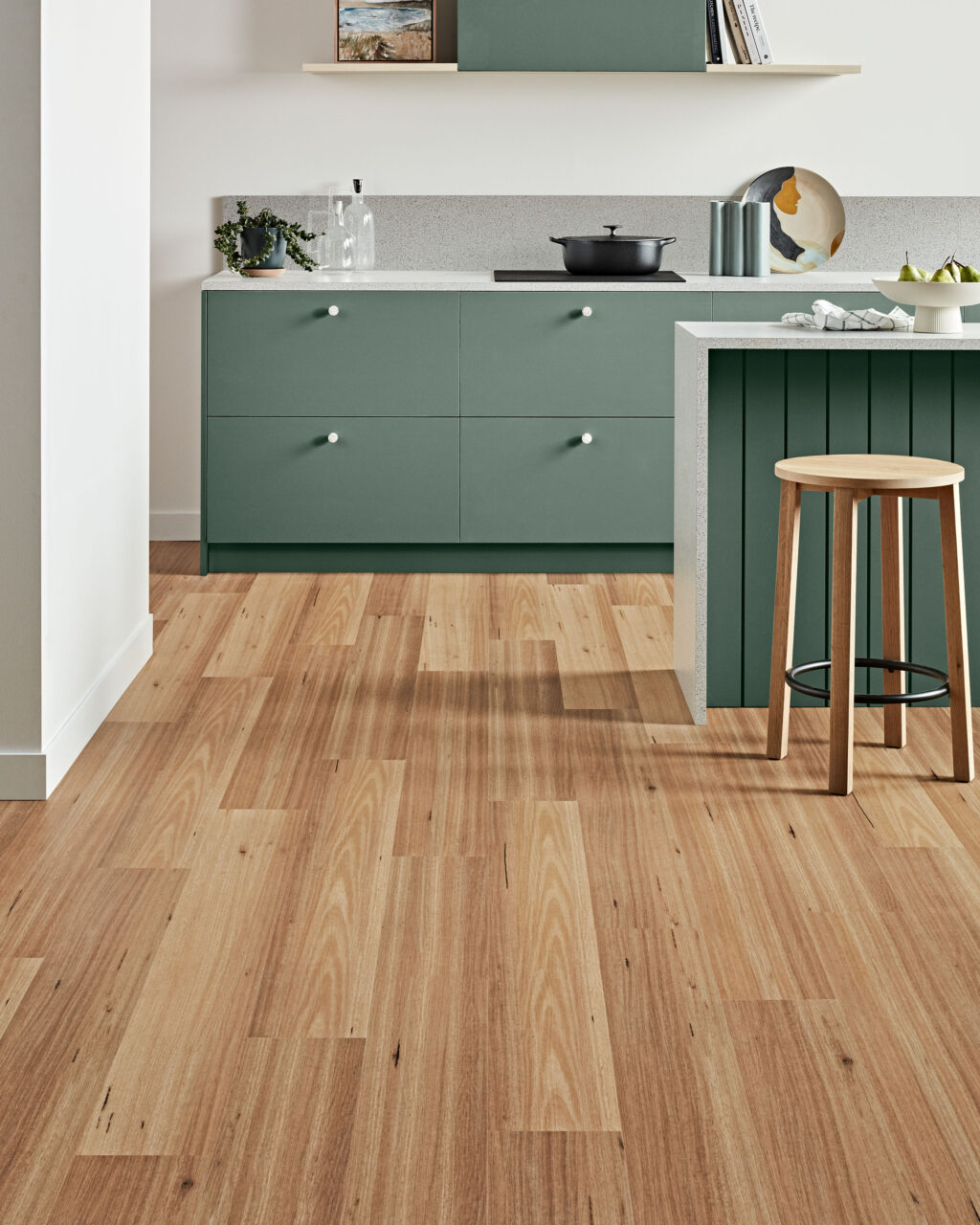
apollo-1500-lifestyle-1-hardflooring-kitchen

The kitchen is the room that tends to get a bit of everything. Chairs scrape, bags get dropped, water splashes around the sink, and somehow there’s always grit underfoot even when you swear you cleaned yesterday.

So if you’re choosing kitchen flooring, the goal isn’t “looks great in a sample.” It’s choosing a floor that still looks good after a month of real life, and doesn’t become high-maintenance the second you move in.

This guide breaks down the kitchen flooring options that make sense in Australian homes, what matters most (and what doesn’t), and the simplest way to choose between hybrid, vinyl plank and timber.

In this article

Quick Answer: What’s the Best Flooring for a Kitchen?

For most Australian kitchens, hybrid flooring is the best all-round choice because it’s practical for everyday spills, stable underfoot, and easy to clean. If budget is the big driver, vinyl plank is a strong alternative. Other options such as laminate and in some cases even some engineered timbers can work, but you need to be extremely diligent with maintenance and dealing with moisture exposure as soon as it occurs which is why it normally isn’t recommended.

The Four Things a Kitchen Floor Has to Get Right

Most people pick a kitchen floor by colour first. That’s understandable, but if you want a floor you won’t regret, start with performance.

1) Water resistance and handling moisture

Most floors can handle the odd splash if you wipe it up quickly. The bigger risk in kitchens is moisture that is either a constant occurrence or at large quantities that are not dealt with immediately. Examples include a dishwasher leak, water sitting around the sink join, a fridge line issue, or repeated wet mopping.

Hybrid and vinyl plank are popular in kitchens because they’re designed to cope with everyday moisture better than more moisture-sensitive options. Just keep one thing in mind: no floating floor loves water trapped underneath it. Good habits still matter.

2) Wear and scratch resistance

The floor doesn’t get “worn out” by walking. It gets worn out by grit being ground into it and chairs dragging in and out every day.

If you want your kitchen floor to keep its finish longer, look for:

  • a strong surface coating / wear layer
  • a heavy residential rating (or equivalent)
  • a warranty that suits a busy home

For details on a product and it’s wear layer, its best to speak directly with your flooring retailer.

3) Fewer joins and grout lines = easier cleaning

Kitchens are messy. Floors with fewer joins are easier to keep clean because you’re not constantly trying to scrub dirt out of edges or seams.

Wider boards and larger plank formats can also make the whole space feel calmer, especially in open-plan kitchens.

4) Comfort underfoot

If you cook a lot, you’ll notice this fast. A floor that feels slightly warmer and more forgiving underfoot can make day-to-day life nicer, especially on concrete slabs.


“The kitchen is the most unforgiving room in your home for flooring. Choose something built for it, not just something that looks good in a showroom.”

Which Flooring Type Works Best in a Kitchen?

Here’s how the main options stack up. 

Flooring Type  Water-Resistance  Scratch Rating  Grout-Free?  Price Tier 
Hybrid Flooring  High  AC4–AC5 (excellent)  ✓ Yes  $$–$$$ 
Vinyl Plank (LVT)  High  AC3–AC4 (very good)  ✓ Yes  $–$$ 
Engineered Timber  Low  Moderate  ✓ Yes  $$$–$$$$ 
Laminate  Medium  AC3–AC5 (varies)  ✓ Yes  $$–$$$ 
Ceramic/Porcelain  High  Excellent  ✗ Grout lines  $$–$$$$ 

Hybrid flooring 

Hybrid is usually the easiest “set and forget” option for busy homes. It’s stable, practical, and suits open-plan layouts where you want one consistent look running through the kitchen and living areas. 

Best for: families, open-plan homes, renovations, pet households
Watch-outs: still needs correct subfloor prep and expansion gaps 

Hard Flooring
Hybrid Flooring
Apollo 1500
Godfrey Hirst • $$
Blackbutt

Vinyl Plank Flooring for Your Kitchen

Vinyl plank is often the smart choice when you want something practical and easy to live with at a lower price point. Modern vinyl has come a long way visually, and it’s a solid pick for kitchens where you want simple cleaning and a forgiving surface.

Best for: tighter budgets, rentals, staged renovations, family homes
Watch-outs: not all vinyl planks feel the same underfoot, so it’s worth comparing samples in-store

Engineered timber

Engineered timber can look incredible in a kitchen, especially in homes where the kitchen is part of a big open-plan living area and you want a true timber feel underfoot.

But it’s not the most forgiving choice around moisture. If you’re set on timber in the kitchen, you need to be realistic about:

  • wiping spills quickly (especially near the sink)
  • avoiding over-wetting during cleaning
  • planning around leak risks

Best for: design-led renovations, timber lovers, homes with good moisture control
Watch-outs: requires a lot more care and maintenance than hybrid/vinyl in wet-prone zones


For the Budget-Conscious Kitchen: Where to Invest, Where to Save

Kitchen flooring is one of those renovation decisions where paying a little more upfront usually saves you money over time. A cheaper floor that warps around the dishwasher or shows wear within three years costs more than a quality floor that lasts fifteen. 

Quick Guide: What to Prioritise by Budget

$ Budget tier: Vinyl plank (LVT). High water resistance, easy to clean, entry-level price. Not as durable as hybrid long-term but a sound practical choice.

$$ Mid-tier: Entry hybrid flooring. Better wear rating than vinyl, rigid core, longer lifespan. The buy-it-once option for most kitchens.

$$$ Premium: Mid-to-upper hybrid or engineered vinyl. Wider planks, better acoustic performance with underlay, more realistic finishes.

Note: Engineered timber ($$$$) can work beautifully in kitchens that are well-maintained and don’t have heavy moisture exposure, but it is not the practical first choice. Speak to your Floorworld consultant about whether it’s right for your specific kitchen.

Hard Flooring
Vinyl Plank
Elmfield Vinyl 2.0
Heartridge • $
Ash

A Note on Coastal and Humid Climates

If your home is near the coast, along Queensland’s Sunshine Coast or Gold Coast, across coastal New South Wales, South Australia’s Yorke Peninsula, or anywhere in Western Australia’s south-west, humidity is a variable that changes your flooring decision.

Engineered timber handles coastal humidity better than solid timber, but it still requires careful moisture management and is not recommended in kitchens close to the ocean without thorough consultation.

Hybrid and vinyl plank, with their highly water-resistant SPC cores, are significantly more stable in high-humidity environments and need no acclimatisation period before installation. That’s a genuine practical advantage in coastal renovation projects where timing is tight.

In inland areas with extreme temperature variation, including parts of regional Victoria, South Australia, and Queensland’s interior, the rigid core construction of hybrid flooring also provides better dimensional stability than laminate, which can expand and contract noticeably across seasonal changes.

Installation: What to Know Before You Start

Most kitchen flooring projects involve either laying over an existing subfloor or replacing what’s there. A few things worth knowing before you commit:

  • Subfloor level matters. Floating floors need a stable, flat base or you’ll notice issues later.
  • Underlay is product-specific. Some hybrids have attached backing; others need separate underlay. The wrong choice can affect feel, sound, and performance.
  • Engineered timber in kitchens needs a moisture barrier regardless of installation method. Your installer will advise on this.
  • Expansion gaps at all walls and fixed edges are non-negotiable. This applies to every floating floor type and protects your floor from buckling as the building moves seasonally.
  • In Queensland and other high-humidity zones, expansion gaps should be slightly wider than the standard specification. Your Floorworld consultant will know the right allowance for your region.
  • Professional installation is strongly recommended for kitchen flooring. Not just for quality, but because many product warranties require it.

Every Floorworld store offers a free in-home measure and quote, which includes a subfloor assessment before any flooring is recommended. That assessment often identifies issues like moisture, unevenness, or existing adhesive that would affect your choice before you’ve committed to anything.

Kitchen Flooring Do’s and Don’ts

Do:

  • use entry mats (grit is the quiet floor killer)
  • wipe spills quickly, especially near sink and dishwasher zones
  • choose mid-tones with natural variation if you don’t want to see every speck
  • plan transitions early if you’re joining rooms

Don’t:

  • assume “water resistant” means “leak-proof”
  • ignore door clearances and appliance heights in renovations
  • skip subfloor prep to save money (it usually comes back later)

Questions We Hear in Store

Can I use laminate in my kitchen if I’m running it through from the living room?

You can, but it’s worth being strategic. Keep it away from the highest moisture-risk zones (sink and dishwasher), and consider using a clean transition at the kitchen boundary. If you want the same look throughout, matching a hybrid in the kitchen to laminate in adjoining rooms is often the easiest way to get both performance and consistency.

Does underlay matter under kitchen hybrid flooring?

Yes. Underlay can change how the floor sounds and feels, especially on concrete slabs. Some hybrid products have backing attached, some don’t, and it’s important to follow the product guidance.
How do I clean kitchen hybrid or vinyl flooring?

Sweep or vacuum regularly (grit causes most surface wear). For everyday cleaning, a lightly damp mop and a gentle floor cleaner is usually enough. Avoid harsh chemical cleaners, and avoid steam if the manufacturer advises against it.

Is hybrid flooring suitable for kitchen renovations in Queensland?

Yes. Hybrid flooring’s rigid SPC core and highly water-resistant construction make it particularly well-suited to Queensland’s humidity levels. It doesn’t require acclimatisation, which simplifies the installation timeline in renovation projects. Wider expansion gaps are recommended in high-humidity zones. Your installer will advise on the correct allowance.

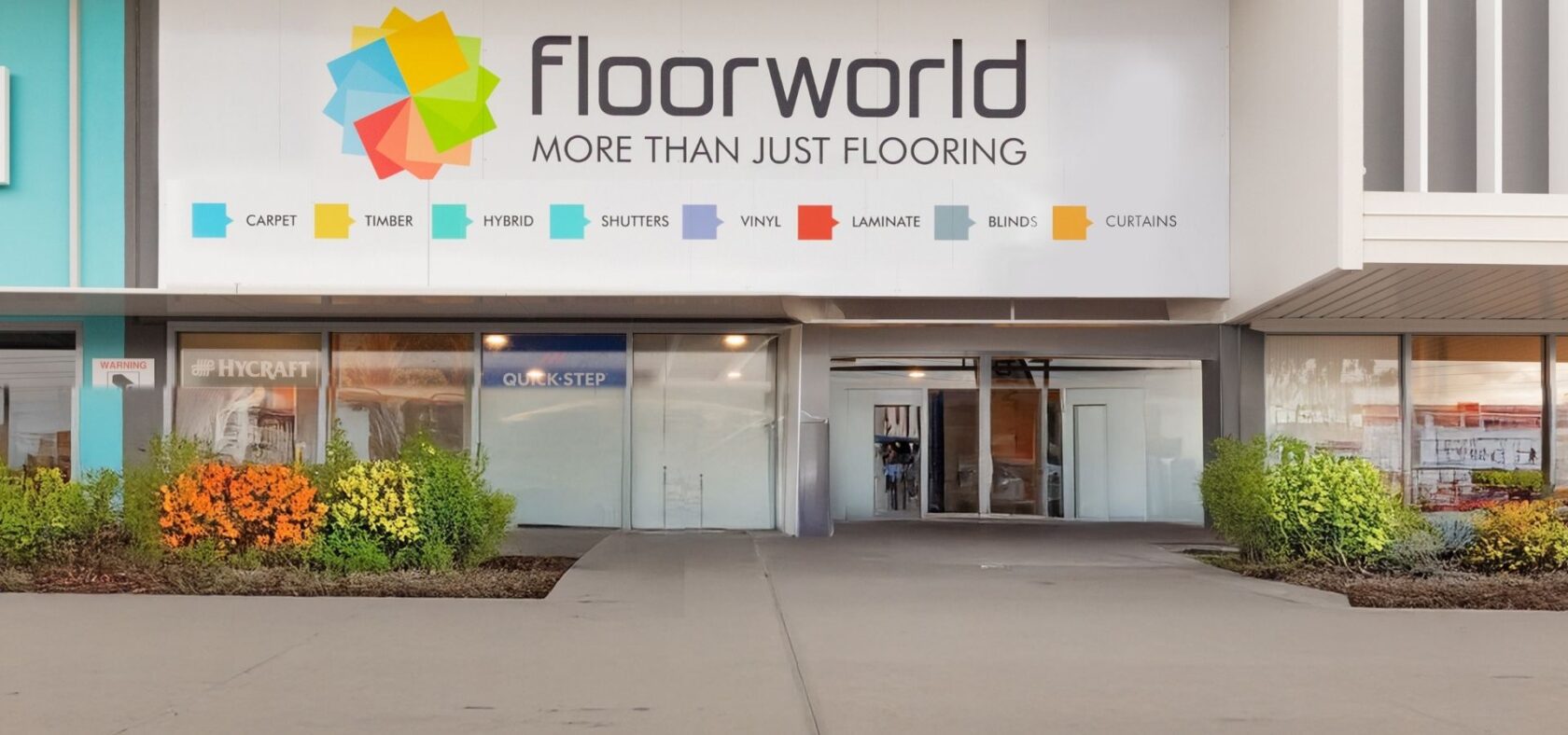
Floorworld Storefront
Ready to find your kitchen floor?

Your local Floorworld store has samples of every product mentioned in this article. Our consultants will help you match the right floor to your kitchen, your subfloor, and your budget.

More Kitchen inspiration

-
My list

Your saved products will appear here.
Add floors you love to compare and share with your nearest Floorworld store.