-

Home Office Flooring Ideas for Australian Homes

Surani Sahabandu
10 min read  ·   Published: Apr 7th, 2026   ·   Updated: Apr 13th, 2026
office-home-hard-flooring

The home office is one room where flooring has a genuine impact on daily life. Not just how it looks, but how it sounds on calls, how it feels after a long day, and what happens when a chair rolls back and forth across the same patch of floor for hours.

And now that working from home is a long-term routine for plenty of Australians, the “spare room office” is turning into a properly considered space. Flooring is part of that decision.

In this article

Quick Answer: Best Home Office Flooring for Most Australian Homes

  • If you’re on video calls daily and want the room to feel quieter: carpet (with good underlay) is the easiest win.
  • If you want easier cleaning and a clean, modern look: hard flooring works well, but plan for acoustics with a rug + underlay and protect the chair zone.
  • The “best of both” option for many households: a hard floor with a substantial rug under the desk area.

The Acoustic Question: Why Home Offices Sound Different On Calls

If you’ve ever jumped on a call and thought, “Why does my room sound echoey?”, flooring is often the reason.

Hard floors in home offices produce noticeable acoustic differences on video calls compared to carpeted spaces. Sound waves generated by your voice reflect off hard surfaces, creating a subtle reverberation that people on the other end of calls often describe as the room sounding ‘live’ or echoey. This isn’t a flaw in the microphone or the software.

Acoustic research consistently shows that carpet absorbs between 15 and 20 percent of airborne sound at typical conversation frequencies. Hard floors, including hybrid and vinyl, absorb close to zero percent, reflecting almost all sound. In a small room with hard walls and a hard floor, this reflected sound accumulates and makes speech less clear.

If you prefer hard flooring, you can still get good acoustics. You just need to add a couple of “soft” elements:

  • a large rug under the desk/chair zone
  • curtains or fabric furnishings (even a soft chair helps)
  • an acoustic underlay where compatible

You don’t need to turn the room into a recording studio. You just want to stop the room bouncing sound back at you.


The Comfort Question: Eight Hours on Your Feet

Comfort means different things depending on how you work.

If your home office involves significant standing, whether at a height-adjustable desk or moving between areas of the space, the floor’s comfort properties become relevant in a way they don’t in a room where you sit all day. Hard floors without cushioning transmit cold from the subfloor in winter and create fatigue in the feet and legs during long standing periods.

If you stand a lot (standing desk users), hard floors can feel tiring over long stretches, especially on concrete slabs. That’s where:

  • an anti-fatigue mat makes a noticeable difference, or
  • carpet with quality underlay gives you natural cushioning across the room.

If you sit most of the day, comfort is more about temperature and feel. In cooler states, hard floors can feel cold in winter. Carpet (especially with good underlay) helps the room feel warmer and more comfortable, which matters more than people expect once you’re working there daily.

“A good home office floor does two specific things: it helps the room sound better on calls, and it handles your chair castors without showing the evidence. Not many products manage both well.”
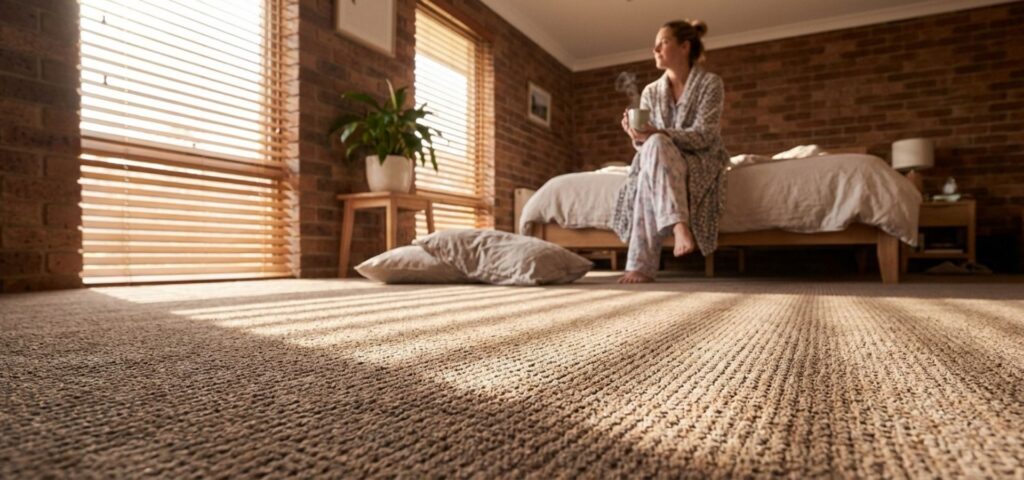
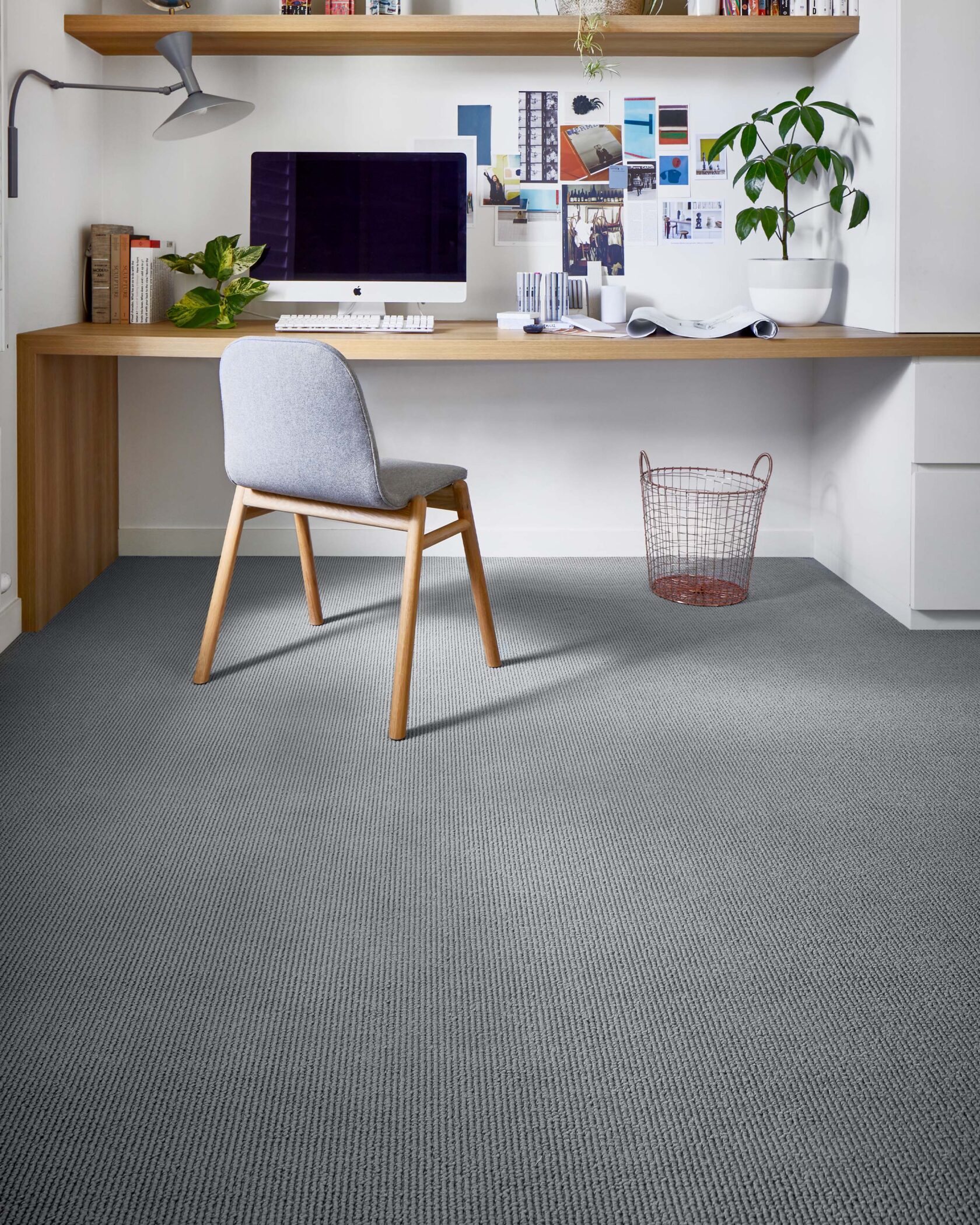
carpet in office interior at home

The Chair Caster Problem: Why This Matters More Than Most People Realise

A rolling office chair drags across the same floor zone multiple times per hour. In a home office used daily for five or more days a week, this concentrated wear path accumulates quickly.

On carpet, this usually shows up as:

  • pile compression and matting in the chair path

On hard floors, it usually shows up as:

  • fine micro-scratches or dulling in the caster zone

The practical fix (for both types)

  • Hard floors: use a chair mat designed for hard floors, or a rug designed to sit flat under a chair (no thick pile).
  • Carpet: choose a more office-friendly construction (low pile / loop pile / twist pile) and use a quality underlay.

On carpet, choose a loop pile or low-pile commercial-grade carpet that resists matting better than high-pile plush. On hard floors, use an office chair mat in the caster zone, which protects the floor entirely. On hybrid flooring specifically, an AC4 or higher wear rating provides enough surface hardness that caster wear registers slowly enough to be manageable without a mat, though a mat remains the most protective approach.

Hard Floors in a Home Office: Making Them Work

Hard floors can absolutely work in a home office. They’re clean, modern, and easy to maintain. The key is managing the three things hard floors don’t naturally solve on their own:

  • acoustics (echo on calls)
  • comfort (cold slabs and standing fatigue)
  • chair wear (caster zone damage)

A simple setup that works:

  1. Large rug under the desk zone (sound + comfort + caster protection)
  2. Acoustic underlay where compatible (impact sound reduction)
  3. Chair mat if your chair is used heavily
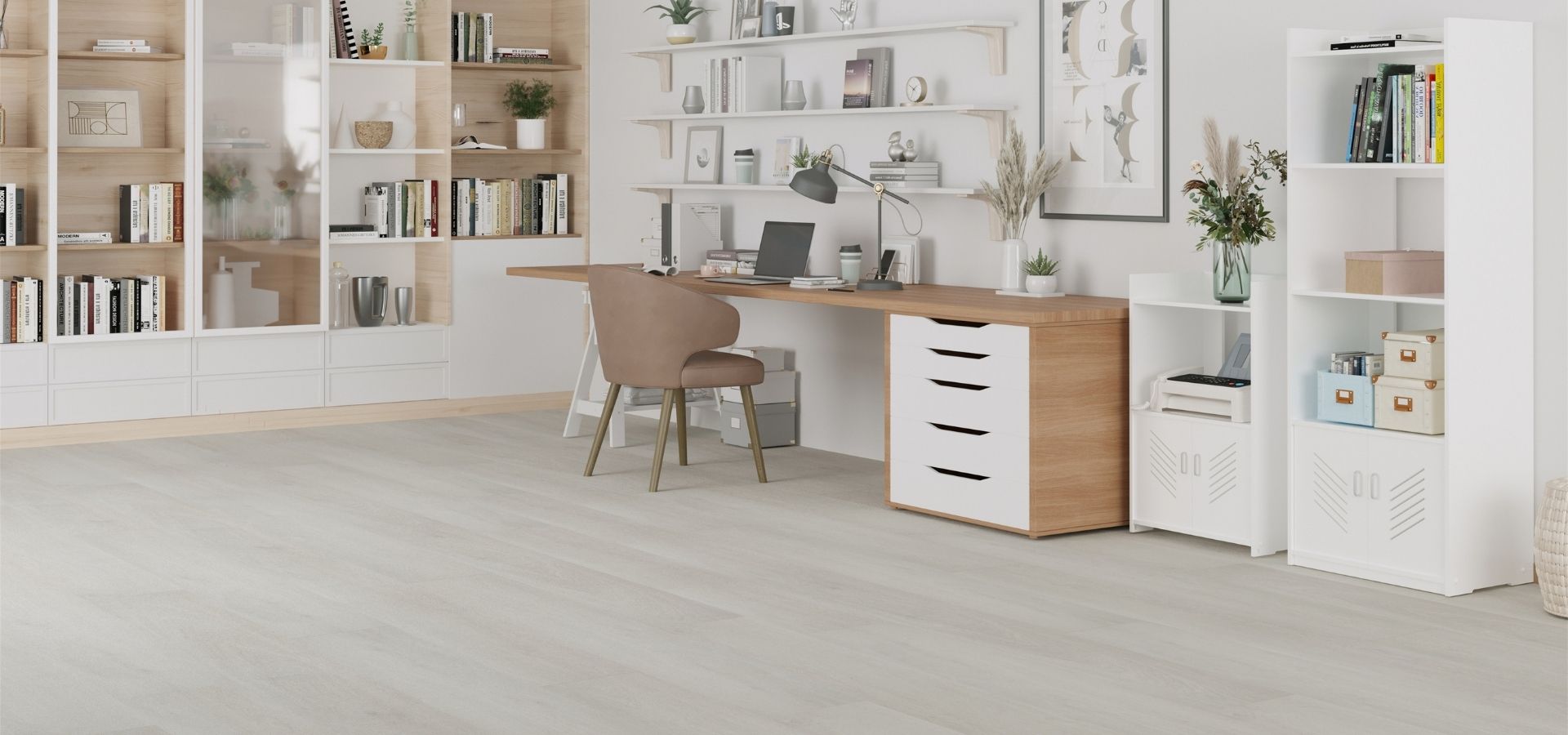
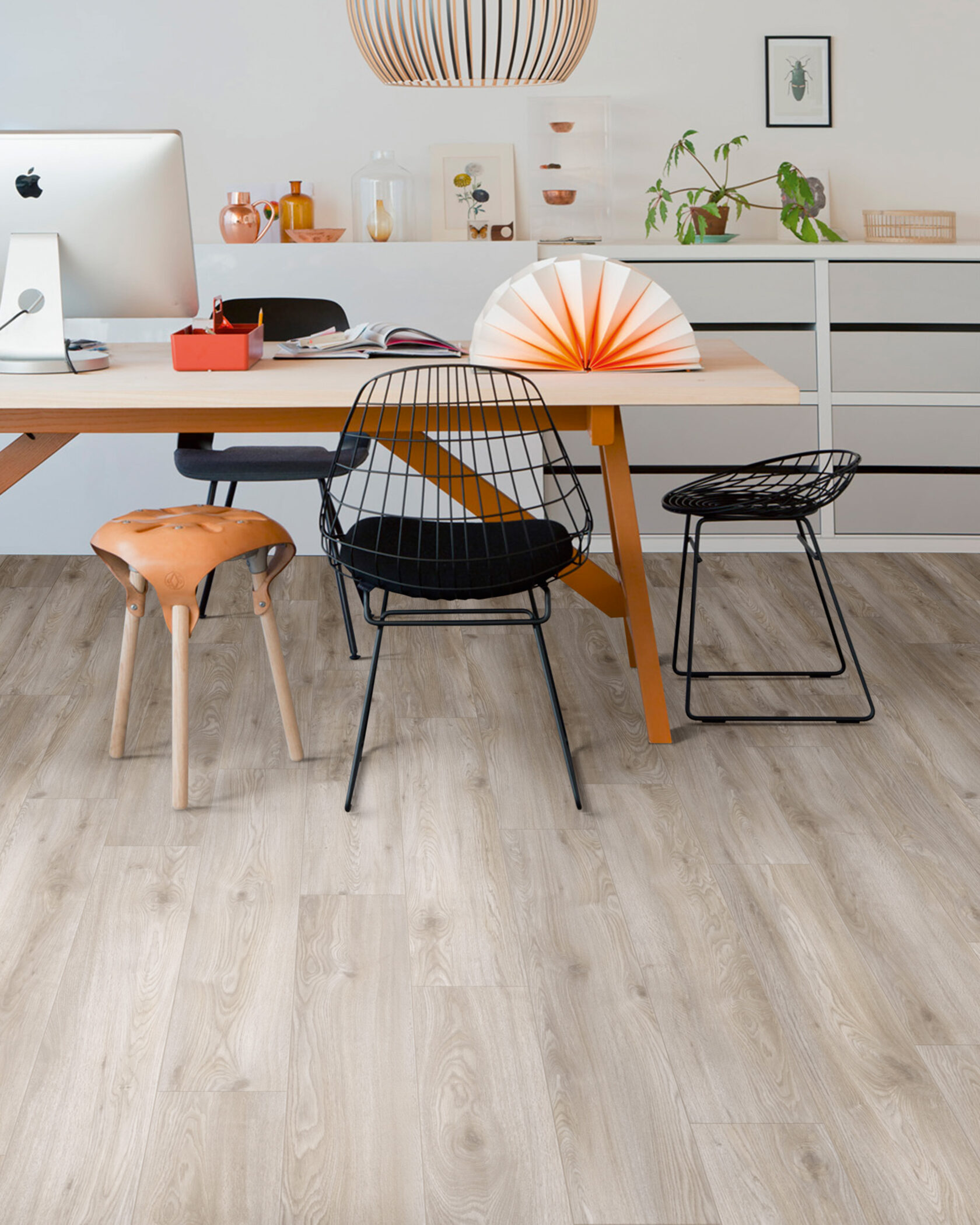
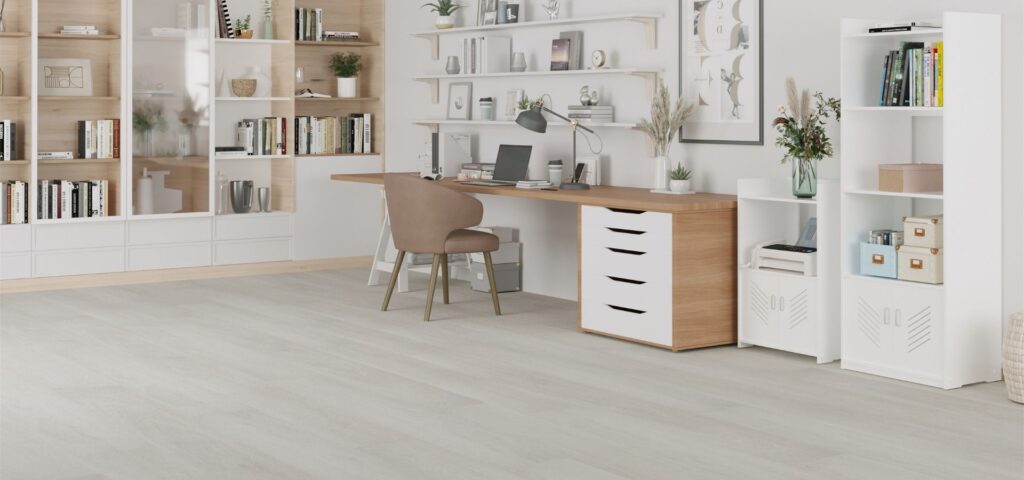
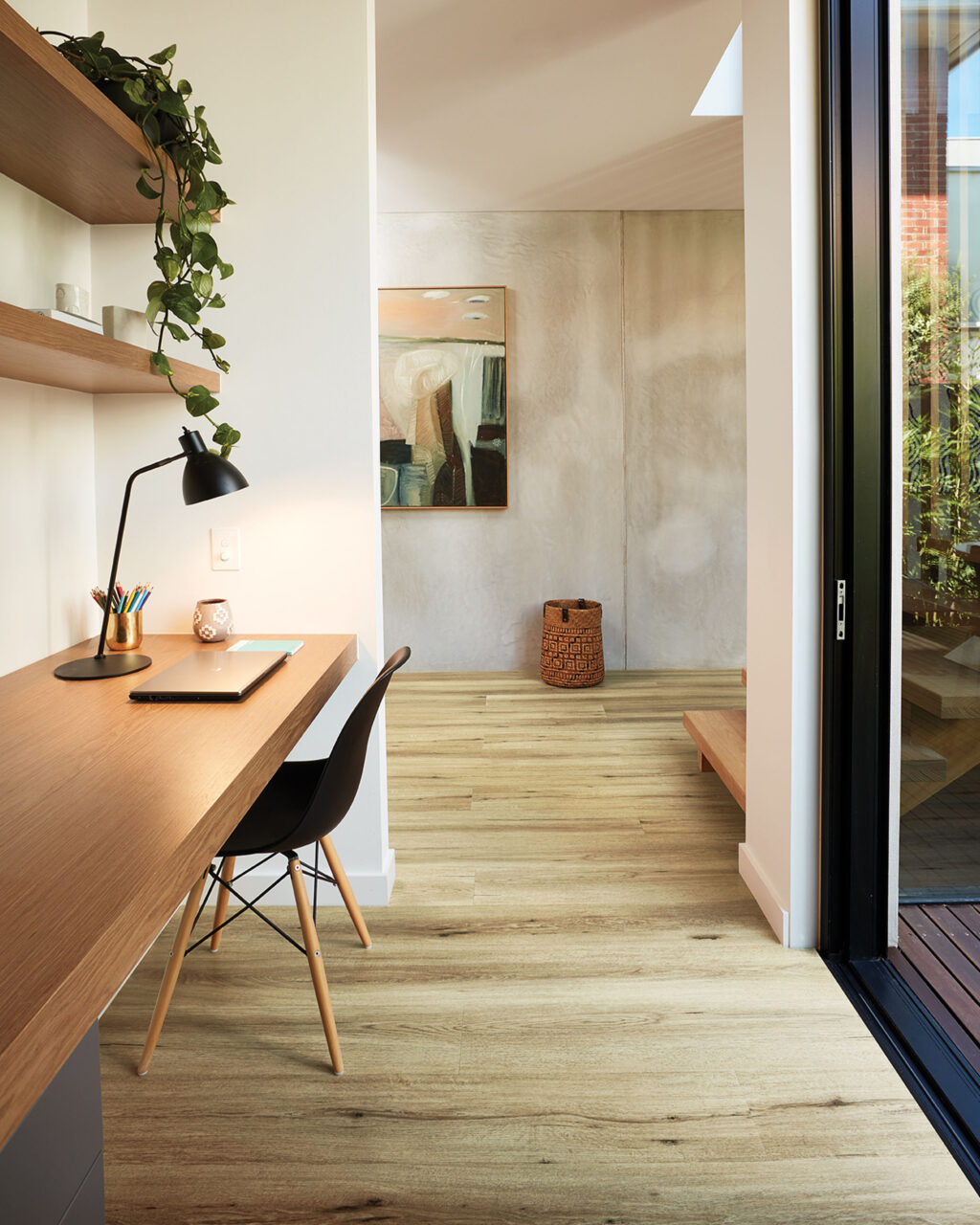
office interior with hard flooring

The Thermal Factor: Cold Floors in Australian Winters

In Victoria, Tasmania, the ACT, and the highland regions of New South Wales and South Australia, a home office floor that transmits cold from the subfloor in winter creates genuine discomfort during long work sessions. Carpet’s thermal insulation properties are meaningful in this context: a wool or quality nylon carpet with a good underlay keeps the floor noticeably warmer than a hard surface in the same room.

If you prefer hard flooring in cold climates, the simplest fixes are:

  • a rug under the desk zone
  • an insulated anti-fatigue mat if you stand at a desk
  • and making sure underlay is chosen correctly (where applicable)

For hard floor offices in cold climates, a large rug covers the zone where feet rest while seated, which addresses the most direct comfort issue. For standing desk users, an anti-fatigue mat with thermal insulation properties addresses both the ergonomic and thermal concerns simultaneously.

Home Office Flooring Do’s and Don’ts

Do:

  • use a chair mat (hard floors) or choose an office-friendly pile (carpet)
  • add a rug if you’re on calls and the room sounds echoey
  • prioritise underlay for comfort and acoustics
  • sample flooring in your actual room light (home offices can look different day vs night)

Don’t:

  • assume hard floors will sound fine without soft furnishings
  • ignore the chair caster zone (it’s where wear shows first)
  • over-wet any floating floor when cleaning
  • choose thick, plush carpet if you roll a chair all day

Questions We Hear in Store

Is carpet or hard flooring better for a home office?

Carpet usually wins for acoustics and warmth. Hard flooring wins for easy cleaning and visual continuity with the rest of the home. A popular middle ground is hard flooring with a substantial rug under the desk zone.

What should I look for in an office chair mat for a hard floor home office?

A clear polycarbonate mat designed specifically for hard floors (not the studded versions for carpet) provides rolling ease and floor protection without significantly changing the floor’s appearance. Size it generously, covering the full zone where the chair moves during a typical work session, not just the area directly under the desk.

Does the home office floor affect the property’s value or rental appeal?

Yes, increasingly. As dedicated home office spaces have become more desirable in the post-2020 property market, the quality and presentation of the home office has become a relevant factor in both sale and rental contexts. A well-considered floor that reads as a proper workspace rather than a repurposed spare room contributes to this impression.

Floorworld store front
Your workspace starts from the floor up.
Visit your nearest Floorworld store or request a free measure and quote.

More Office inspiration

-
My list

Your saved products will appear here.
Add floors you love to compare and share with your nearest Floorworld store.