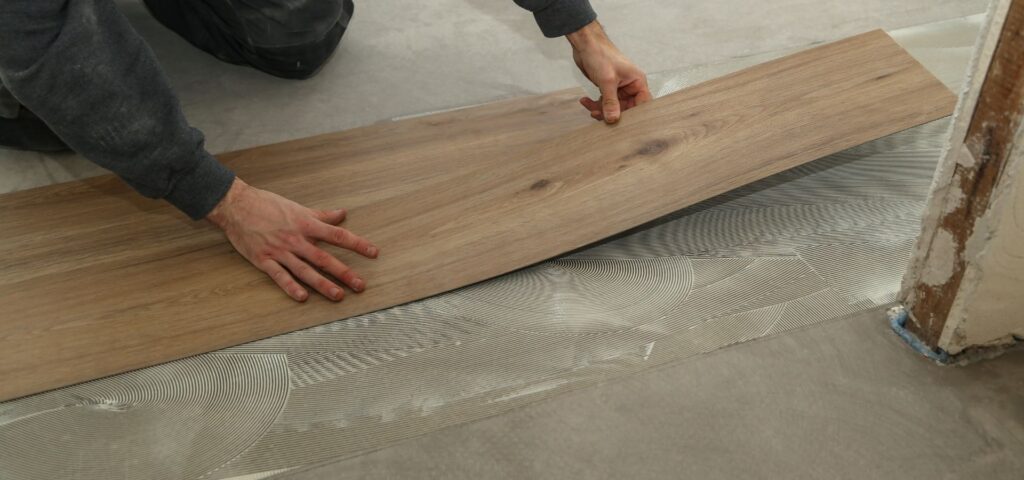
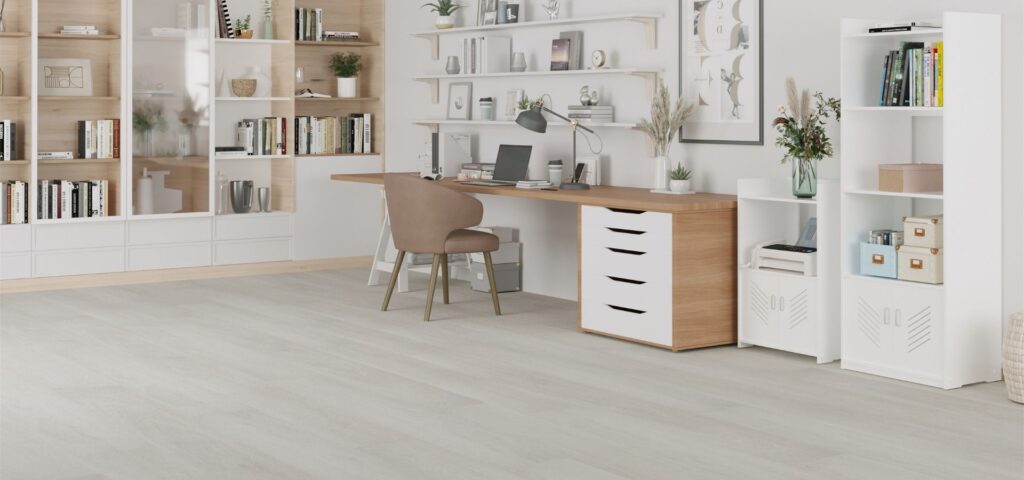
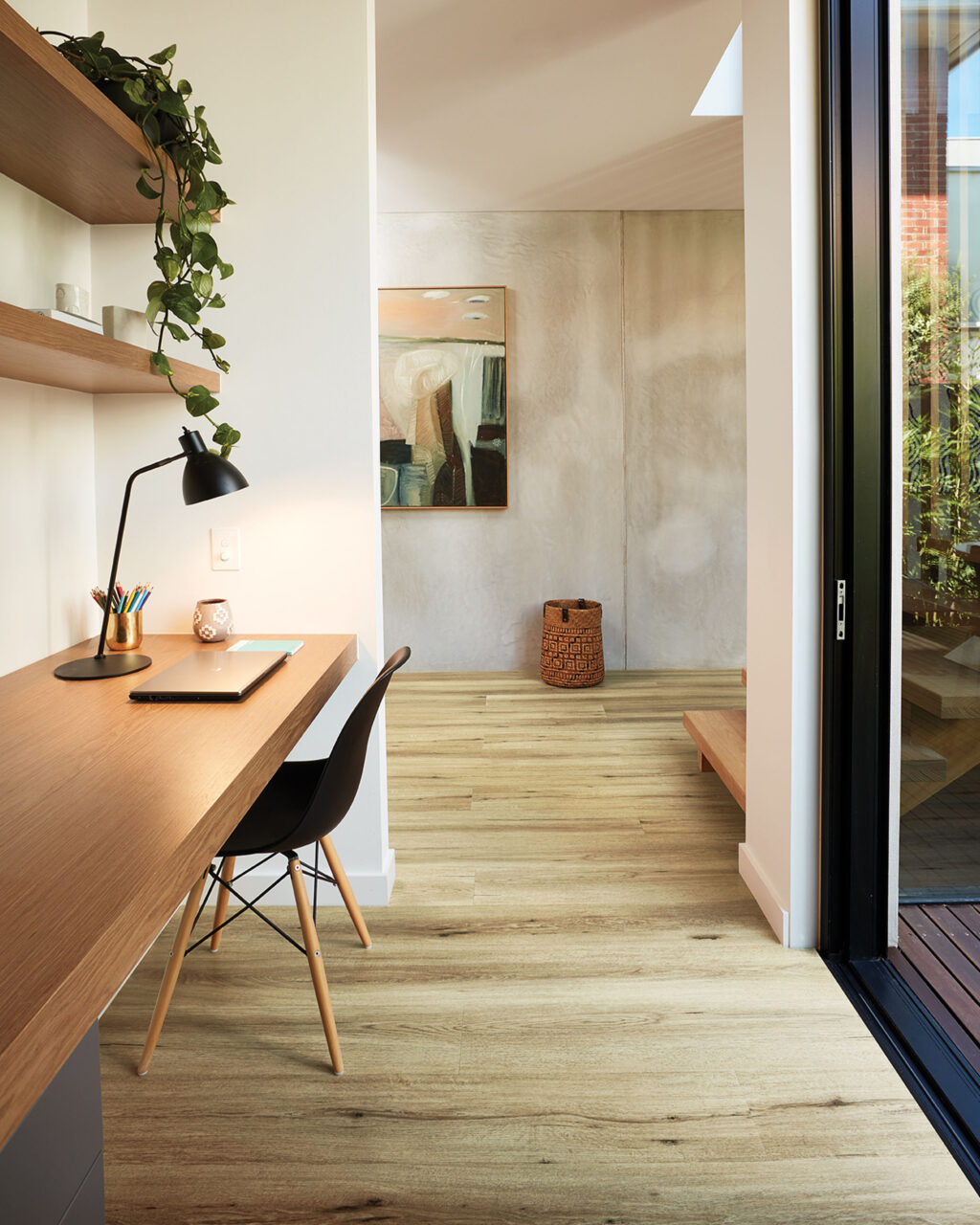
In any room conversion, the subfloor is the first thing to assess. What’s currently down (carpet, tile, existing floating floor, bare concrete) determines what’s possible and what prep you’ll need.
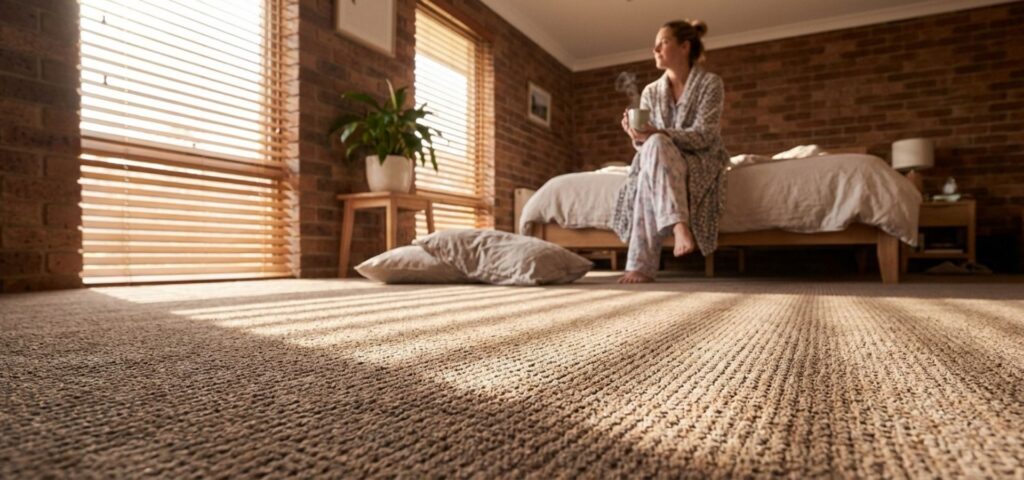
Converting over existing carpet
Installing a floating hard floor over carpet is not recommended. Carpet compresses under load, which can make the floor feel unstable and can put extra stress on click-lock joins over time. Removing the carpet first adds a step, but it avoids installing a floor that performs poorly from day one.
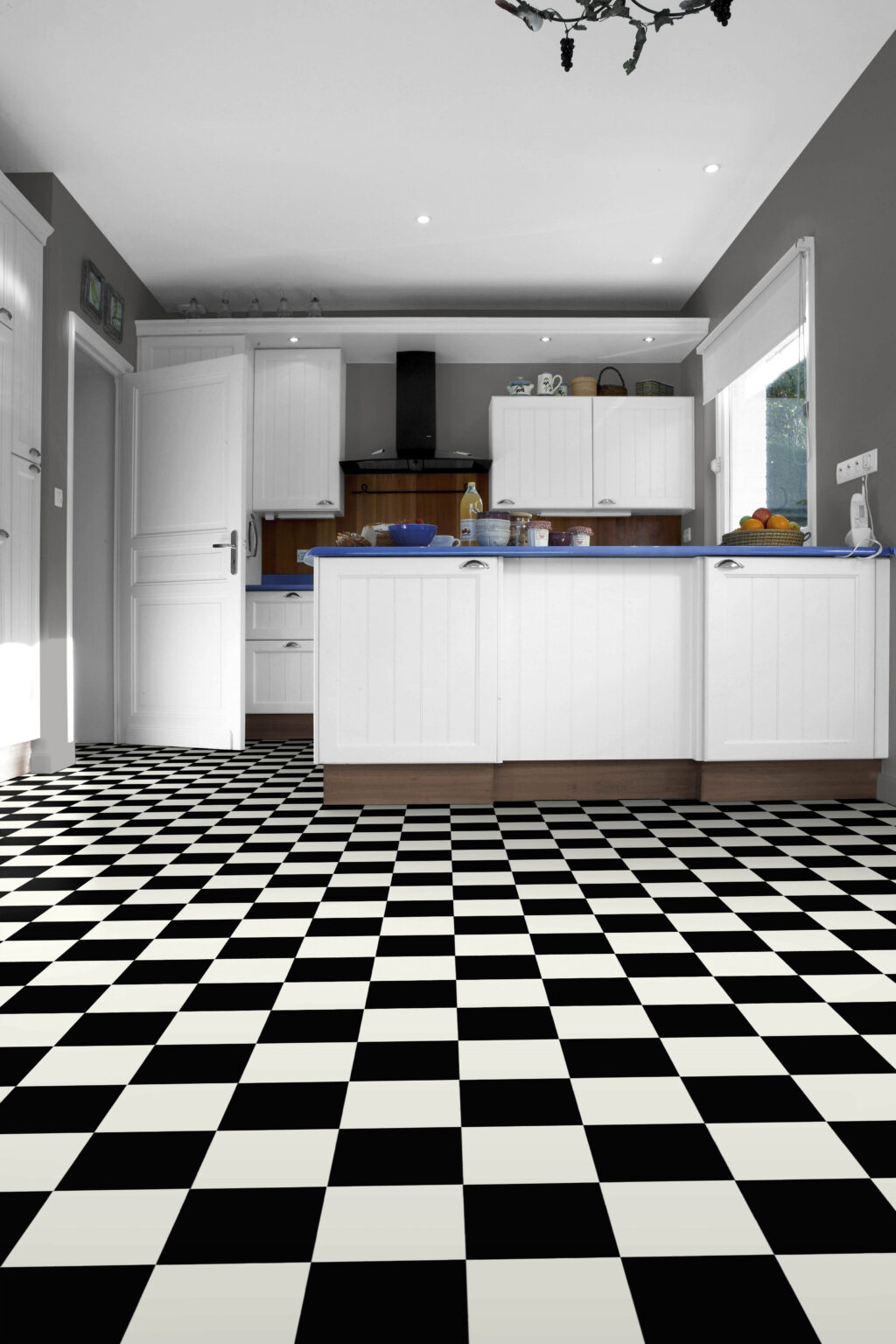
Converting over existing tiles
A floating floor can sometimes be installed over tiles if the surface is level, firmly bonded, and not hollow-sounding. The key issue is usually grout lines and lippage (height variation). Minor unevenness can often be addressed with levelling compound, but it needs assessment first.
Bare concrete or timber subfloor
Check:
- flatness (manufacturer tolerances vary, often measured over ~1.8m)
- moisture (especially ground floors, coastal areas, and humid regions)
- structural soundness (movement, squeaks, soft spots)
Moisture testing is particularly important in ground-floor rooms and in Queensland and tropical areas where moisture is a real factor. Your Floorworld consultant can advise on moisture testing and the right underlay or moisture barrier for your conversion.