
-

Dog-Friendly Flooring: What Actually Works in Australian Homes

Surani Sahabandu
12 min read  ·   Published: Apr 8th, 2026   ·   Updated: Apr 24th, 2026
redbook green carpet brand banner feltex.jpg

Around 40 percent of Australian households have dogs. That’s a lot of floors taking a lot of daily punishment from muddy paws from the garden, claws on hard surfaces, the occasional accident, grit tracked in from outside on every entry. If you have a dog, you already know that standard flooring advice doesn’t always account for what your house actually goes through.

Flooring for dog households isn’t a separate product category. It’s the same products, chosen more deliberately based on the specific things dogs do. Here’s an honest guide to what that looks like.

Browse a range of Pet-Friendly products available at Floorworld.
In this article

Quick answer: What’s the Best Dog-Friendly Flooring?

For most Australian dog households:

  • Hybrid flooring is the best all-rounder because it’s low-fuss, durable, and generally offers high water resistance.
  • Vinyl plank is a great alternative when you want a slightly softer feel underfoot and better acoustic comfort.
  • For bedrooms and quiet zones, carpet can still work if you choose the right fibre and construction (cut pile is usually safer than loop pile for claws).

What Dogs Actually Do to Floors

Most people focus on scratches, but in dog homes, the bigger story is usually this:

1) Grit and abrasion (the quiet floor killer)

Dogs bring in fine sand, soil and paving debris on their paws. Under foot traffic, it acts like sandpaper on almost any surface over time. This is why entry zones and hallways often show wear first.

2) Moisture exposure

Wet paws, water bowls, rainy days, and occasional accidents. Spills and wet footprints are usually manageable when cleaned promptly. The bigger risk is water left sitting for long periods or leaks that push moisture under the floor.

3) Claw contact

Active breeds will leave marks over time. Finish matters as much as floor type: matte and embossed surfaces hide marks better than high-gloss floors.

4) Concentrated traffic

Dogs follow the same routes every day: entry door → water bowl → favourite spot. That creates repeat wear down the same path, which is why durability and finish choice matter.

“Dogs don’t know about your floors. Choose flooring that doesn’t hold it against them.”

Hybrid Flooring: The First Recommendation for Most Dog Households

Hybrid flooring is often the simplest answer because it handles daily life well:

  • it’s easy to vacuum and damp mop
  • it’s generally designed for high water resistance
  • it’s stable underfoot through open-plan areas
  • many ranges have textures/embossing that help disguise everyday marks

What to look for when you’ve got big or active dogs:
Instead of chasing one magic spec, ask about:

  • surface durability / wear layer options
  • heavy residential suitability
  • warranties that suit high-traffic areas
  • finish type (matte/embossed tends to be more forgiving)
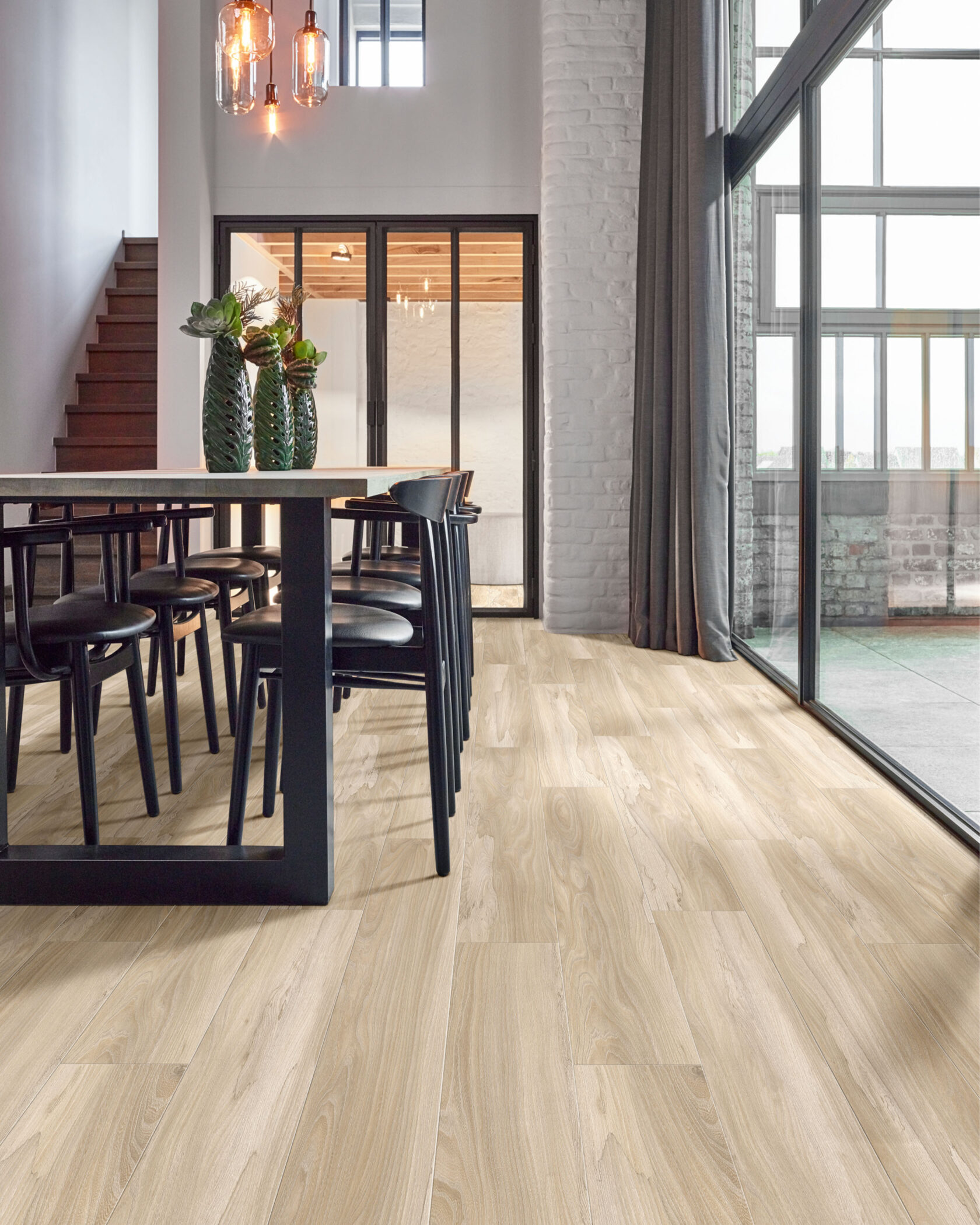
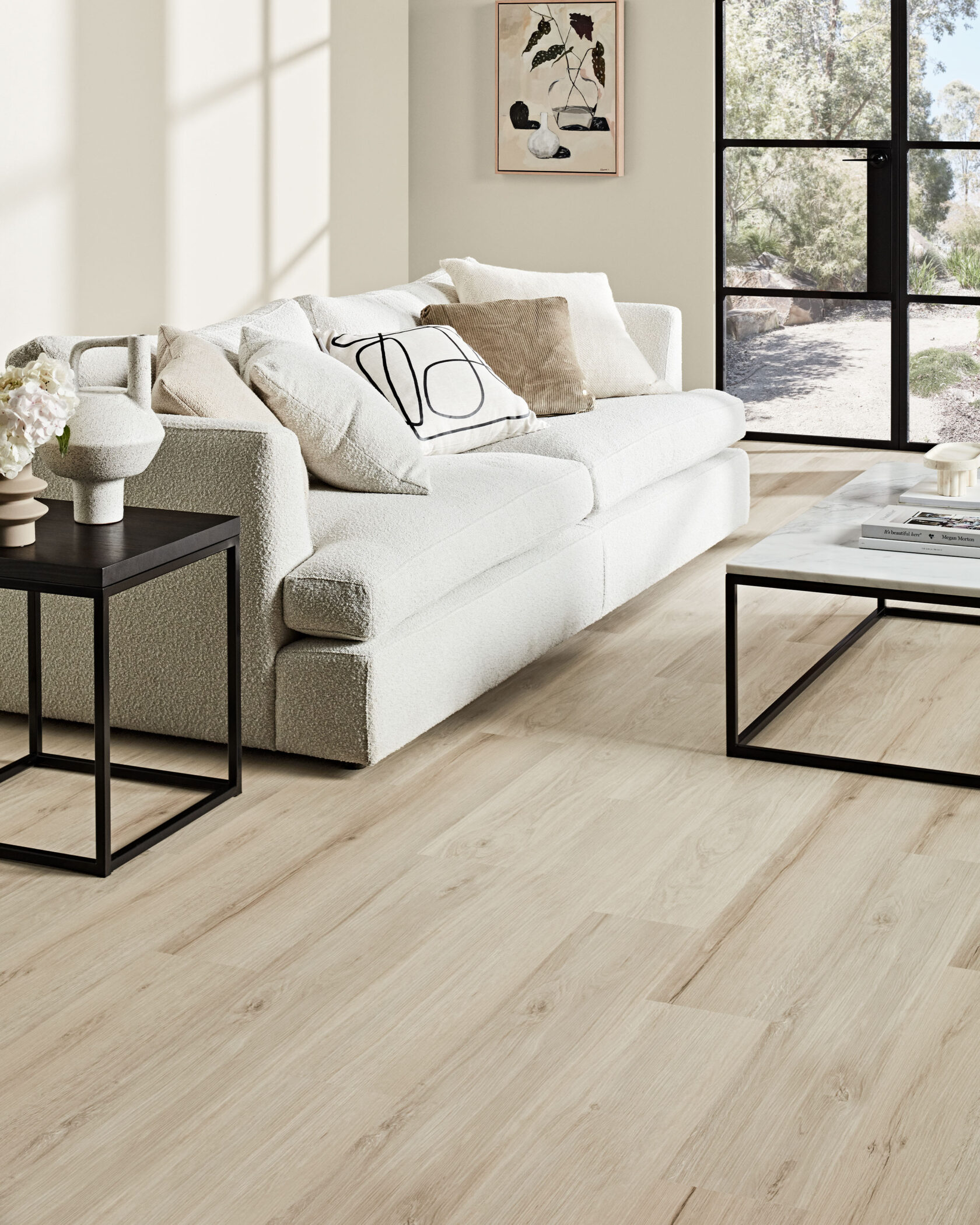
Hybrid flooring in living room with modern furniture

Vinyl Plank for Dog Households: Where It Fits

Vinyl plank is worth considering alongside hybrid when:

  • you’re in an apartment or multi-storey home and want softer acoustics
  • you want a slightly more forgiving feel underfoot
  • you have an older dog and comfort matters more than maximum rigidity

For high-moisture entry zones, both hybrid and vinyl plank are equally capable. The decision between them is more about feel underfoot and budget than waterproofing performance.

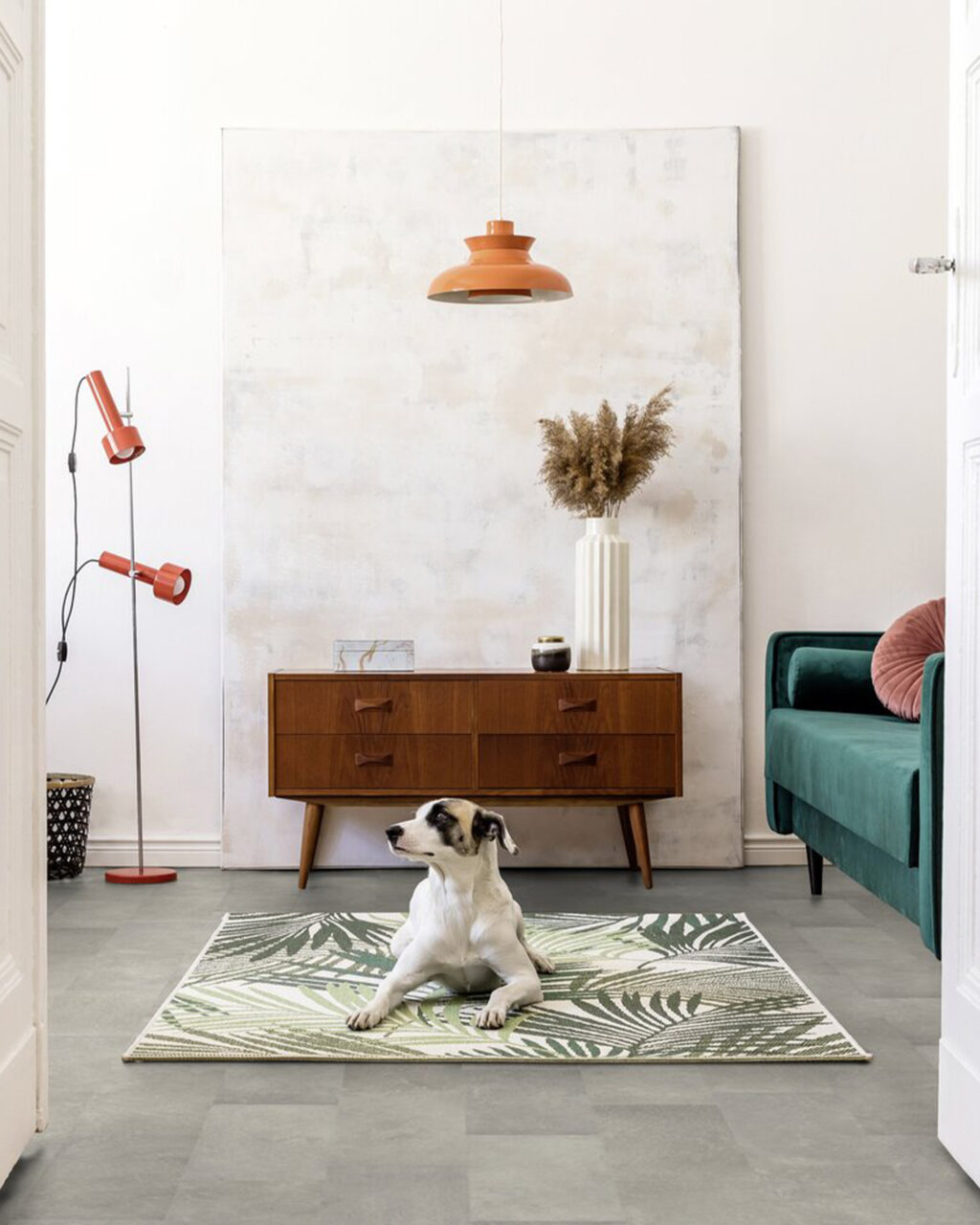
Vinyl Flooring in hallway with wide open window

Carpet in a Dog Household: When It Makes Sense

A lot of dog owners assume carpet and dogs don’t mix. The more accurate answer is: it depends on fibre and construction.

Where carpet can work well:

  • bedrooms and quieter areas where dogs sleep
  • upstairs homes where noise matters
  • households that want warmth and softness underfoot

Key notes for dogs:

  • Cut pile (especially twist) is usually safer than loop pile. Loop pile can snag on claws.
  • If accidents are a concern, choose fibres designed for stain resistance and follow the care routine.

A Real Paw Perfect Household

Mel and Tom from Geelong have two border collies and an open-plan home where the kitchen, dining and living areas all connect. After replacing carpet twice in six years, they wanted something that would genuinely last.

 They left with a hybrid plank through the main living areas flooring that was practical enough for the dogs but still warm enough that it still felt like home. Tom says the entry mat at the back door has done as much work as the floor itself.

A Room-by-Room Guide for Dog Households

Entry and hallway: Hybrid or vinyl plank. Choose a tone with natural colour variation that hides grit and hair between cleans. A walk-off mat at the exterior door is the single most effective wear-reduction step.

Living room and open-plan: Hybrid for durability and consistency across zones. Vinyl plank where acoustic comfort matters more than maximum rigidity.

Bedrooms where dogs sleep: Triexta or solution-dyed nylon carpet. Cut pile only. Mid-tones that hide hair between vacuum cycles.

Dining room: Hybrid or vinyl with a rug under the dining table. The rug handles the highest concentrated wear zone and is replaceable without replacing the floor.

Stairs: Plan this decision early. A forgiving carpet texture that won’t show every mark. Non-slip backing essential.

The Four Questions to Ask Before You Choose

From the Paw Perfect self-assessment guide used in Floorworld stores:

  • Is your dog mostly indoor or indoor/outdoor?

Outdoor dogs bring more grit, and grit drives wear.

  • Is moisture risk high at home?

Puppies, seniors, water-bowl splash zones. If yes, prioritise flooring designed for high water resistance and keep clean-up quick.

  • Is slipping or noise a concern?

Older dogs, long hallways, apartments. Consider texture, rugs/runners, and acoustic planning.

  • What’s the household like day to day?

Busy family life creates a different wear profile than a quiet home with one older dog.

For more help on choosing the best flooring for your pets, grab a copy of our Pet Flooring eBook.

Dog-friendly flooring do’s and don’ts

Do:

  • use walk-off mats at entries (biggest wear reducer)
  • keep nails trimmed (best scratch prevention)
  • choose matte/embossed finishes for a forgiving look
  • add felt pads under furniture legs and protect high-traffic dog routes

Don’t:

  • assume “high water resistance” means leaks don’t matter
  • skip regular vacuuming in entry zones (grit builds quickly)
  • choose very glossy finishes if marks will bother you

Questions We Hear in Store

Is any floor genuinely scratch-proof for large dogs?

No floor is scratch-proof, but some perform significantly better than others. Quality laminate at AC5 rating offers the highest raw scratch resistance of any residential flooring. The trade-off is that laminate is not fully waterproof. For households where both scratch resistance and water resistance are required, AC4-rated hybrid is the better all-round call.

How do I minimise scratch marks on hard floors?

Keeping claws trimmed regularly is one of the single most effective steps. Use a walk-off mat at every entry point to trap grit before it reaches the floor. Choose a matte or embossed finish that makes surface marks less visible. Felt pads under furniture legs prevent drag marks that compound claw marks over time.

Floorworld store front
See Paw Perfect flooring in person.
Visit your nearest Floorworld store or request a free measure and quote.

More Paw-Perfect Flooring inspiration

-
My list

Your saved products will appear here.
Add floors you love to compare and share with your nearest Floorworld store.