
Reviewed by Brett Talbot, National Sales and Operations Manager, Floorworld · Last reviewed [8 October 2026]
Reviewed by Brett Talbot, National Sales and Operations Manager, Floorworld · Last reviewed [8 October 2026]
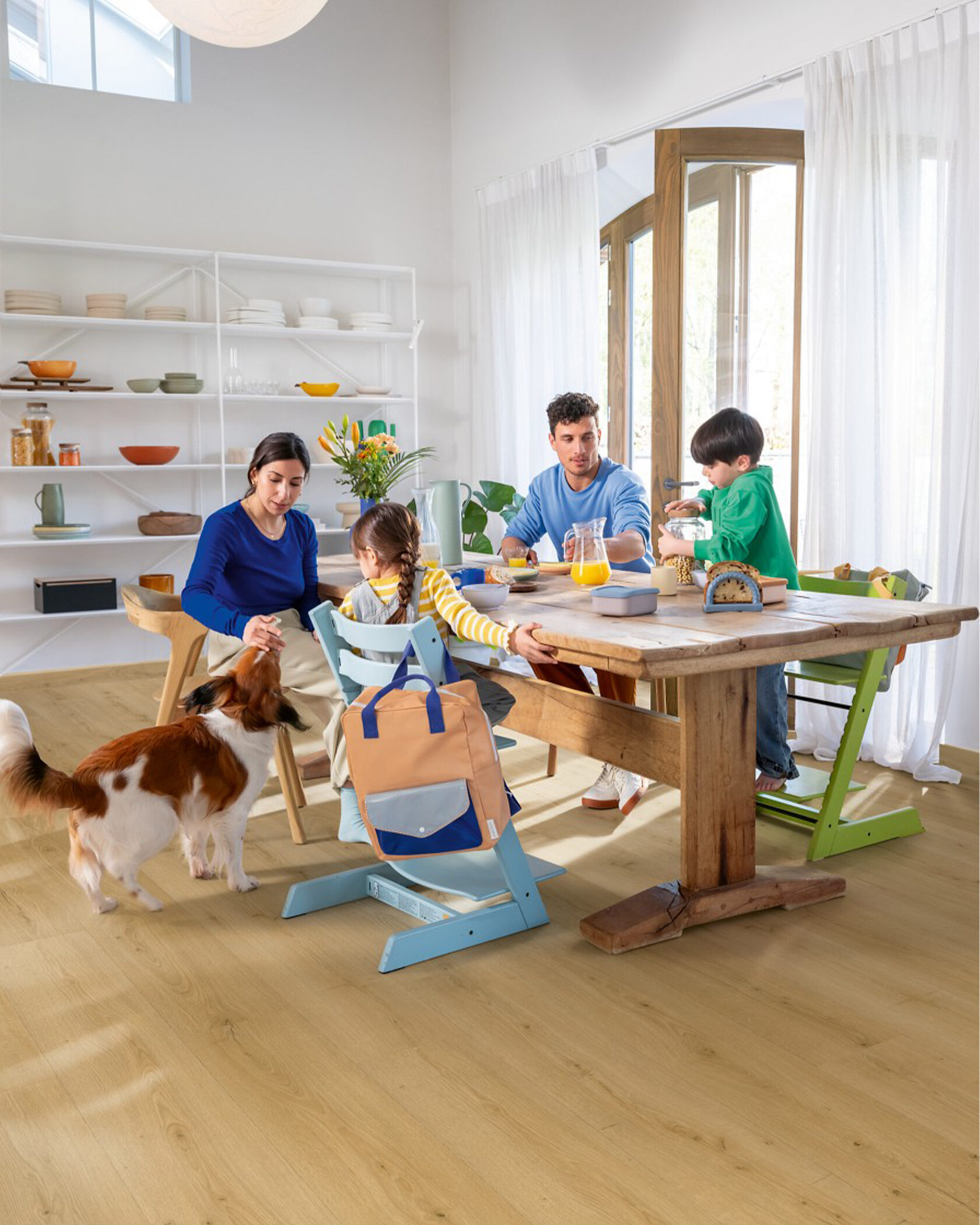
The language around water-resistance, waterproof and how that actually translates in a practical sense for your home can get a bit confusing.
Kitchens and bathrooms get wet in very different ways, so the right floor for one isn’t always right for the other. A kitchen deals with spills and the odd leak. A bathroom or laundry deals with water every day, and what you may not know is that there are clear Australian building rules underlying all these factors to be considered when choosing the right flooring for your spaces.
This guide explains why, what to check before you choose, and the questions worth asking your local Floorworld store.
Not quite, and the difference matters most in a bathroom. When a product says “waterproof”, it usually means the plank itself won’t swell or break down when it gets wet.
What the product can’t promise is what happens at the joins, the edges and the subfloor underneath. Water that gets through a click joint or around the edge of a room can sit unseen beneath the floor and cause damage.
That’s why we use the term water-resistant here at Floorworld. Sheet vinyl is the only option in this guide that’s laid as a continuous surface with sealed seams. Planks, however water-resistant the material, still have joins which you need to be mindful of.
For most kitchens, vinyl plank or sheet vinyl is the safest all-round choice, and you have more options than in a bathroom because Australia’s building code doesn’t class kitchens as wet areas. Everyday spills are easy for most hard floors. The real test is a slow leak, from a broken hose, a badly fitted tap or a pipe behind the wall, which can go unnoticed for days.
Vinyl plank is glued flat to the subfloor, quiet and slightly softer underfoot than rigid floors. It handles spills well. Being flexible, it can dent under point loads like chair legs or appliance feet, so use furniture protectors.
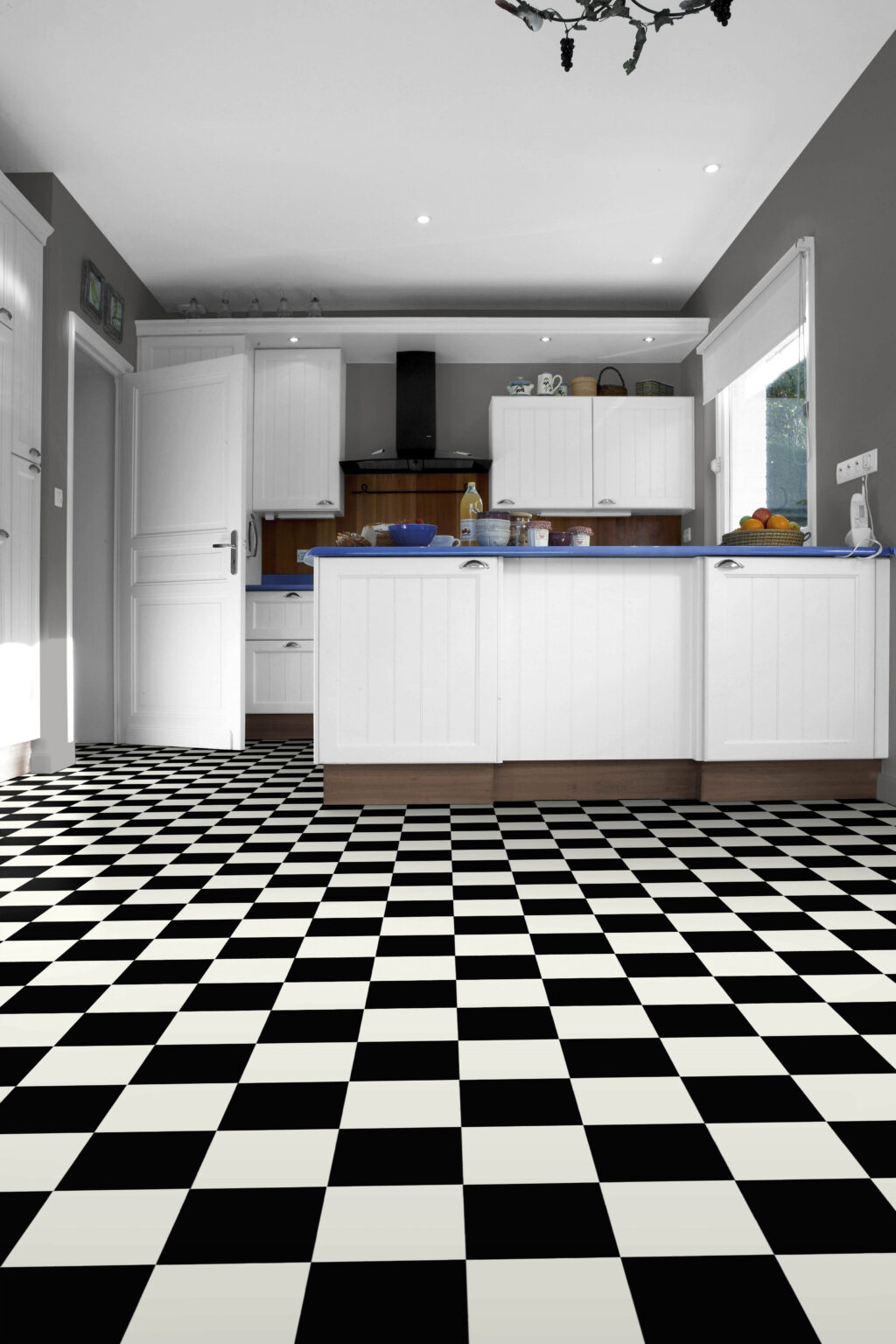
Sheet vinyl has the fewest joins of any option. It’s sold in rolls 3m or 4m wide, so many kitchens need one seam or none. It’s worth a look if your kitchen opens onto a laundry or you want to be extra cautious about water.
Hybrid has a rigid core that handles impact, like a dropped pot, better than flexible vinyl. It’s a floating floor, so it’s laid around your cabinetry and island bench with expansion gaps, not underneath them. Godfrey Hirst, for example, specifies at least 10mm gap. Manufacturers also limit very heavy furniture, such as again Godfrey Hirst’s limit at 200kg, which need to be considered. Wipe up spills promptly.
Water-resistant laminate can work in a kitchen, but it isn’t our first recommendation and your floor will need more care with spills and leaks than vinyl or sheet vinyl. More on that below.
Most water leaks come from broken hoses or incorrectly fitted taps. Slow leaks behind plaster can often cause more damage than obvious leaks, as they can get under the floor and cause massive issues before they’re discovered. They happen with all kinds of flooring, but often travel further in floating floors, as there is a gap under the flooring for water to move around.
Rachel’s honest take is that there is not much can stop a leak from ever happening, so check your home and contents insurance covers this type of damage before you need it. The only thing you can do is be mindful and observant to address any issues before they cause significant damage.
Not sure what’s under your current kitchen floor? It affects which options will work, so mention it when you talk to your local Floorworld store.
For most bathrooms, it’s sheet vinyl. It’s laid in one continuous piece with sealed seams, and the edges can be turned up the wall or finished neatly at the bath and vanity. That’s why the Australian Standard for wet areas lists it as an accepted floor finish, alongside tiles.
What’s a floor waste? It’s a drain set into the floor itself, usually a small round or square grate, separate from the drain inside your shower. It’s there to carry water away if a basin, bath, toilet or washing machine overflows. Not every bathroom or laundry has one, and it changes which floors you can use.
Why not vinyl plank or hybrid? Their joins aren’t sealed, so they aren’t on that accepted list (QBCC). Using them in a bathroom generally needs sign-off from a building certifier. Manufacturers also commonly rule them out in rooms with a floor waste (a drain in the floor) and inside showers.
A quick check: does your bathroom have a floor waste? If it does, planks are usually off the table, and sheet vinyl or tiles are the way to go.
The shower area needs a purpose-made wet-area system, installed over proper waterproofing by a qualified professional. Ask your store what’s suitable for your layout.
“The mistakes I see most are incorrect selection of flooring and failures in waterproofing. A product that is fit for purpose is essential. You can’t run a floating floor into a stepless shower.”
Treat a laundry like a bathroom. Australia’s building code classes laundries as wet areas, and many have a floor waste. Sheet vinyl is the first choice for the same reasons: continuous surface, sealed seams, easy to clean.
If your laundry has no floor waste and no shower, ask your store whether a plank product is suitable and what the manufacturer’s warranty allows.
Each suits a different room. None is the best choice everywhere.
| Sheet vinyl | Vinyl plank | Hybrid | |
| Construction | Continuous flexible sheet | Thin flexible planks, glued down | Planks with a rigid stone-polymer core, floating |
| Joins | Few, sealed or welded | Unsealed plank joins | Unsealed click joins |
| Feel underfoot | Soft, warm | Slightly softer, quieter | Firmer, closer to timber |
| Impact and dents | Can dent under point loads | Can dent under point loads | Handles impact better |
| Kitchens | Yes | Yes | Yes |
| Bathrooms and laundries | First choice | Generally not with a floor waste; check with your store | Generally not with a floor waste; check with your store |
| Typical cost | Varies by range | Lower | Slightly higher |
For an open-plan kitchen and living area, the choice between vinyl plank and hybrid comes down to feel, budget and how much impact the floor will take. For a bathroom or laundry, sheet vinyl is the safer pick.
Both can work in a kitchen, but neither is our first recommendation where water is a concern. Laminate needs more care than vinyl or sheet vinyl, and timber needs the most care of all.
Laminate has a wood-fibre core that can swell if water sits on it or gets into the joins. Water-resistant ranges give you more time, rated in hours, but spills still need wiping up straight away, and a slow appliance leak can still cause damage. It isn’t recommended for bathrooms or laundries, and standard laminate warranties often exclude them.
Timber reacts to moisture and can cup, swell or stain if water sits on it. In a kitchen it needs extreme care: wipe spills straight away, put mats at the sink and dishwasher, and keep the finish maintained. It isn’t recommended for bathrooms or laundries.
Love the timber look? Vinyl plank and sheet vinyl both come in realistic timber designs, with far less risk around water.
It depends on the product, so ask for its slip rating before you choose a bathroom or laundry floor. In Australia, flooring is tested wet and given a P rating from P0 to P5; the higher the number, the more grip. Industry guidance commonly points to P3 for wet areas.
Matte and textured finishes generally grip better than glossy ones. Slip resistance matters most if young children or older family members use the room.
Even the right floor can fail if it’s installed or used outside the manufacturer’s conditions. Before you commit, check these:
When Rachel measures and quotes a wet area, she starts with how the homeowner needs the floor to perform. Only then does she match a product that’s fit for purpose to their budget and colour choice.
Sometimes, but it isn’t the standard option. Plank joins aren’t sealed, so planks aren’t on the accepted list of wet-area floor finishes, and using them generally needs certifier sign-off. Manufacturers commonly exclude rooms with a floor waste and shower areas. Sheet vinyl is the safer choice.
Sheet vinyl or tiles. Both are accepted wet-area floor finishes, and sheet vinyl can be finished neatly around the floor waste and up the walls.
Often, if the tiles are sound, flat and well bonded. Godfrey Hirst’s hybrid instructions, for example, allow installation over ceramic tiles when grout lines are no more than 3mm wide and 3mm deep; deeper grout needs levelling first. Your store will check the floor during the measure and quote.
You can, but check the warranty first. Manufacturers commonly make professional installation a condition; Godfrey Hirst’s hybrid warranty, for example, applies to floors professionally installed to its instructions. In a bathroom or laundry, waterproofing must also meet building rules.
In a bathroom or laundry, yes. Building rules require waterproofing under the floor regardless of the floor covering.
Not anymore. Current sheet vinyl ranges include realistic timber and stone looks. Ask to see samples at your local store, or browse sheet vinyl.
About the reviewer
Brett Talbot is National Sales and Operations Manager at Floorworld, with 25 years’ experience in the flooring industry across multiple roles and organisations. He reviewed this guide for product suitability wording, installation considerations, and claims about water resistance and wet-area suitability. Last reviewed [8 October 2026].
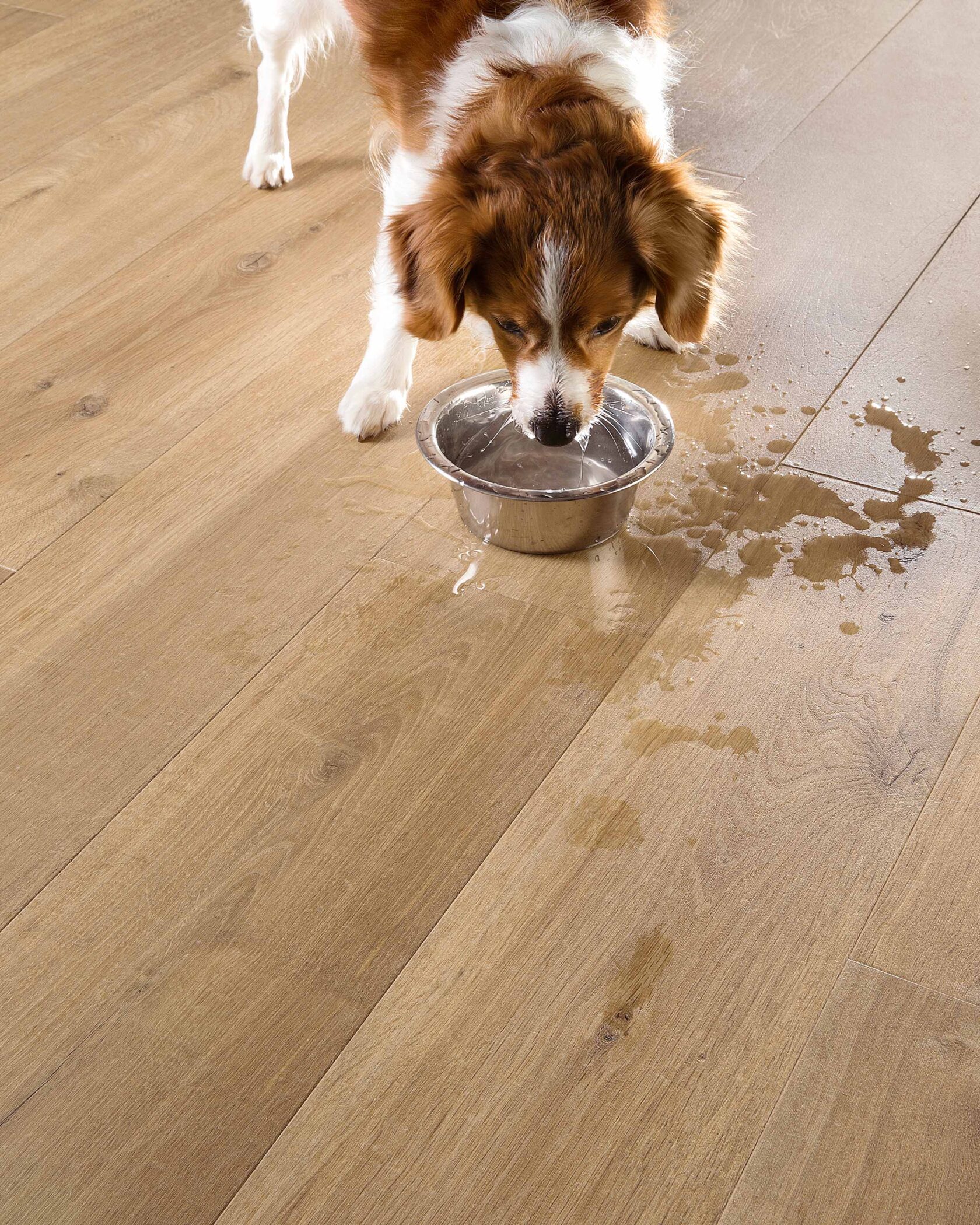
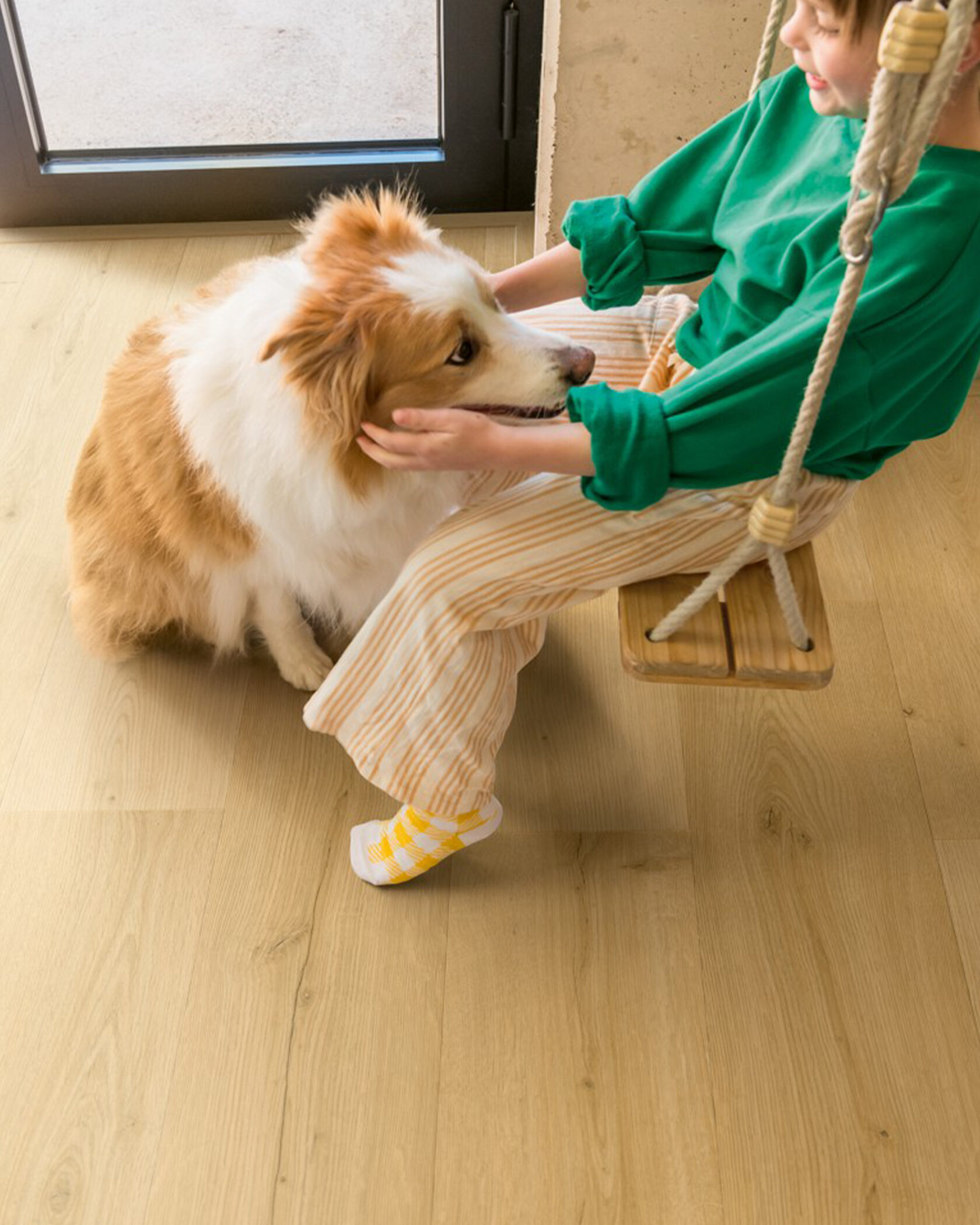
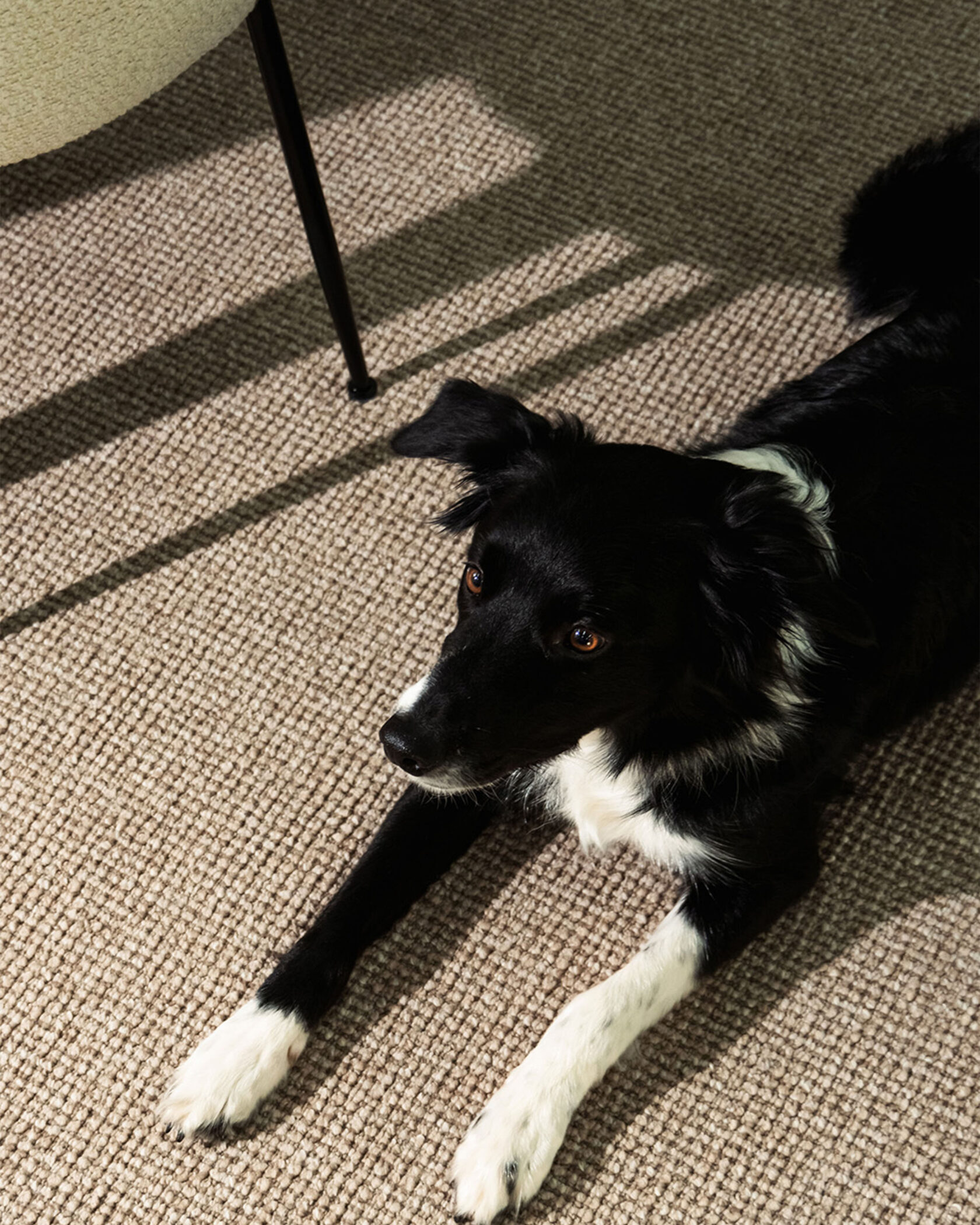
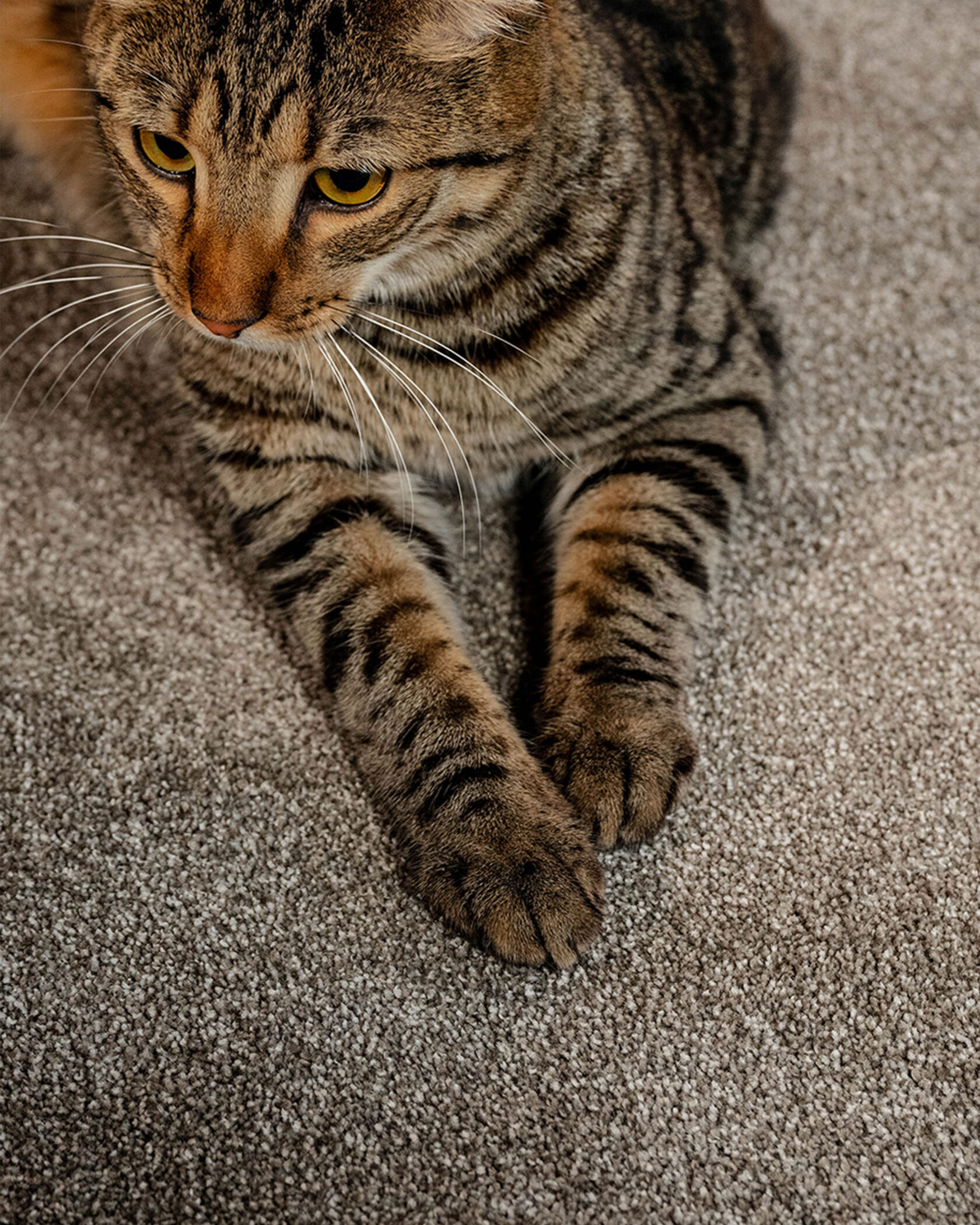
If you have a dog or a cat, you already know the floor takes a beating. Muddy paws from the backyard. A water bowl tipped over. Claws that skid on every hard surface. The odd accident that needs dealing with fast.
None of that means you have to compromise on having a home you’re proud of. It just means you need to be a bit more deliberate about which floor you choose. Get that right and you won’t spend the next decade wincing every time your dog runs inside.
This guide walks you through what actually matters, which flooring types are worth considering, and what to watch out for. By the end, you’ll have a clear enough picture to walk into your local Floorworld store and have a useful conversation.
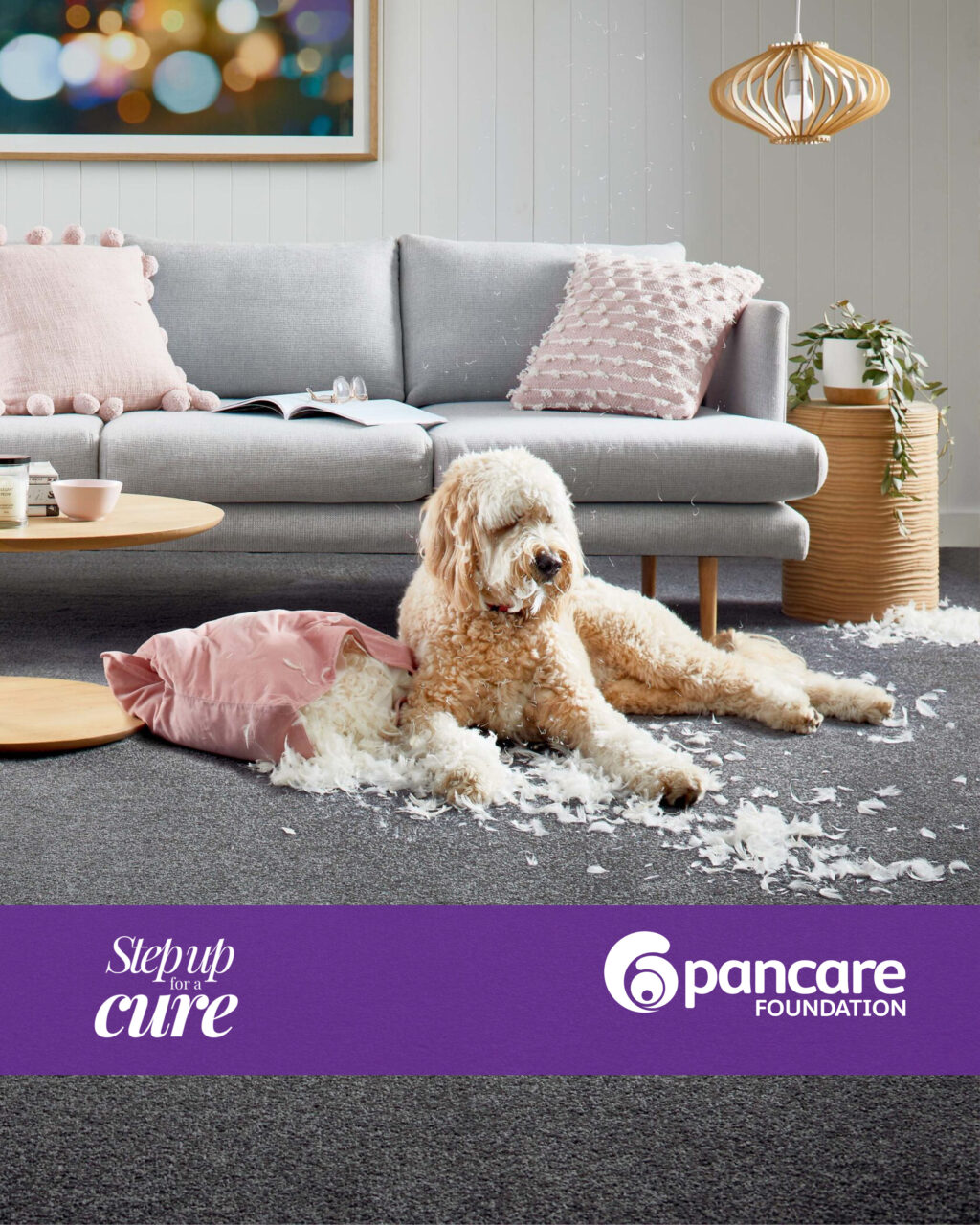

Before you look at products or colours, it helps to think through what your floor actually needs to deal with. For a pet household, it comes down to four things.
Use this as a starting point. Your Floorworld team can narrow it down further once they know more about your home and your pets.
| Hybrid | Vinyl / LVP | Timber | Carpet (SDN) | |
| Scratch resistance | Excellent | Very good | Varies by species | Not applicable |
| Handles moisture | Yes | Yes | Needs fast cleanup | No |
| Accident cleanup | Wipe and done | Wipe and done | Act immediately | Difficult |
| Pet hair removal | Easy | Easy | Easy | Traps hair |
| Odour resistance | Good | Good | Moderate | Absorbs odour |
| Comfort underfoot | Good | Comfortable | Firm | Very soft |
| Noise from running | Low to moderate | Low | Noticeable | Silent |
| Overall for pets | Best choice | Strong choice | With care | Limited use |
SDN = solution-dyed nylon. These are general ratings. Specific products may vary. Ask in store for guidance.
Hybrid has become the go-to for pet households for good reason. It looks like timber or stone but it’s built around a rigid core that handles moisture, resists scratches, and cleans up easily. It works in kitchens, living areas, bathrooms, and anywhere else in the home.
It’s also stable in the temperature swings that Australian homes go through in summer, which matters for a floor that needs to stay flat and tight over time.
Quick-Step is one of the brands Floorworld stocks, with hybrid options designed for busy households. Ask your store team to show you the range and help you match the right product to your situation.
LVP does most of what hybrid does, often at a lower price point. It handles moisture well, resists everyday scratching, and cleans easily. It’s a bit softer underfoot than hybrid, which some pet owners actually prefer if they have older dogs with sore joints.
The main thing to watch is quality at the lower end of the range. Cheaper LVP has a thinner protective layer and won’t hold up as well under sustained claw contact. Ask about the wear layer when you’re comparing products.
Timber is a beautiful floor and it can absolutely work in a pet household, but you need to choose carefully. Australian hardwood species are tougher than most, and a matt or satin finish will hide minor scratching far better than anything glossy. A gloss surface acts like a mirror for every tiny mark.
What timber can’t do is handle moisture the way hybrid or vinyl can. If your dog has an accident or the water bowl tips over and you don’t get to it quickly, you risk staining or warping. Near the back door, the feeding area, or anywhere accidents are more likely, timber carries real risk.
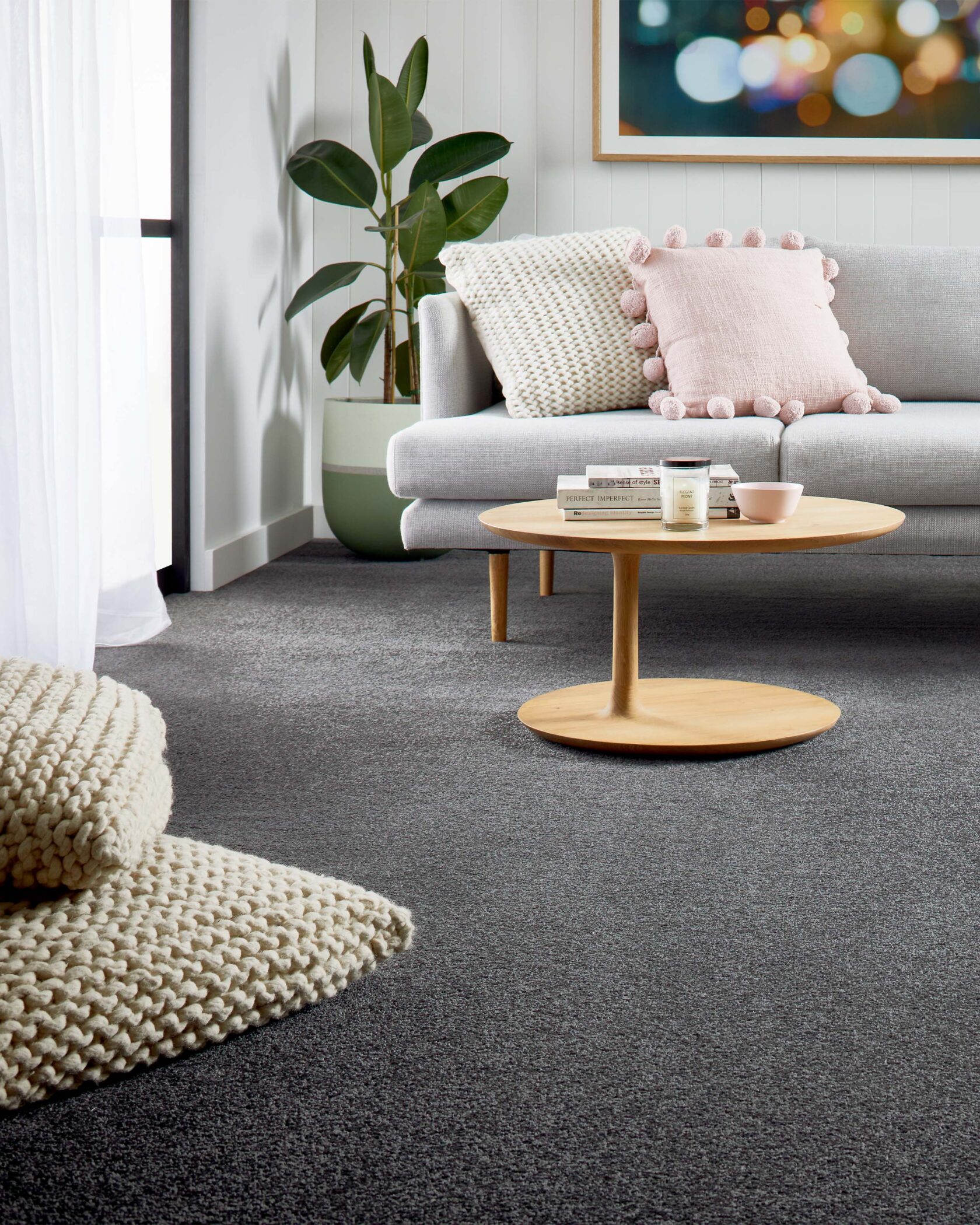
Standard carpet and pets are a difficult combination. Hair embeds, smells build up, and accidents are hard to fully remove. In high-traffic pet areas, it’s genuinely not the right choice.
Solution-dyed nylon changes that picture a bit. Because the colour goes all the way through the fibre rather than sitting on top, it’s more resistant to stains and easier to keep clean than standard carpet. If you want the softness of carpet in a bedroom or lounge where your pet spends time, SDN is the type to ask about. Your Floorworld team can show you what’s in the range.
Most flooring guides treat all pets alike. In practice, dogs and cats put different demands on a floor.
Dogs tend to cause more overall wear. Bigger breeds put more weight through their claws with every step. Active dogs that skid and change direction quickly create more stress on the surface than a calm, measured gait. And of course, accidents from a larger dog are harder to deal with than from a smaller one.
Cats are generally lighter and more precise in their movement, but their scratching can be very concentrated in specific spots. Near the base of a door, at a corner, or anywhere they’ve decided is a good surface to grip. Fine litter particles tracked from the litter tray also act like a mild abrasive on hard floors if they’re not swept regularly.
For both: trim their nails. It’s the single most effective thing you can do to reduce surface wear, no matter what floor you choose.
This comes up a lot in store conversations, and it’s worth raising before you commit to a colour.
Very pale floors show every dark hair. Very dark floors show every pale hair and every dusty footprint. Mid-toned, warm finishes are by far the most forgiving in a pet household. They hide daily shedding, minor marks, and the general evidence of real life much better than either extreme.
Finish matters just as much. A high-gloss floor looks stunning in a showroom and shows every single scratch within a week of having a dog on it. A matt or low-sheen finish in the same colour will look far better for longer. If you’re comparing options, ask to see the same product in both finishes side by side. It’s a much easier decision once you can see the difference.
Textured and wire-brushed surfaces also do a better job of hiding minor scuffs than smooth, flat ones. Many of the ranges at Floorworld come in textured finishes specifically for this reason.
Even the most resilient floor needs some basic care. These habits are the ones that make the biggest practical difference in a pet household.
People often arrive expecting to be shown products straight away. Most of the time, we start with a conversation first.
We’ll ask about your pets: what breed, how active, whether they’ve wrecked a floor before. We’ll ask about your home: which rooms you’re thinking about, whether you have a concrete slab or a raised timber floor underneath. We’ll ask how you live day to day.
From there, we can usually narrow it to two or three products that actually suit your situation. You’ll see physical samples and get a feel for how different wear layers compare. You can look at the same colour in matt and gloss side by side.
The free measure and quote covers the whole process, including a check of your subfloor so nothing gets missed. No pressure, no obligation.
Hybrid flooring is the most practical all-round choice. It handles scratching, moisture, and daily cleaning without any of the limitations that laminate or standard timber bring. Luxury vinyl plank is a solid second option, particularly at a lower price point. Both are available at Floorworld.
Nothing is completely scratch-proof. What hybrid does is resist everyday claw contact far better than most other hard floors. The thicker the wear layer, the better it holds up over time. Your store team can help you find the right weight of product for your household.
Yes, particularly luxury vinyl plank. It handles moisture well, is easy to clean, and resists everyday scratching. It’s also a bit softer underfoot than hybrid, which suits households with older or smaller pets. Quality varies at the lower end, so it’s worth asking your store team about the wear layer before you buy.
Yes, with the right choice. Standard carpet is difficult to keep clean and odour-free in a pet household. Solution-dyed nylon is a better option because the stain resistance goes all the way through the fibre. If you want carpet in any room, ask specifically about SDN options.
Hybrid and luxury vinyl plank. Both resist moisture, don’t hold onto pet hair, and clean up with a sweep and a mop. Timber can also be easy to maintain but needs the right cleaning products. Carpet takes the most effort to keep genuinely clean.
Go mid-toned and warm. Very pale or very dark floors show every hair and mark. A matt or low-sheen finish in a mid-range timber colour will look far more liveable day to day. Ask to see samples in both matt and gloss so you can compare before you decide.
This is one of the questions we get most often in store, and it’s a genuinely useful one to ask. Both are real timber floors. Both look beautiful. Both can last a very long time. But they behave quite differently in a home, and putting the wrong one down can cause real problems.
The good news is that the choice usually becomes clear once you know a few key things about how your home is built and where you live in Australia. This guide walks you through both options honestly, so you can make a confident decision.
It’s in the construction, not the surface.
Solid timber is exactly what it sounds like: a single piece of hardwood, milled from top to bottom. In Australia, you’ll typically find it in species like blackbutt, spotted gum, tallowwood, jarrah, and Sydney blue gum. These are dense, slow-grown hardwoods that develop character over time. Wear patterns, small variations, the way the colour shifts with light and age. That’s part of what makes them special.
Because the board is solid all the way through, it can be sanded and refinished multiple times over its life. Scratches, sun fade, and wear can be removed and the floor brought back to looking like new. Done properly, a solid timber floor from quality Australian species can last generations.
Engineered timber has a real hardwood veneer on top, bonded to a layered plywood core underneath. What you see on the surface is genuine timber. The difference is in the structure below it.
That layered core is what makes engineered timber more stable. Because the layers run in opposing directions, the floor resists the natural expansion and contraction that timber goes through when humidity and temperature change. The result is a floor that holds its shape reliably across a much wider range of conditions than solid timber can manage.
The thickness of the veneer on top varies between products. A thinner veneer has less scope to be sanded down the track. A thicker veneer gives you more options for refinishing over the floor’s life. It’s one of the more important questions to ask when you’re comparing engineered products in store.
This is where the conversation usually lands for a lot of customers, and it matters.
Solid timber was developed for homes built on suspended timber subfloors. In older Australian homes, typically those built before the 1970s, this was standard: a raised timber frame with the floorboards laid on top and air circulating underneath. Solid timber performs beautifully in that environment.
But most Australian homes built from the 1970s onward sit on a concrete slab. And concrete behaves very differently. It holds onto moisture. It conducts temperature. It moves with heat and cold. Solid timber laid directly onto concrete responds to all of that in ways that cause problems: boards can cup, crack, or gap over time.
This isn’t a flaw in the product. It’s a mismatch between a material and a substrate it wasn’t designed for.
Engineered timber was built to handle exactly this situation. The layered core tolerates the moisture and movement that comes with concrete subfloors, which is why:
If your home was built from the 1970s onward and you’re not sure whether you have concrete underneath, there’s a good chance you do. Your Floorworld team can help you work that out.
One of the most common things customers bring up when comparing the two is sanding. Solid timber can be sanded back and refinished multiple times, which means scratches and wear can be removed and the floor effectively reset to near-new condition. A qualified floor sander using a product like Bona’s professional refinishing range can do remarkable things with a tired solid floor.
Engineered timber can also be sanded, but the number of times depends on how thick the veneer is. A thicker veneer gives you more sanding cycles over the floor’s life. A thinner one may only allow a light sand. When comparing products in store, asking about veneer thickness is one of the smartest questions you can ask.
The practical reality for most customers is this: if you’re renovating to sell, or if you expect to update your home within 10 to 15 years, a quality engineered floor will look just as good at the end of that period as the day it was laid. The sanding advantage of solid timber tends to matter more if you’re planning to stay in the same home for 20 or 30 years and want to be able to restore the floor across that time.
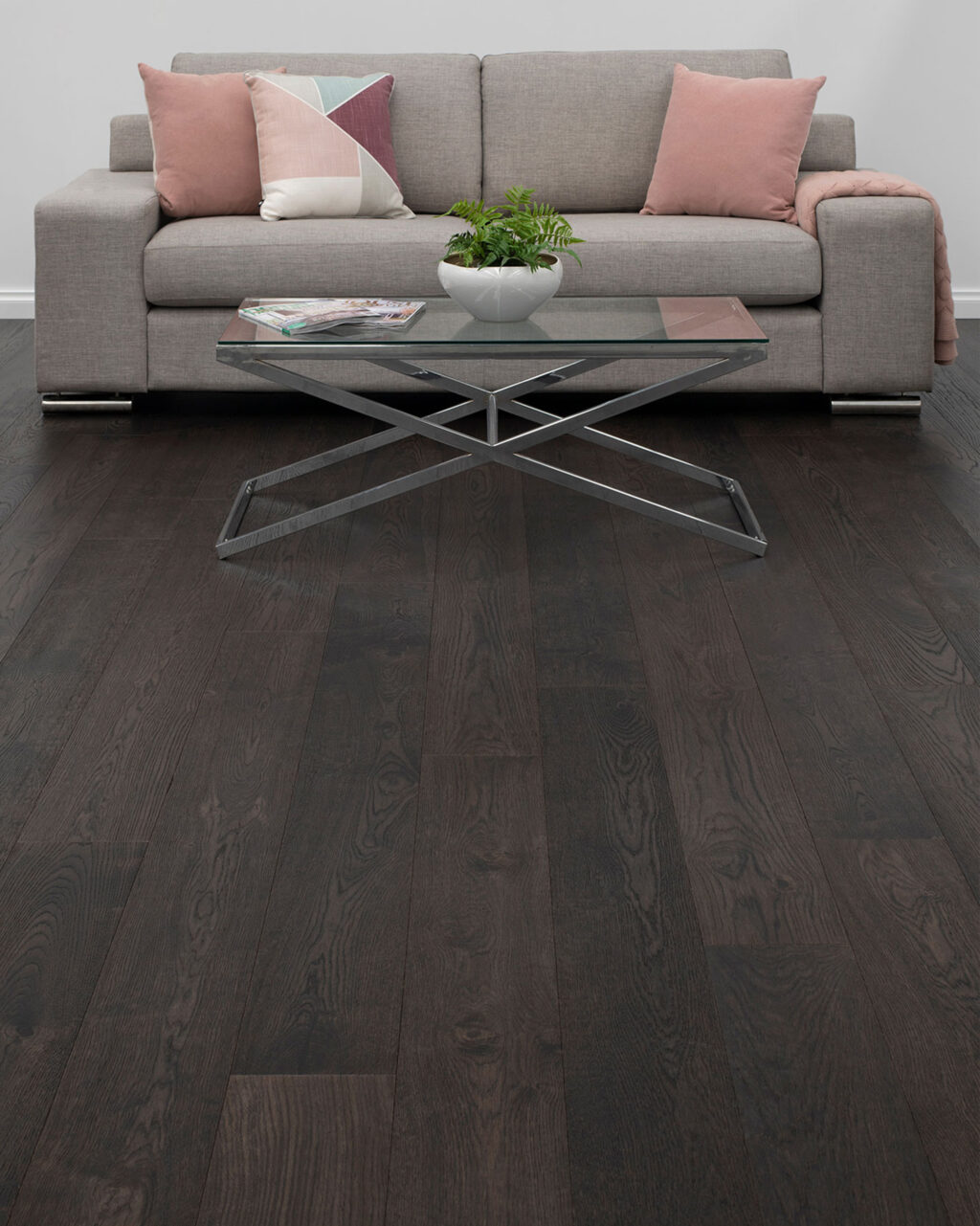
Both product types use the same timber species. Blackbutt, spotted gum, and tallowwood come in both solid and engineered formats. The grain, character, and natural variation are the same on the surface regardless of which construction method is underneath.
European oak has become one of the most popular choices in Australian interiors over the past decade. It’s almost exclusively available as engineered timber, because its properties suit that construction method and it performs far better on the concrete subfloors that are standard in modern Australian homes.
Australian Select Timbers, available through Floorworld stores, carries both solid and engineered options in Australian species. It’s a useful range to look at if you want to compare the two formats in the same species side by side.
There’s no simple answer because it depends on the species, the grade, and what’s required to prepare the subfloor.
As a general guide, solid Australian hardwood typically costs more per square metre than mid-range engineered products in the same species. High-end engineered products with quality veneers and cores can match or exceed solid timber pricing. Where it gets more nuanced is installation: solid timber over concrete often needs extra subfloor work, which adds to the overall cost. Engineered timber is more straightforward to install in most situations.
The practical point is that the gap in total installed cost is often smaller than people expect. A free measure and quote from Floorworld includes a subfloor assessment, which gives you an accurate all-in cost before you commit to anything.
| Solid timber | Engineered timber | |
| What it is | Single piece of hardwood | Hardwood veneer over layered plywood core |
| Handles moisture | Low. Clean spills immediately. | Moderate to high |
| Over concrete slab | Generally not suitable | Yes, with correct preparation |
| Sanding over time | Multiple times across its life | Depends on veneer thickness |
| Lifespan | Generations with proper care | Decades with proper care |
| Coastal / humid climates | Higher risk | Better suited |
| Cost | Generally higher | Mid to high range |
Choose solid timber if:
Choose engineered timber if:
For most customers we talk to, engineered timber ends up being the right fit. Not because it’s better in any absolute sense, but because most Australian homes are built in a way that suits it. If your home has the subfloor for solid timber and you’re prepared for the maintenance, it’s a genuinely exceptional floor. It’s just that most of us don’t live in that situation anymore.
When you come in to look at timber flooring, we don’t start by asking what colour you like. We start by asking about your home.
Subfloor type. Climate zone. Whether you have pets or children. How much maintenance you’re genuinely prepared to do. From the answers to those questions, we can usually get you down to two or three options that are actually right for your situation.
You’ll see both product types side by side. You can feel the difference between a thin veneer and a thicker one. You can compare the same species in solid and engineered format. And you can ask questions about specific products from Australian Select Timbers or any other supplier we carry.
The free measure and quote includes a subfloor check. No pressure, no obligation. Most customers leave with a clear answer.
Solid timber is a single piece of hardwood all the way through. Engineered timber has a real hardwood surface bonded to a layered plywood core. Both look identical on top. The difference is how they behave when exposed to moisture and temperature changes, and that determines which one suits your home.
Yes. It’s designed for it. Engineered timber can be glued or floated over a concrete slab, provided the slab is level and properly prepared for moisture. Solid timber generally can’t be laid over concrete without significant additional work and risk. For most Australian homes built from the 1970s onward, engineered timber is the right choice for this reason alone.
It depends on how thick the veneer is. Thicker veneers give more sanding cycles over the floor’s life. Thinner veneers have less scope. When comparing products in store, asking about veneer thickness is one of the most useful questions you can ask.
Both solid and engineered timber will show scratches from pet claws over time. The species makes a bigger difference than the construction method: Australian hardwoods like spotted gum and blackbutt are naturally tougher and hold up better. A matt finish also hides minor surface wear far better than gloss. Your store team can point you toward the more practical options.
Engineered timber, clearly. Coastal humidity causes solid timber to swell and gap in ways that engineered timber handles much better. If you live near the coast or in a high-humidity area, engineered timber is the safer choice.
Yes. Both solid hardwood and engineered timber are available across our stores, in a range of Australian and imported species. Availability varies by location, and Australian Select Timbers is one of the brands you’ll find across the network. Your local store team can show you what’s in stock and help you compare.
| PUBLISHING NOTES
Brands: Australian Select Timbers, Quick-Step, Heartridge |
Australia Day is a good reminder to buy local, but buying Australian-made isn’t just a once-a-year feel-good moment. If you’re spending real money on flooring, you want the confidence that you’re getting quality, sensible lead times, and support you can actually access if you ever need it.
This guide is a practical one. I’ll explain what “Australian made” means for flooring, how to check origin claims, why it matters, and which Australian manufacturers to look for when you’re shopping at Floorworld.
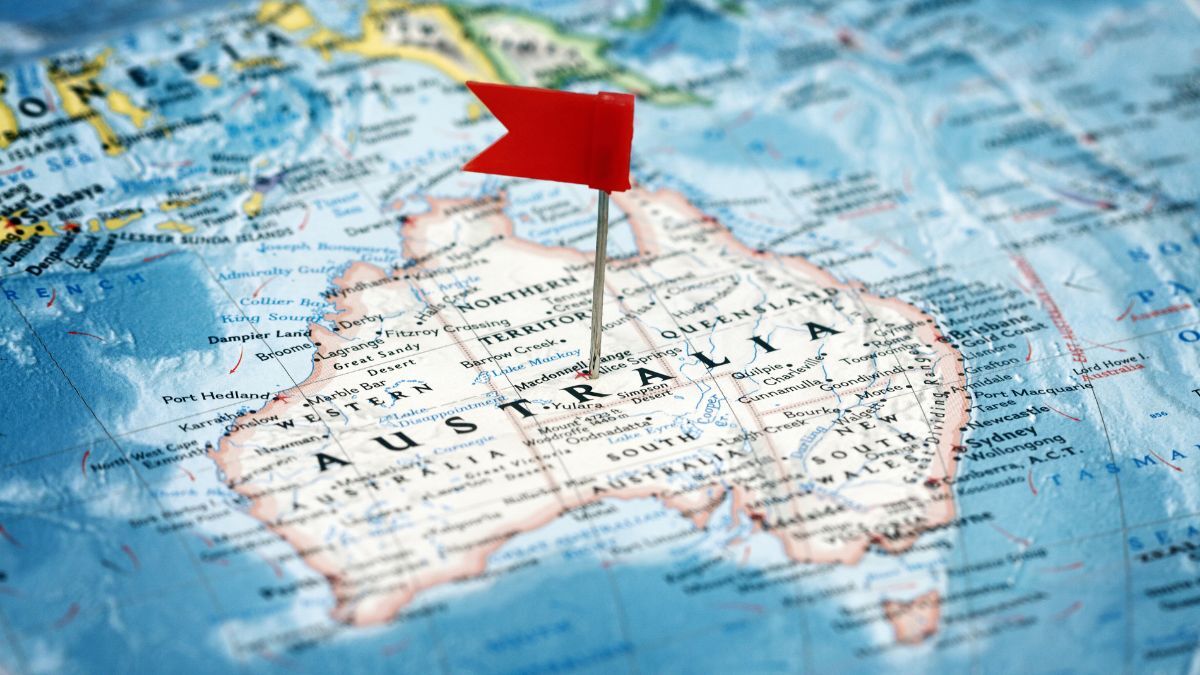
This is where people get tripped up, so it’s worth clearing up early.
The ACCC explains that the Australian Consumer Law doesn’t require country-of-origin information for non-food products. Flooring falls into that bucket. ACCC
So if you don’t see an origin label on a flooring box, it doesn’t automatically mean it’s imported or hiding something. It can just mean the brand hasn’t chosen to label it.
If a business says, “Made in Australia” (or anything that implies it), that becomes a country-of-origin representation, and it must not be false, misleading or deceptive. ACCC
The ACCC’s guidance also explains that “made in” is linked to where a product’s substantial transformation happened.
When you’re researching flooring (or you’re in-store), do this:
Simple, repeatable, and it doesn’t rely on any one label.
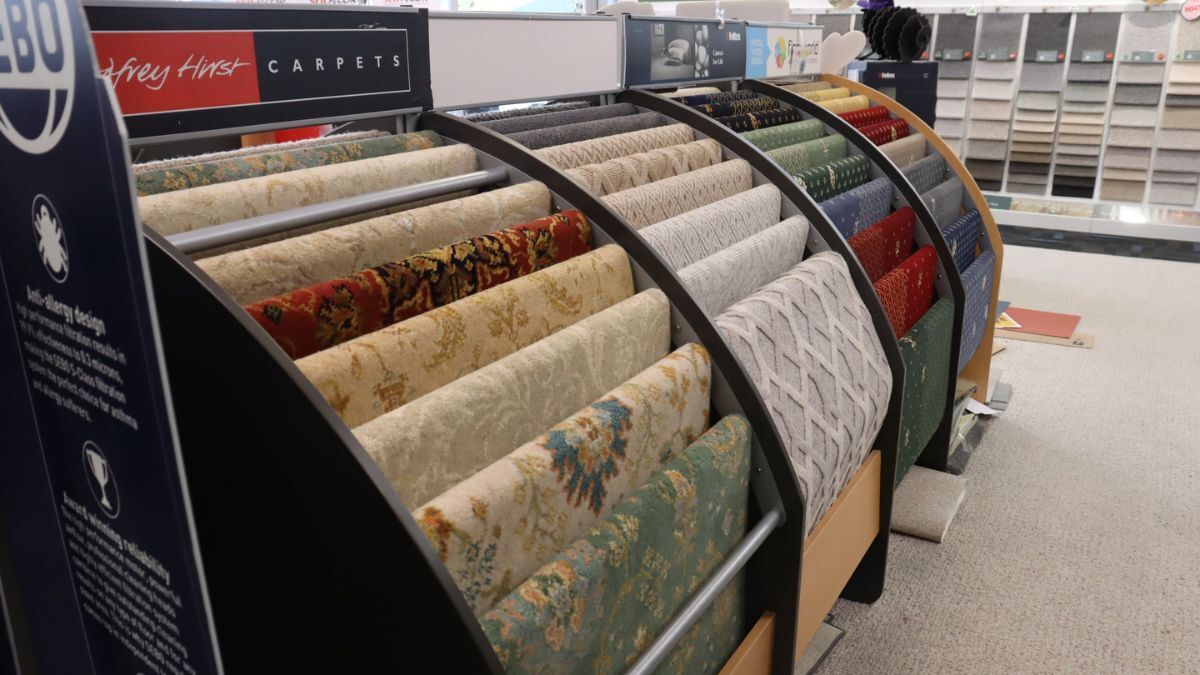
This isn’t a niche preference. In 2024, Roy Morgan found 86% of Australians say it’s important to buy Australian-made. Roy Morgan
And in more recent reporting, Roy Morgan put support at 95%, which tells you the sentiment hasn’t faded. Roy Morgan
In the Australian Made Campaign summary of that Roy Morgan research, 67% said they often or always buy Australian-made, and 35% said they’re buying more now than before. Australian Made
Flooring is a big, awkward, high-stakes purchase. If something goes wrong, you want answers quickly.
Australian manufacturing and supply can help with:
Sustainability gets thrown around a lot, so here’s the flooring-specific version.
A longer-lasting floor means fewer replacements. That reduces material use and waste over time. With flooring, durability is sustainability in plain clothes.
If you want something credible that goes beyond marketing claims, the Environmental Certification Scheme (ECS) is an Australian program administered by the Carpet Institute of Australia. They describe it as evaluating products across their lifecycle, from raw materials through to disposal. Carpet Institute
That’s especially useful for commercial clients, architects and designers who need documentation, but it can also help homeowners who want a clearer comparison tool.
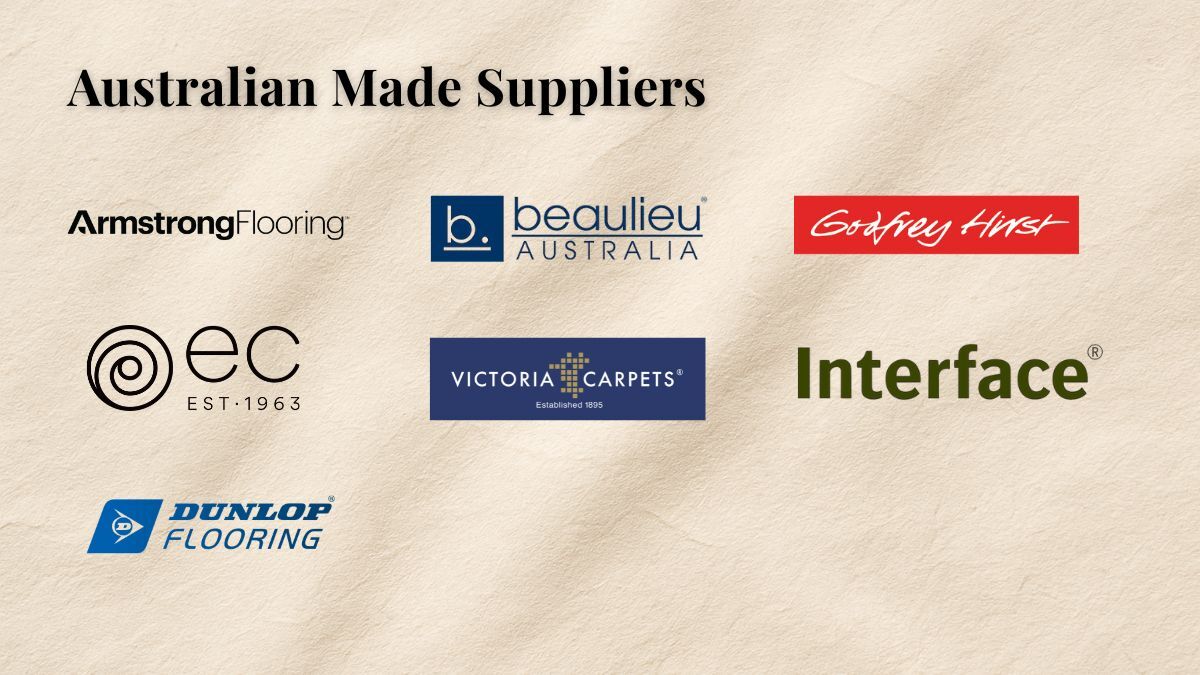
Armstrong is Australia’s only manufacturer of commercial sheet vinyl flooring, and it has been manufacturing in Australia since 1969. Armstrong Flooring
Godfrey Hirst has multiple manufacturing facilities in Geelong, Victoria, and is a major employer of the local community. Godfrey Hirst
Beaulieu has been manufacturing flooring since its time as Sterling Carpet Mills in Queensland since 1973. Beaulieu
Victoria Carpets manufactures carpet at its Dandenong plant in Victoria. Victoria Carpets
EC Carpets has been manufacturing its carpets at a state-of-the-art facility at Lonsdale in South Australia since 1963. EC Carpets
Interface has manufactured modular carpet tiles locally in south-west Sydney since 1971. Interface
Dunlop has been proudly manufacturing underlay in Australia since 1972. Dunlop Flooring
Some brands manufacture locally, but not every range is necessarily made in Australia. If “Australian-made” is a priority, confirm the manufacturing location for the exact product you’re quoting or simply ask your local Floorworld store for more details. The ACCC is clear that origin claims must not mislead. ACCC
Step 1: Pick your category
Carpet, underlay, resilient, or commercial carpet tile. You’ll narrow choices faster and avoid comparing apples with oranges.
Step 2: Visit your nearest Floorworld store
This is where you can compare samples properly, talk through your room use, and confirm which ranges are manufactured in Australia.
Step 3: Request a measure and quote
Flooring cost isn’t just the product. A quote helps you plan for prep, removal, underlay, transitions, and installation. It also prevents surprise costs that may come up.
If you’re searching “Australian made flooring near me”, here’s the shortcut: go in-store with a couple of photos of your space and ask two questions:
Whether you’re in Melbourne, Sydney, Brisbane, Perth, Adelaide, or the Sunshine Coast, this keeps the decision clear and avoids assumptions.
For non-food products, the ACL doesn’t require origin labelling. But if a business makes a country-of-origin claim, it must be clear, truthful and accurate. ACCC
The ACCC explains that “made in” claims relate to where the product’s substantial transformation occurred. In other words, it’s about where the final meaningful manufacturing step happened, not necessarily where every component originated.
Participation in certification marks and programs can be voluntary. The key is verifying the manufacturer’s stated production location and confirming it at the product/range level. Australian Made
Not automatically. Sustainability depends on lifecycle impacts, durability, and manufacturing practices. Programs like the Carpet Institute’s ECS assess products across lifecycle stages and can provide a more credible comparison. Carpet Institute
Check the manufacturer’s published information, then confirm the manufacturing location for the exact range you’re choosing. Origin claims matter under consumer law, so you want them documented and specific.
Approximate Reading Time: 5 Minutes
Carpet installation costs in Australia can vary significantly, and that’s exactly why many homeowners and businesses feel unsure when comparing quotes.
Unlike products with fixed price tags, carpet installation is site-specific. The final cost depends on your home, your carpet, your subfloor, and the work required to install it properly. That’s why two properties of similar size can receive very different installation estimates.
This guide explains what affects carpet installation costs in Australia, what’s typically included, what’s often excluded, and how to avoid the most common (and costly) mistakes without relying on misleading “average prices”.
If you want clarity rather than assumptions for your next floor reno, then this guide is for you.
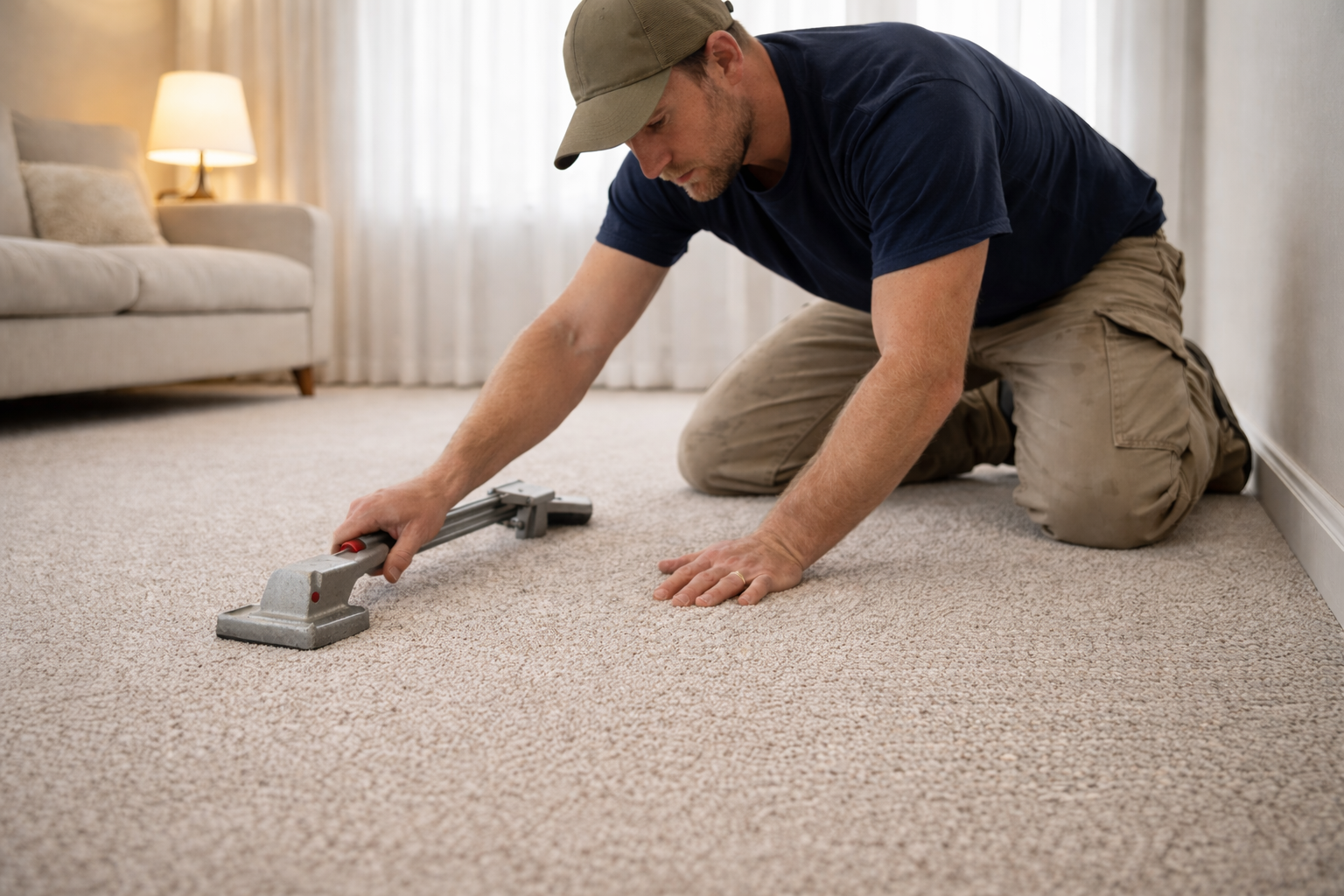
There’s no single standard cost for carpet installation in Australia, and understanding why helps make more confident decisions.
Installation costs vary because every home is different. Factors such as your carpet choice, subfloor condition, room layout, and preparation needs all influence how much work is involved to install your carpet properly.
These factors aren’t meant to complicate the process. They exist to ensure your carpet is installed safely, correctly, and built to last — which is exactly what professional installers focus on.
Not all carpets are installed the same way. Denser, heavier, or patterned carpets often require more time and precision, while simpler constructions are quicker to install.
Using the correct installation method for your specific carpet helps it look better, feel better underfoot, and perform well over time. This is why experienced flooring specialists always consider carpet construction before installation begins.
Your subfloor, the surface beneath your carpet, plays a major role in how well your carpet performs. Subfloors may be concrete, timber, or sheet flooring, and each behaves differently.
If a subfloor is uneven, damaged, or affected by moisture, it may need preparation before carpet is laid. Identifying this early helps prevent issues like rippling, movement, or premature wear, giving you peace of mind from day one.
Room shape affects installation time. Square rooms are quicker to install than long hallways, angled spaces, or open-plan areas with multiple joins. Stairs, in particular, require careful measuring, cutting, and finishing to achieve a neat and safe result.
An in-home measure allows installers to plan properly and deliver a cleaner, more professional finish.
Preparation is one of the most important and often overlooked steps in carpet installation. This can include removing old flooring, addressing minor subfloor issues, or selecting the correct underlay.
While preparation isn’t always visible once the carpet is laid, it has a big impact on how long your carpet lasts and how well it performs over time.
Installation requirements can also vary depending on where you live, the time of year, and installer availability. Seasonal demand and regional conditions influence how installations are scheduled.
This is where local knowledge matters. Floorworld’s locally owned stores work with experienced installers who understand Australian homes and conditions, helping ensure each installation is planned with care.
These factors aren’t obstacles; they’re part of ensuring your carpet is installed properly and performs as it should. That’s why professional installers rely on in-home measurements rather than quoting blindly per square metre.
Understanding what’s involved helps you compare quotes properly, ask the right questions, and avoid costly mistakes, which is exactly what the rest of this guide is designed to help you do.
Before diving deeper, here’s a quick snapshot of what matters most when it comes to carpet installation costs.
Understanding these key points helps explain why carpet installation costs can vary so much from one home to another.
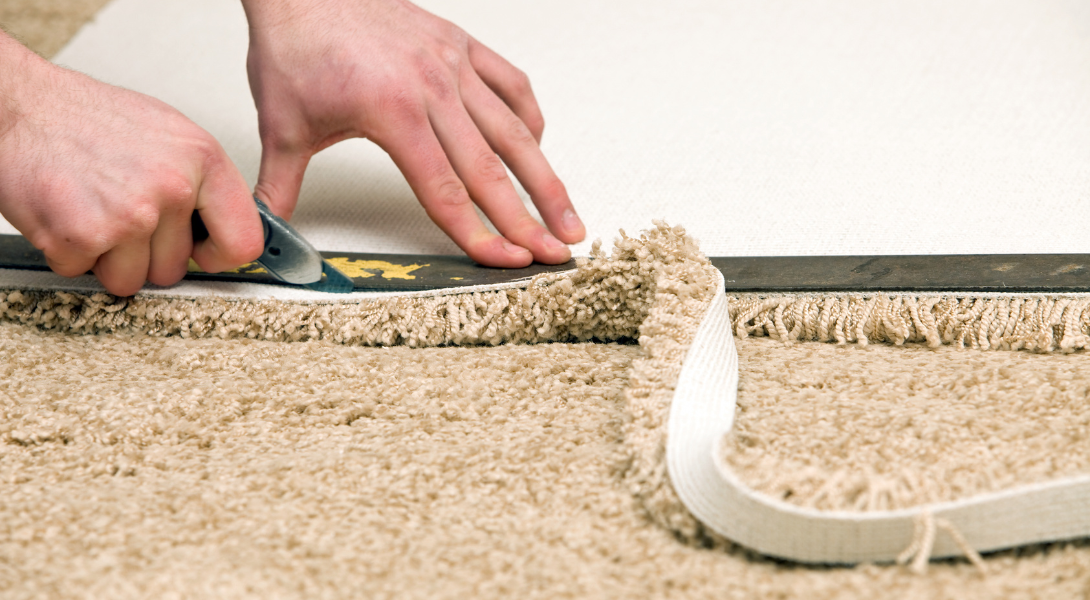
Many online articles publish “average” installation prices. While these can be useful as a rough reference, they rarely reflect real-world installations.
Australian homes vary widely in:
Professional installers price based on time, complexity, and risk, not just floor size. This ensures the carpet is installed correctly and performs as intended over the long term.
Let’s look more closely at the specific factors installers assess when quoting a carpet installation.
Rather than focusing on dollar figures, it’s more useful to understand what actually influences installation cost. These are the specific factors installers assess during an in-home measure, and why two homes of similar size can receive very different installation quotes.
Different carpets require different installation techniques.
For example:
This is often the first thing installers consider when assessing labour time.
Subfloor preparation is one of the most overlooked cost factors.
Common subfloors include:
Additional work may be required if the subfloor is:
Preparation takes time, and time affects cost. Subfloor condition is one of the most common reasons installation scopes change after a site visit.
Simple, square rooms are faster to install than:
More cutting increases labour requirements.
Stairs are one of the most labour-intensive parts of carpet installation.
Each stair requires:
Split-level homes also increase handling and access time. This is why stairs are often discussed separately during quoting.
Installation costs may increase if existing flooring needs removal.
Factors include:
Removal is not always included in basic installation quotes.
Underlay plays a critical role in comfort, durability, and warranty compliance.
Different underlay may require:
Incorrect underlay can shorten carpet lifespan and void warranties.
Installation costs may vary depending on:
These factors affect scheduling and labour allocation.
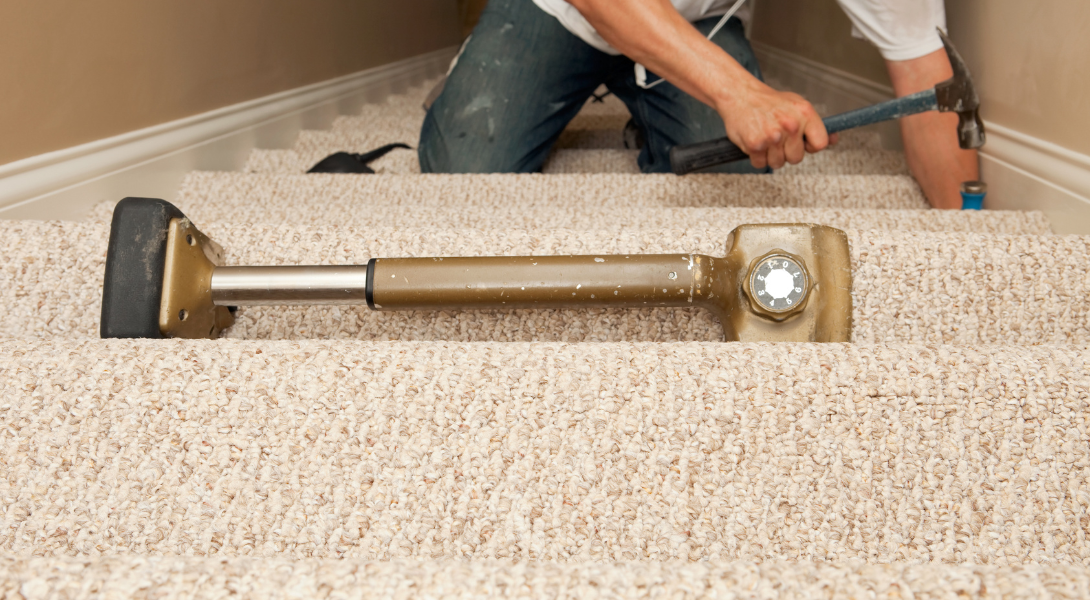
Understanding what’s included in a carpet installation quote helps avoid confusion and ensures everyone is on the same page from the start.
Professional installers don’t leave things out to be difficult; they separate tasks, so your quote accurately reflects what your home actually needs, rather than relying on assumptions.
In most standard installations, quotes will usually cover:
Carpet laying
Proper stretching and trimming
Basic edge finishing for a neat result
These are the core steps required to install carpet correctly and safely in a typical space.
Some aspects of installation depend entirely on your home’s condition and layout. Rather than guessing, experienced installers assess these during an in-home measure and discuss them upfront.
These can include:
Subfloor repairs or levelling, if the surface isn’t suitable.
Removal and disposal of existing flooring.
Stair installation requires additional labour and finishing.
Furniture moving, depending on access and timing.
Moisture barriers or treatments, where required.
Pattern matching or complex seams for certain carpet styles.
Separating these items isn’t about adding surprises; it’s about ensuring the work is done properly and that you’re only paying for what’s actually required.
Clear inclusions protect you from:
Unexpected costs later.
Installation shortcuts.
Warranty issues caused by skipped preparation.
By confirming what’s included during an in-home measure, you get a clearer picture of the scope of work and greater confidence in the final result.
At Floorworld, this transparent approach helps customers make informed decisions with no pressure and no assumptions.
Always ask what’s included in your quote and why. A professional installer will be happy to explain, and clarity at the start leads to a smoother installation experience.
Many installation issues don’t appear immediately; they develop over time, often because key steps were missed during
Approximate Reading Time: 5 Minutes
Buying carpet isn’t just about colour or price. The best carpet is the one that suits your lifestyle, your home, and how you actually live day to day. In Australia, that means factoring in heat, kids, pets, allergies, foot traffic, and long-term value; not just what looks good in the showroom.
Australian homes experience a wide range of conditions, and many buyers are also thinking more carefully about fibre sourcing, durability, and how often a carpet may need to be replaced over time.
This carpet-buying guide is designed to help Australian homeowners and businesses make informed choices and avoid costly mistakes.
This guide explains how to buy the best carpet, drawing on clear, practical advice from Australian flooring experts who help customers make confident decisions that balance comfort, durability and long-term value every day.
.jpg)
To buy the best carpet, you need to:
This matters in Australia because our homes face high UV exposure, open-plan layouts, pets, kids, and the need for hard-wearing materials. A carpet that works in Europe or the US isn’t always right here.
This guide is written for homeowners and renovators, families and pet owners, budget-conscious buyers, premium and wool carpet buyers, and commercial and investment property owners.
Many Australians don’t regret buying carpet; they regret how they bought it.
Based on real homeowner and renovator experiences, the most common carpet regrets aren’t about colour or brand. They’re about issues that only show up after installation.
Common carpet regrets include:
Many buying guides focus on brand names or softness. That’s misleading.
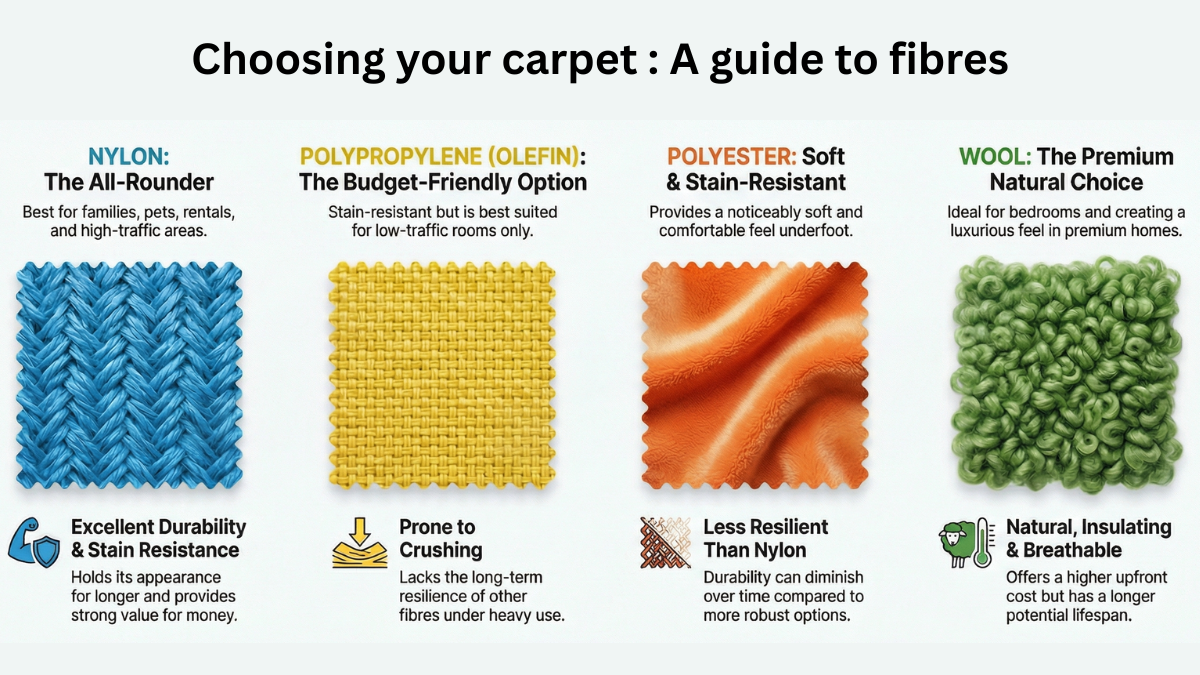
Expert tip: Fibre choice matters more than colour or brand. Always start here.
Best for families, pets, rentals, and high-traffic areas. Solution-dyed nylon (SDN) offers superior stain resistance due to colour being locked into the fibre, while nylon provides strong resilience and performance for high-traffic areas. Holds its appearance longer than cheaper fibres and offers strong value for money.
Budget-friendly. Stain-resistant and budget-friendly, with performance best suited to low-traffic areas depending on construction. Best for low-traffic rooms only.
Soft underfoot. Good stain resistance. Generally less resilient than nylon in high-traffic areas over time.
Natural, breathable, insulating. Luxurious feel and excellent indoor air quality. Higher upfront cost, longer lifespan. Ideal for bedrooms and premium homes.
Lifestyle factors such as pets, children, and daily foot traffic often influence how well a particular carpet performs in real-world conditions.
Twist pile carpets offer better durability and footprint recovery, while plush styles provide a smoother, more luxurious appearance but show wear more readily.
Extremely durable, hides dirt and wear well, great for hallways, stairs, and offices.
Adds texture and design, hides wear better than plush styles. Popular in modern Australian homes.
A dense, well-twisted mid-weight carpet often outperforms a thick, fluffy one.
Even a well-constructed carpet relies on appropriate care and ongoing maintenance to maintain its appearance and performance over time.
Carpet often gets blamed for allergies, but in reality, the wrong carpet choice is usually the problem.
Is carpet bad for allergies?
Not necessarily. A well-chosen carpet can actually improve comfort and reduce airborne dust compared to hard floors — but the fibre type, pile height, and maintenance matter.
Practical tip:
A good HEPA-filter vacuum makes more difference to allergies than fibre choice alone.
Sustainability matters to many Australian buyers, but “eco-friendly carpet” isn’t one-size-fits-all. Many modern carpets now use advanced fibres such as triexta and ECONYL® recycled nylon, which offer strong performance while reducing environmental impact through renewable or recycled inputs.
Practical tip:
The most sustainable carpet is often the one that lasts the longest in your home — replacement frequency matters as much as materials.
Q&A with Interior Stylist Emma Sykes from Emhaus Creative in collaboration with Floorworld
When it comes to creating a home that feels both beautiful and functional, one design element often gets overlooked… the flooring. Yet, it’s the foundation of every space, influencing everything from how light reflects in a room to how your furniture and decor come together.
I recently transformed my own home with the Quick-Step Majestic Laminate range in Desert Oak Light Natural, supplied by Floorworld, and the results completely changed the look and feel of the space. Here, I answer some of the most common questions I get about flooring and why it’s such an important part of Interior Design.
.webp)
Flooring forms the foundation of every room, both literally and visually. It’s the surface you see and feel every day, and it influences how a space looks, feels, and functions. The right flooring can make a home feel warm, open, and inviting, while the wrong one can disrupt the entire flow of your interiors.
Beyond aesthetics, flooring impacts acoustics, comfort, and durability. For example, timber, laminate or hybrid flooring adds warmth and texture, while tiles or polished concrete bring a sleek, contemporary look. Designers often say that flooring is the first design decision that should be made, as it sets the tone for all other choices, from wall colours to furniture and finishes.
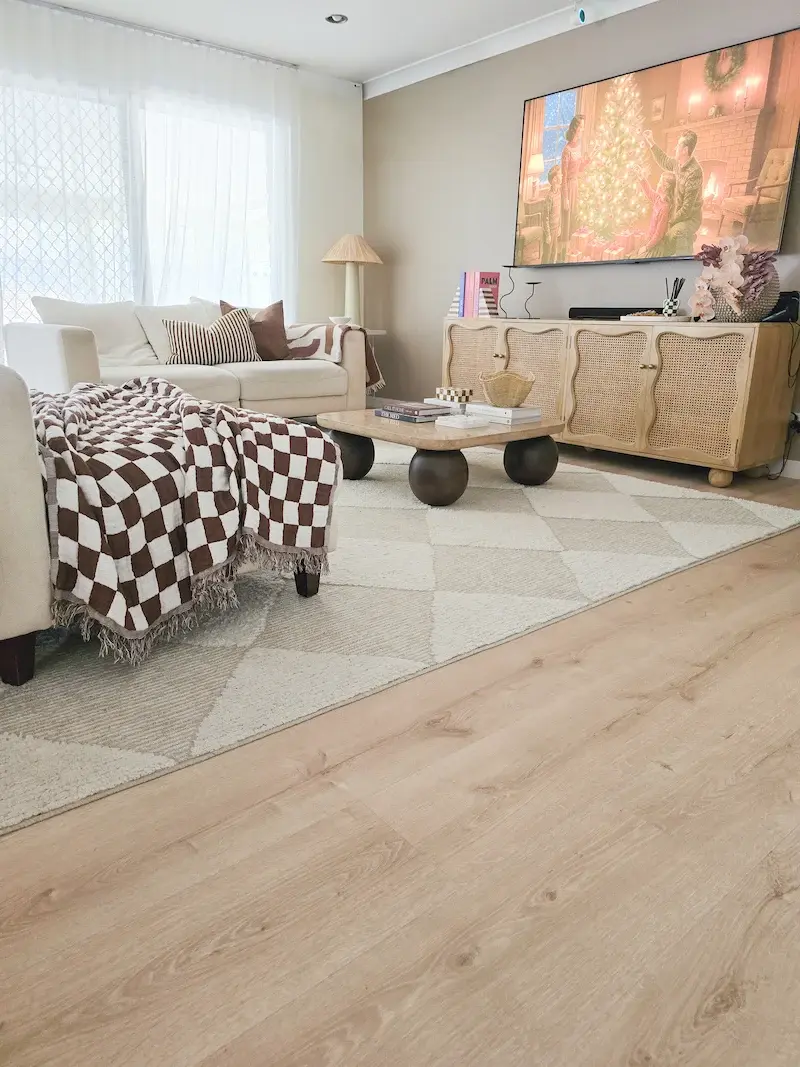
Flooring acts as a visual anchor. The tone, texture, and colour all influence the mood of a space. Light oak or whitewashed flooring creates a bright, airy feel that’s perfect for coastal, Scandinavian, or modern homes. Dark walnut or smoked tones add richness and depth, ideal for creating a moody, sophisticated atmosphere.
Texture also plays a big role. Smooth finishes create a sleek and minimal look, while matte or textured floors feel relaxed and organic. The grain pattern, plank width, and even the direction of the boards can change how large or intimate a room feels.
For example, laying planks parallel to the longest wall can make a narrow space appear wider. In my home, the light oak tone brightened every corner and allowed the natural light to bounce beautifully across the rooms. It also became a versatile base for styling, working seamlessly with both neutral and textured decor elements.
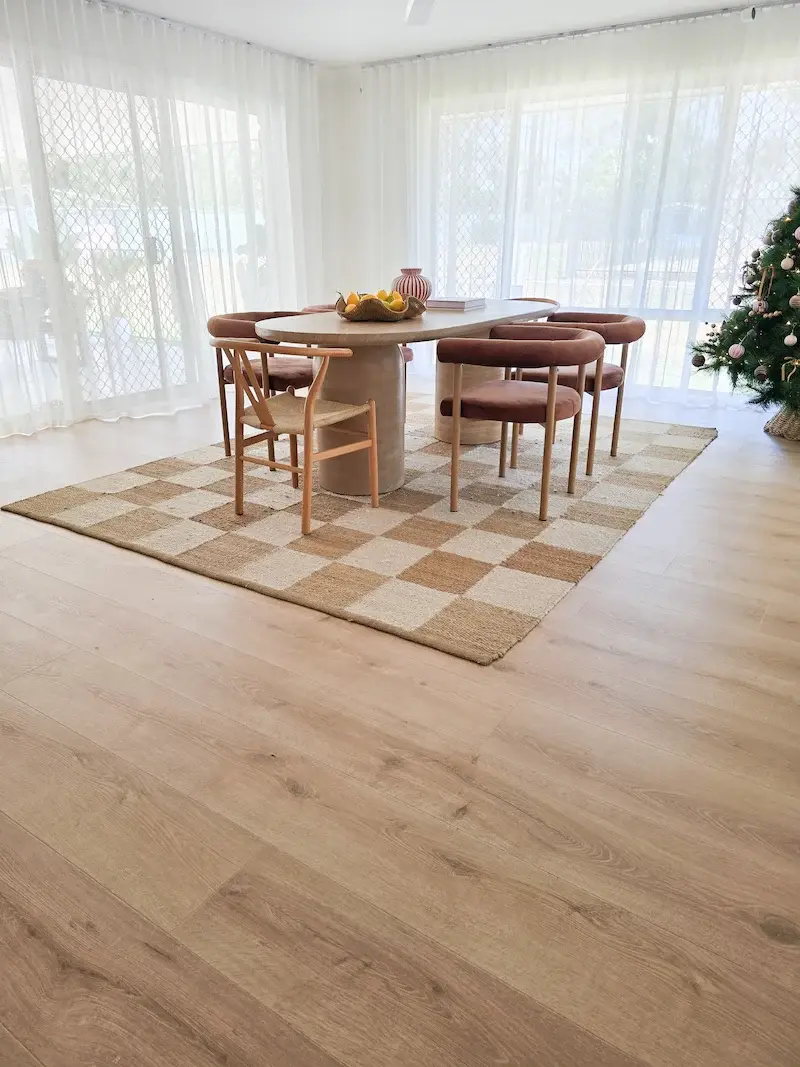
Start with lifestyle first, then aesthetics. Every household has different needs, and the right flooring should balance beauty with practicality.
Here are a few key considerations:
Once you’ve narrowed down the practicalities, you can focus on style. Tone, texture, and finish should complement your home’s overall design direction.
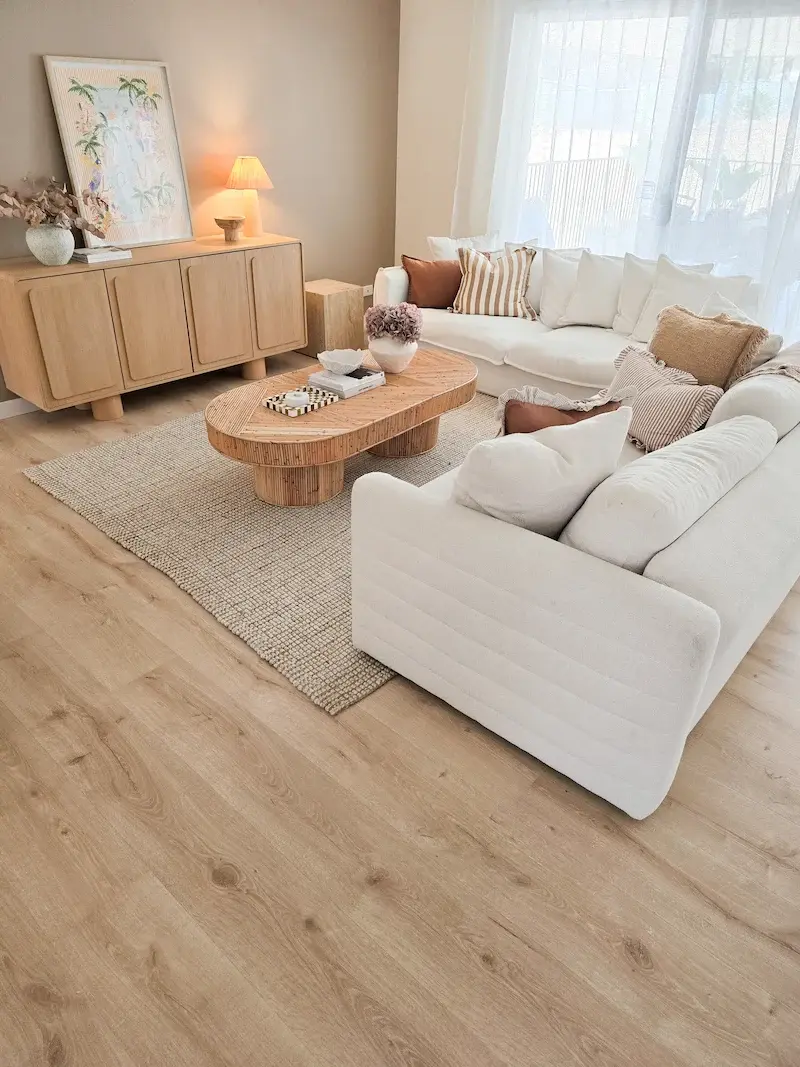
Always begin with your overall design vision. Is your home coastal, modern farmhouse, contemporary, or classic? Once you know that, you can match your flooring’s tone and texture to that theme.
For instance, I wanted my home to feel calm, light, and timeless, a reflection of natural textures and a relaxed aesthetic. That’s why I was drawn to Desert Oak Light Natural. It’s soft underfoot, has subtle grain detailing, and its neutral tone works beautifully with my interior styling palette of whites, beige, and warm timbers.
If you’re unsure, bring home large flooring samples from Floorworld and see how they look in different lighting throughout the day. Natural light can completely change how a colour appears.
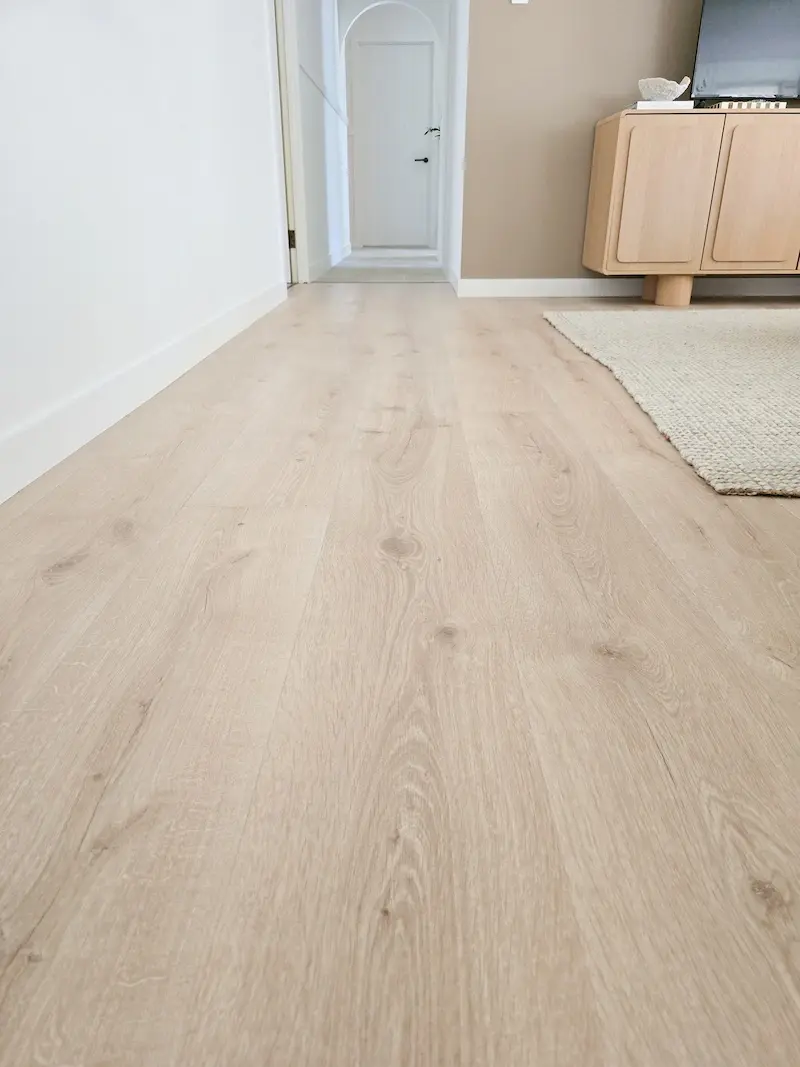
The biggest mistake is choosing flooring in isolation, without thinking about the rest of the home. Flooring should connect the rooms visually, not compete with them. Another mistake is focusing only on appearance and not on practicality.
Durability, maintenance, and comfort all matter. For example, if you love the look of oak but need something more durable for family life and pets, laminate or hybrid flooring can give you that same beautiful aesthetic with added resilience and affordability.
Another mistake is not considering lighting. The same flooring can look completely different in natural versus artificial light, so always view samples in your own home before deciding.
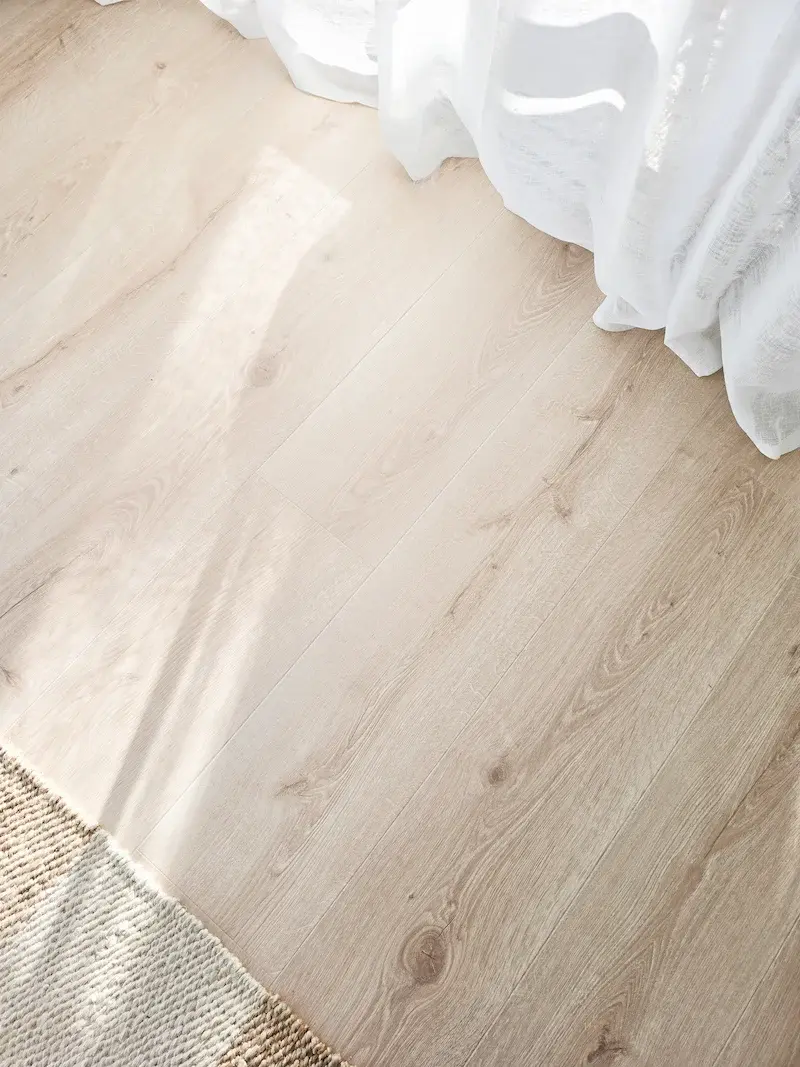
Once your new floors are installed, let them shine! Avoid covering them up with overly large rugs or heavy furniture. Instead, use rugs to define spaces and add softness while allowing the flooring’s tone and texture to show through.
Layer complementary materials like timber furniture, linen textiles, and soft lighting pair beautifully with natural flooring tones. If your floors are darker, lighten the rest of your palette with neutral or warm shades. If they’re light, introduce warmth through timber accents, textiles, or artwork.
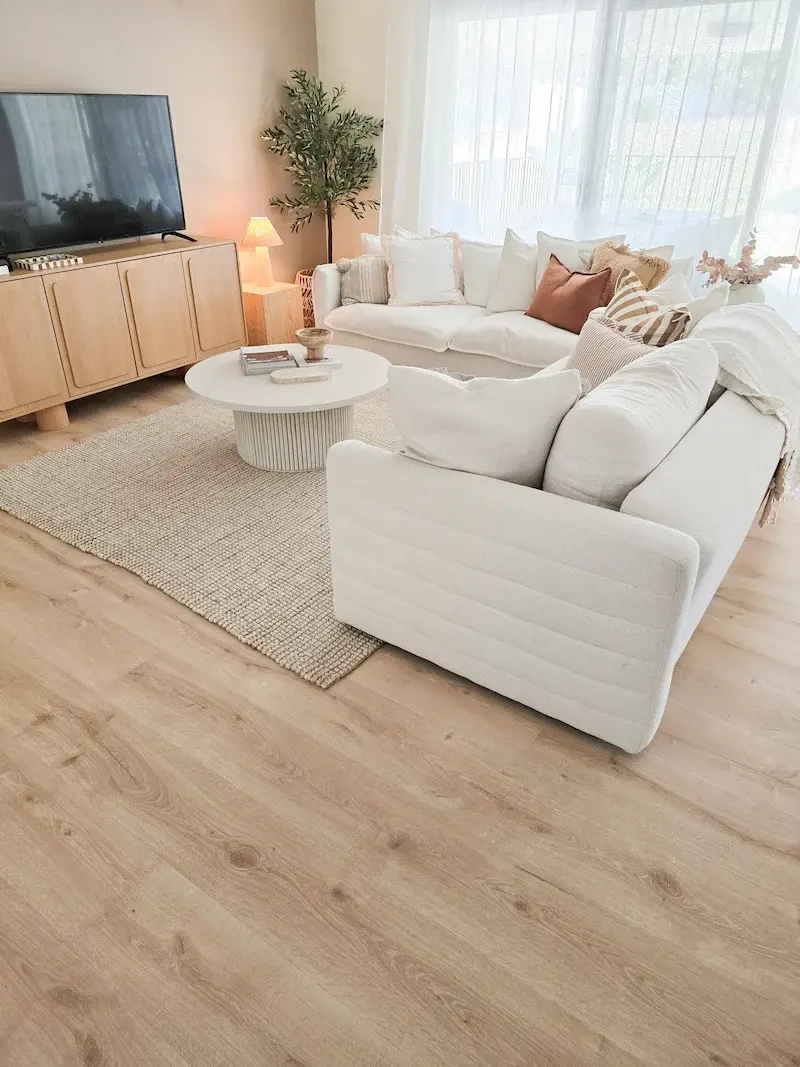
I wanted flooring that combined beauty, practicality, and quality. The Quick-Step Majestic Laminate range, available through Floorworld, ticked all the boxes.
The Desert Oak Light Natural tone is warm and authentic, perfectly suited to the calm, layered look I love to create. The planks are extra-long and wide, which helps make my rooms feel spacious and cohesive. Plus, the surface is durable and resistant to scratches and spills, ideal for everyday life. Once the floors went in, the whole space felt instantly elevated, and I couldn’t recommend them more highly.
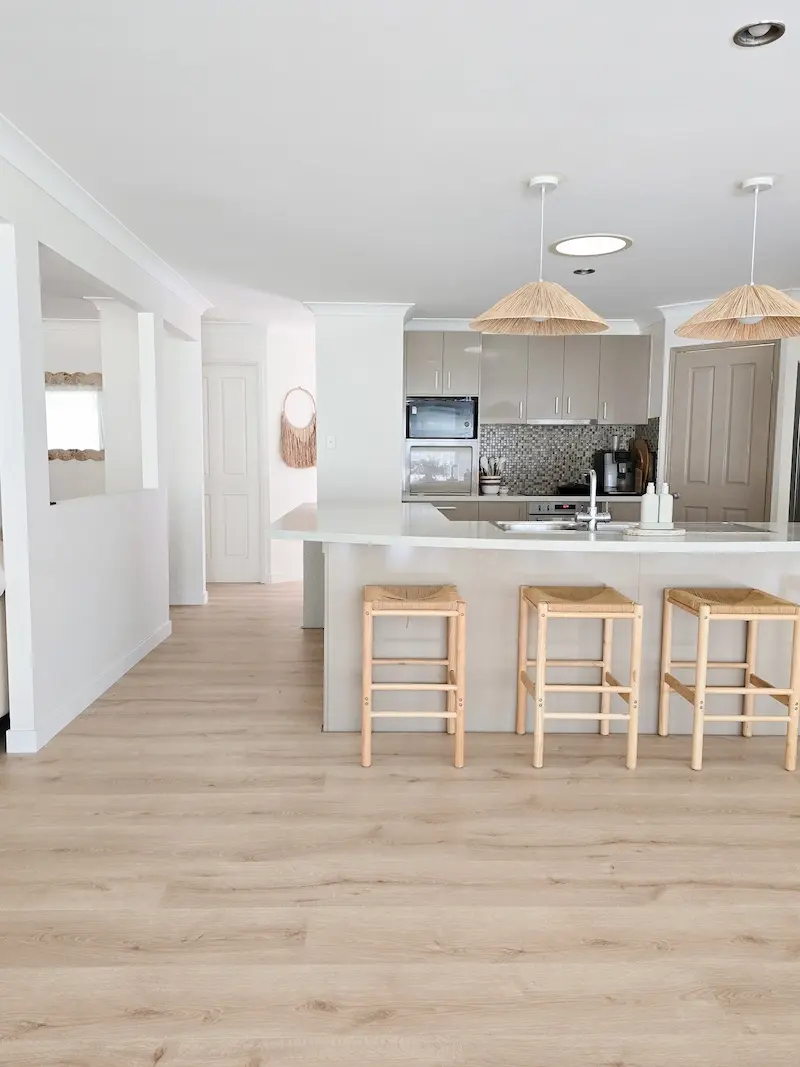
Approximate Reading Time: 4 Minutes
In Partnership with Armstrong Flooring
_Kingswood%20Select%20Oak.jpg)
Pets fill a home with joy and energy, but they also bring claws, occasional accidents, and plenty of foot traffic. Selecting pet-friendly flooring is key to preserving a beautiful home that can stand up to the activity pets bring.
Here are some important features to consider to ensure your flooring can withstand the wear and tear of life with pets while still looking great.
1. Durability
Pets’ nails can scratch certain flooring materials over time, so it’s best to look for scratch-resistant surfaces.
2. Stain Resistance
Flooring that doesn’t absorb stains will be easier to maintain and won’t show lingering signs of past accidents.
3. Waterproof Surface
Accidents and spills are bound to happen, so waterproof or water-resistant flooring is a must for easy cleanups and to avoid damage from pet messes.
4. Easy to Clean
Choose materials that are easy to sweep or mop and look at hard flooring options over carpet as they won’t trap pet hair or dander.
5. Acoustic Benefits
Flooring with sound-dampening features like an acoustic backing or padded underlay can help reduce the noise of paws and make the home quieter.
6. Style and Versatility
Look for flooring options that complement your interior style and offer designs you’ll love. Many pet-friendly options come in various finishes, from classic hardwood looks to sleek, modern tones, so you can find one that suits your aesthetic.
Armstrong Flooring’s stunning collection of luxury vinyl and hybrid flooring offers all these benefits in a range of authentic timber-look planks, perfect for enhancing your home interior.
Luxury Vinyl Plank–Chesterfield™2.0Collection
The Chesterfield™ 2.0 collection is a top choice for pet owners looking for trendy yet highly durable flooring.
This luxury vinyl plank is packed with features, including low-maintenance care and resistance to common scratches and stains from our furry friends.
Its waterproof surface handles spills and messes with ease while maintaining top-quality performance. With a wider range of modern and classic timber designs, there’s a colour to perfectly match your style.
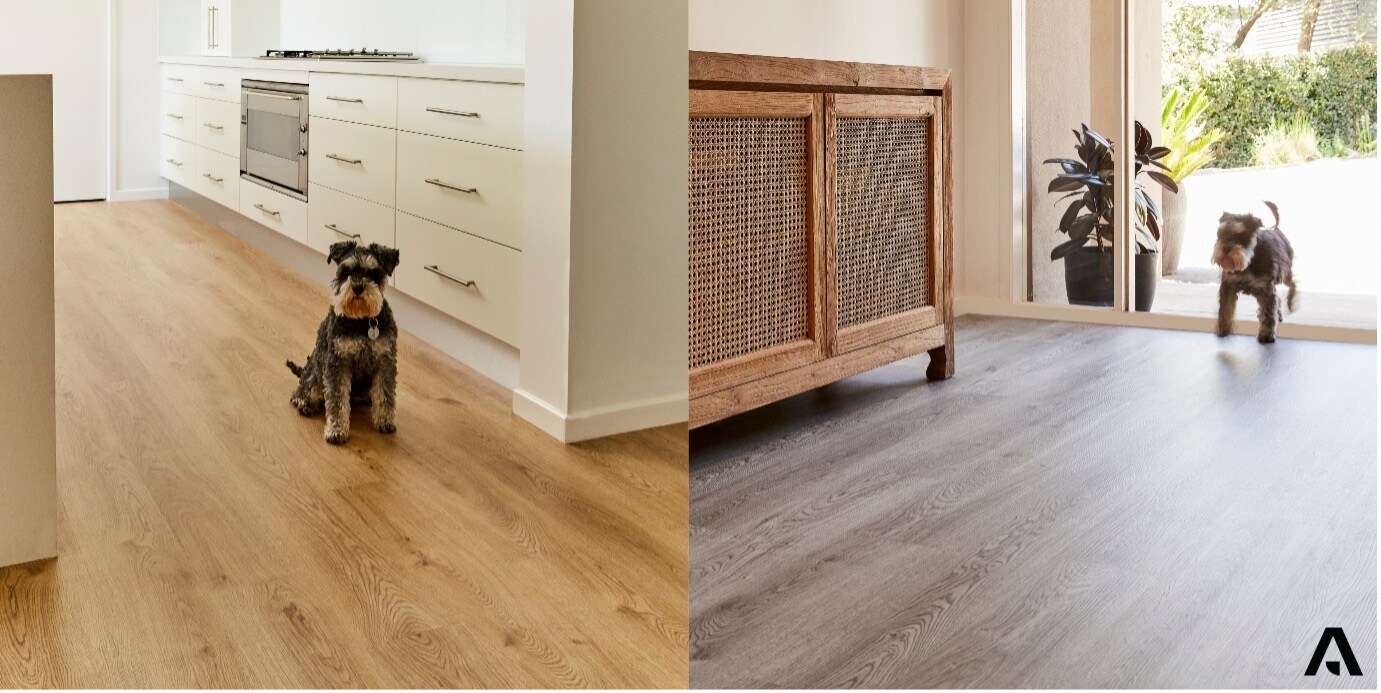
The Kingswood 1.2™ collection is another fantastic option for those with pets seeking durability without sacrificing style. Tailored for everyday living, this hybrid plank flooring combines all the essential features of a pet-friendly floor such as, easy-to-clean properties and scratch resistance.
The XFD Acoustic Backing™ provides acoustic benefits so you can enjoy a quieter space as your pets move around. With a trusted and reliable locking mechanism and a selection of contemporary and Australian hardwood designs, Kingswood 1.2™ promises lasting beauty and performance in your home for years to come.
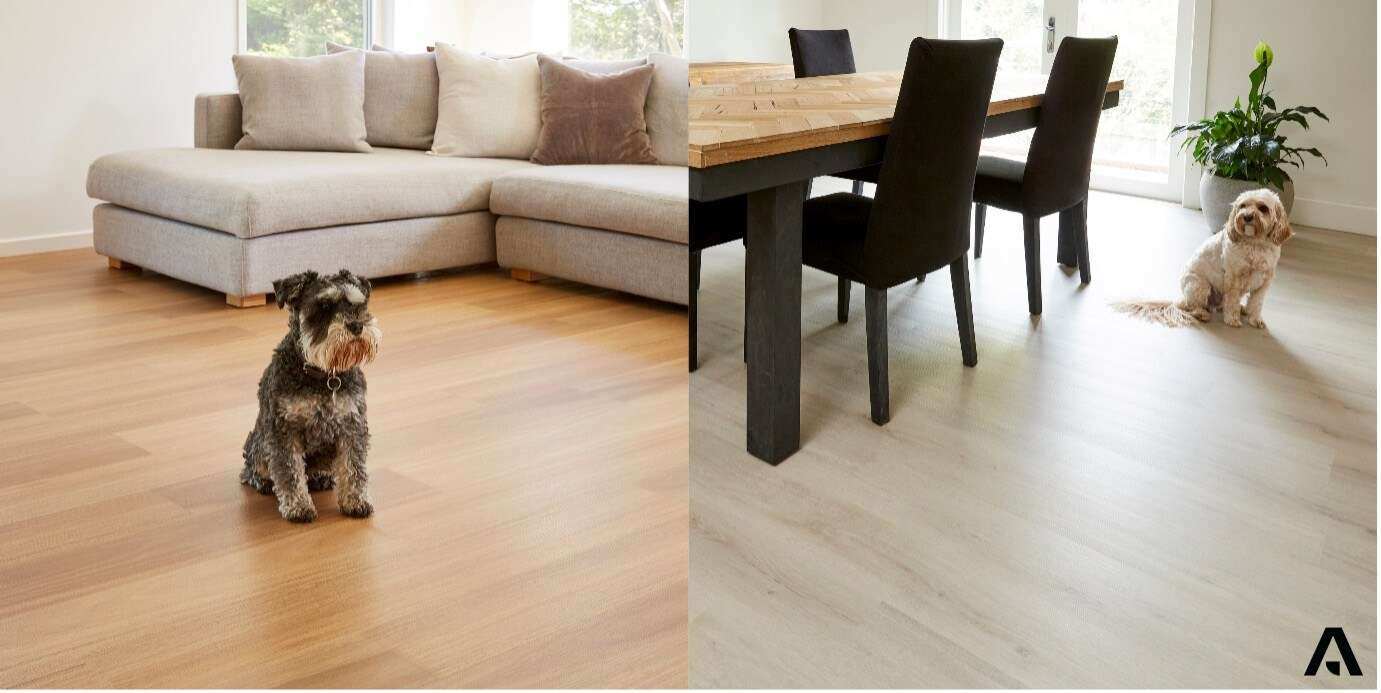
For more insights on maintaining your floors with pets, download our comprehensive eBook, ‘Floors and Paws – Your Guide to a Pet-Friendly Home‘ which covers topics like caring for different flooring types, enhancing indoor air quality, flooring trends, and installation tips.
Check out Floorworld’s other key resources on these subjects to ensure your home remains stylish and functional.
Approximate read time: 4 minutes
In the dynamic world of home improvement, selecting the right flooring is a decision that influences your living space’s longevity and aesthetic appeal. Australian homeowners are privileged to have diverse flooring options, each possessing unique qualities.
This blog explores the benefits of Australian flooring choices—the importance of prioritising quality for long-term satisfaction and value. As we assess the many options in the flooring world, we’ll discover why these choices are not just about style but also about creating a lasting investment.
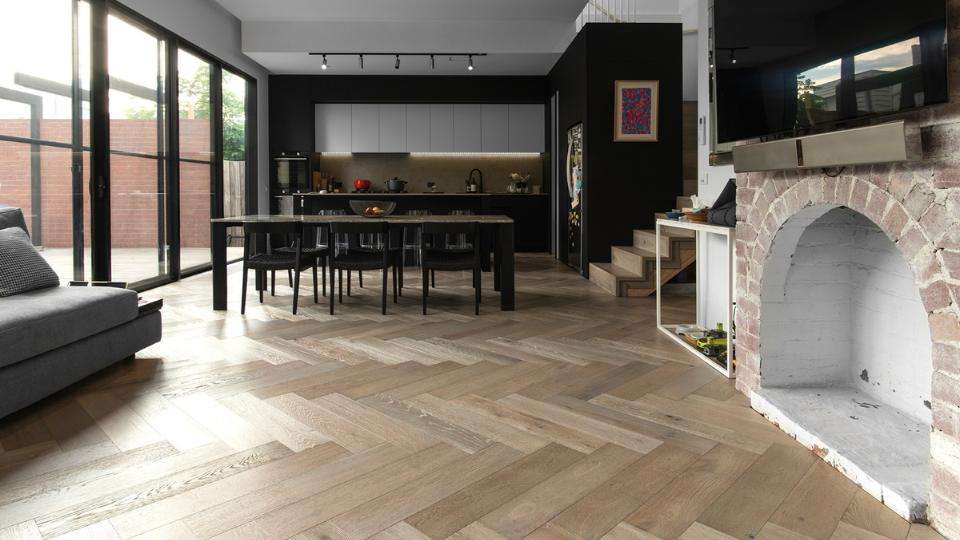
Embraced for its timeless elegance and robustness, timber flooring remains a cornerstone of Australian homes. Beyond its aesthetic charm, timber is renowned for its durability, making it a lasting investment. Its natural beauty enhances interior spaces, while its versatility allows seamless integration with various architectural styles – from classic to contemporary.
Timber flooring provides a beautiful foundation for your home and appreciates in value over time. The longevity of timber ensures it withstands the test of time, offering both durability and an enduring aesthetic that stands the test of time.
For those seeking a fusion of innovation and durability, hybrid flooring emerges as a revolutionary solution. Merging the best qualities of laminate and vinyl, hybrid flooring is engineered to endure the demands of modern living. Its advanced composition ensures superior scratch resistance, waterproof properties, and thermal stability.
The key advantage of hybrid flooring lies in its ability to provide a stylish, long-lasting solution without compromising practicality. Australian homeowners benefit from a flooring option that meets their aesthetic preferences and stands up to the challenges of daily wear and tear.
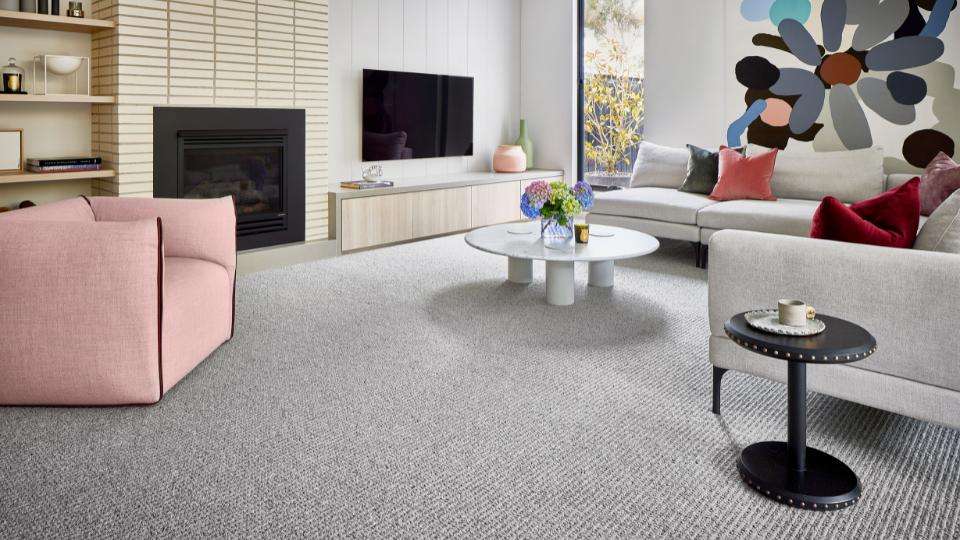
Regarding comfort and style, the carpet holds a special place. Beyond their soft underfoot feel, carpets contribute to a cozy and inviting atmosphere in any room. The variety of colours, textures, and patterns allows homeowners to customise their spaces, adding a touch of luxury while providing insulation and noise reduction.
Carpet is not just about aesthetics; it’s a choice that offers warmth and comfort, making it an excellent option for bedrooms, living rooms, and other areas where a plush feel is desired.
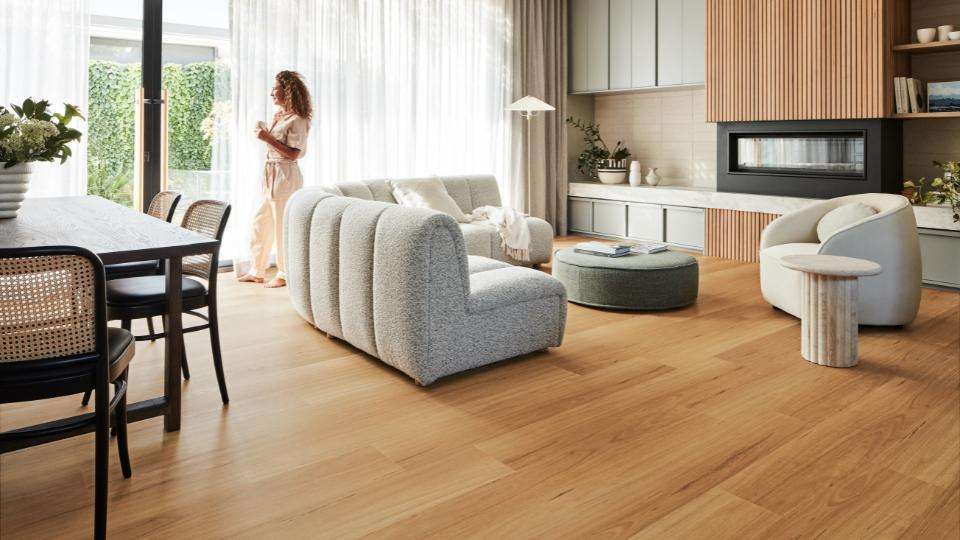
For those seeking an affordable yet elegant flooring solution, laminate is a popular choice. With its ability to mimic the appearance of natural materials like wood or stone, laminate provides a cost-effective way to achieve a high-end look. Its durable and low-maintenance nature makes it suitable for high-traffic areas, ensuring long-term satisfaction without breaking the bank.
Laminate flooring offers the perfect blend of style and affordability, making it a practical choice for homeowners who want a durable and visually appealing flooring option.
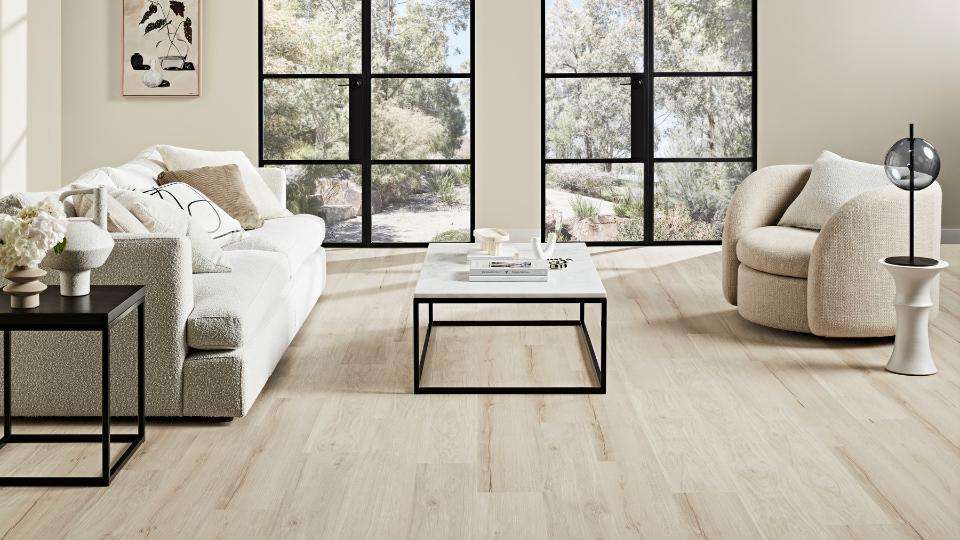
Vinyl flooring has evolved into a resilient and versatile option for Australian homeowners. With advancements in technology, vinyl can replicate the look of various materials while offering excellent resistance to water, stains, and scratches. This makes it ideal for kitchens, bathrooms, and other moisture-prone areas.
The versatility of vinyl extends to its installation options, allowing for easy application in various rooms. Its durability, combined with a wide range of designs, makes vinyl flooring a practical and stylish choice for those seeking long-term value.
Choosing underlay is a critical yet often overlooked aspect in pursuing long-term flooring satisfaction. The underlay is the foundation beneath your chosen flooring, providing support, insulation, and impact resistance. The suitable underlay can enhance the performance of your flooring, prolong its lifespan, and contribute to a comfortable indoor environment.
When selecting an underlay, consider factors such as the type of flooring, the subfloor conditions, and the desired level of comfort. A high-quality underlay with moisture-resistant properties is essential for timber and hybrid flooring. Carpeted areas benefit from underlays that offer both cushioning and sound absorption. Laminate and vinyl flooring, on the other hand, require underlays that provide stability and support for the floating installation method.
Australian homeowners are presented with various options, each with its unique blend of durability, aesthetics, and functionality. By prioritising quality in your flooring, you lay the foundation for enduring elegance and functionality within your living space.
Embrace the enduring charm of quality flooring, supported by a suitable underlay, and create a home environment that not only exudes aesthetic appeal but also delivers long-lasting value and performance. Your choices today will echo in the elegance and durability of your home for years to come. Invest wisely and build a resilient home against the passage of time.
For more insights on flooring maintenance, trends, or design tips, fill out the form below to request a Floorworld eBook.
Approximate Reading Time: 5 Minutes

There’s a lot to love about Australia. It’s home to some of the world’s most beautiful beaches, unique flora and fauna and home to one of the world’s most watched TV shows, Bluey!
Australia is also home to some of the world’s highest-quality products, including flooring, that is exported worldwide and embraced for its beauty and unique quality.
However, quality products aren’t the only thing that makes buying Australian-made so great. Let’s delve into the numerous reasons why opting for Australian products and flooring is a decision worth celebrating.
Buying Australian isn’t just a reflection of the true blue patriotic nature of the individual; it’s a decision with many other benefits across various aspects.
It assures consumers that the product has undergone meticulous quality control, instilling confidence in their purchase and is a prime reason why Australian flooring is in such high demand worldwide.
Australian-made flooring emphasises authenticity and an organic feel, showcasing the natural patterns and grains of wood in their products.
By choosing Australian-made, individuals actively support local businesses, contributing to the growth of their community. Additionally, it’s a step towards environmental sustainability, eliminating the need for resource-intensive imports.
For more on sustainability, check out our Floorworld Essential Series: The Ultimate Eco-Friendly Sustainable Flooring Guide.
There’s a reason why Australian products are in such high demand all across the globe, stringent quality control measures and sourcing from durable, unique materials located only in Australia make it desirable as a premium quality product.
A premium product that you can enjoy without the need to pay import costs or administration fees.
Add to that the fact that these products are already adapted to the needs of the Australian climate, and you have great quality products that look good, provide value, and are long-lasting.
For more information on adapting to the Australian climate, check out our article: Tips For Navigating the Australian Climate: Flooring for Every Season.
With the advent of big international corporations like Amazon, Temu, and Shien entering the Australian market, products are increasingly coming from outside the country.
According to data from the Australian Bureau of Statistics, we saw a $601 million increase in imports for 2024.
This is despite another report by Roy Morgan that found that 86% of Australians preferred buying Australian-made products.
As you can see, we already want to buy Australian-made products, but it can sometimes be challenging in the face of cheaper, lower-quality imported products. That is why, now more than ever, it’s important to opt for Australian businesses and organisations and contribute actively to developing local industries and communities.
In the long term, this will lead to better-funded schools, better-funded sports clubs, better opportunities for local jobs, and a better future for those living in Australia.
Buying Australian products is not just a choice that helps local communities but supports protecting the environment as a whole. Local products require fewer transport processes to reach your home and, as such, reduce the amount of resources needed overall.
Strict environmental manufacturing guidelines also mean that companies in Australia must comply and work towards reducing their impact on the environment.
The high overall quality of products also means that buying Australian will result in products that last much longer and reduce the waste caused by replacement and repair.
For more on how buying Australian-made affects sustainability, check out our Floorworld Essential Series article: The Ultimate Eco-Friendly Sustainable Flooring Guide.
.png)
For those of you already sold on buying Australian Made, below is a list of brands to watch out for, all available in your nearest Floorworld store.
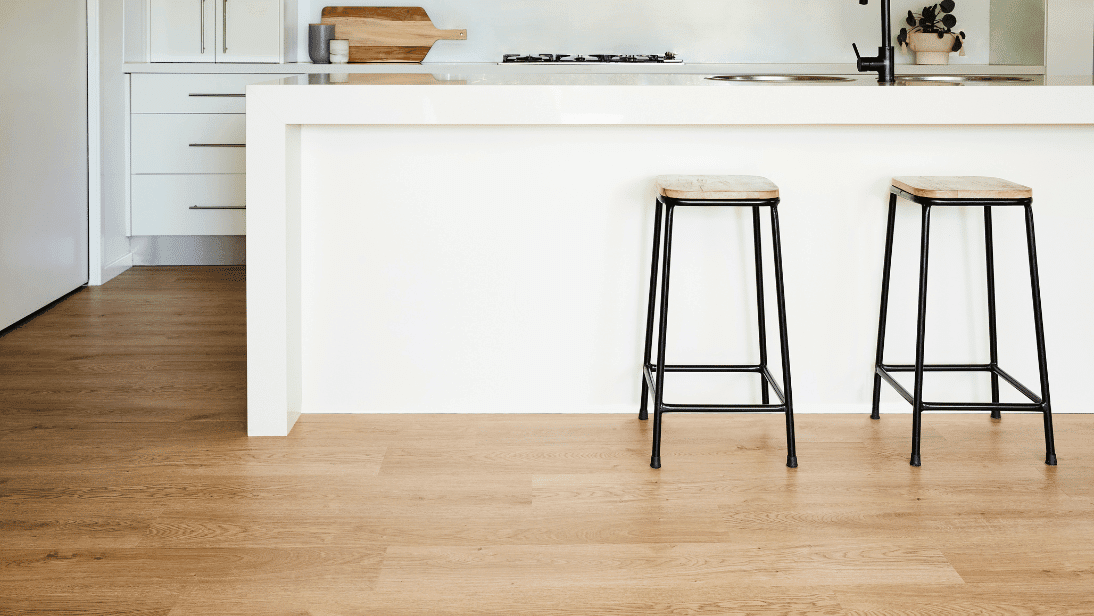
Armstrong Flooring is a decades-old premier Australian flooring brand specialising in durable, high-quality Australian-made Vinyl and Hybrid Flooring inspired by natural local timber designs. Continuously innovating, their Vinyl collection embraces many natural textures, providing a sense of luxury and longevity. The Hybrid flooring is a stellar combination of vinyl’s waterproof properties and the rigidity of laminate flooring, making it well-suited for moisture-rich environments like bathrooms and kitchens.
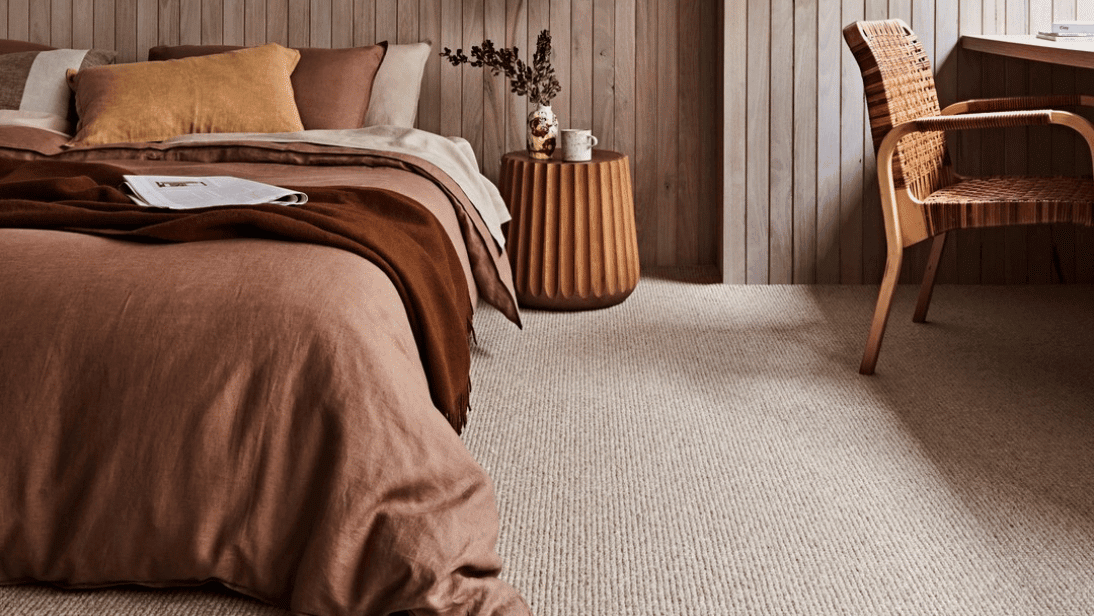
Godfrey Hirst Carpets is an esteemed Australian brand with a rich history of delivering premium flooring solutions. Renowned for their commitment to excellence, Godfrey Hirst Carpets specializes in crafting exquisite, high-quality carpets that redefine elegance in Australian homes. Drawing inspiration from the nation’s diverse landscapes, their carpet collections showcase a blend of sophistication and durability. The extensive range caters to various preferences, offering textures and designs that elevate the ambience of any space.
Beaulieu Carpets is an Australian brand synonymous with crafting exquisite flooring solutions. Embodying a legacy of excellence, Beaulieu Carpets specializes in curating carpets that redefine luxury in Australian homes. With a steadfast commitment to quality, these carpets seamlessly merge elegance and endurance, setting the stage for a refined living experience. Influenced by a diverse array of design inspirations, Beaulieu Carpets presents an extensive range of textures and patterns that cater to a spectrum of tastes.
Victoria Carpets is an esteemed Australian brand that redefines the artistry of flooring. Focused on delivering quality flooring solutions, Victoria Carpets specialises in creating carpets that seamlessly blend tradition with contemporary allure. Rooted in a commitment to crafting the extraordinary, their carpets weave a story of craftsmanship, offering a unique tapestry of textures and designs inspired by the diverse landscapes of Australia.
Interface Flooring has been manufacturing premium carpet tiles in South-West Sydney since 1971, combining innovation, sustainability, and local craftsmanship. Their Australian-made products support local jobs and are designed with recycled materials and eco-friendly practices, reflecting a commitment to quality and the environment.
With decades of expertise, Interface offers stylish, durable flooring solutions perfect for Australian homes and workspaces, making them a trusted choice for locally crafted excellence.
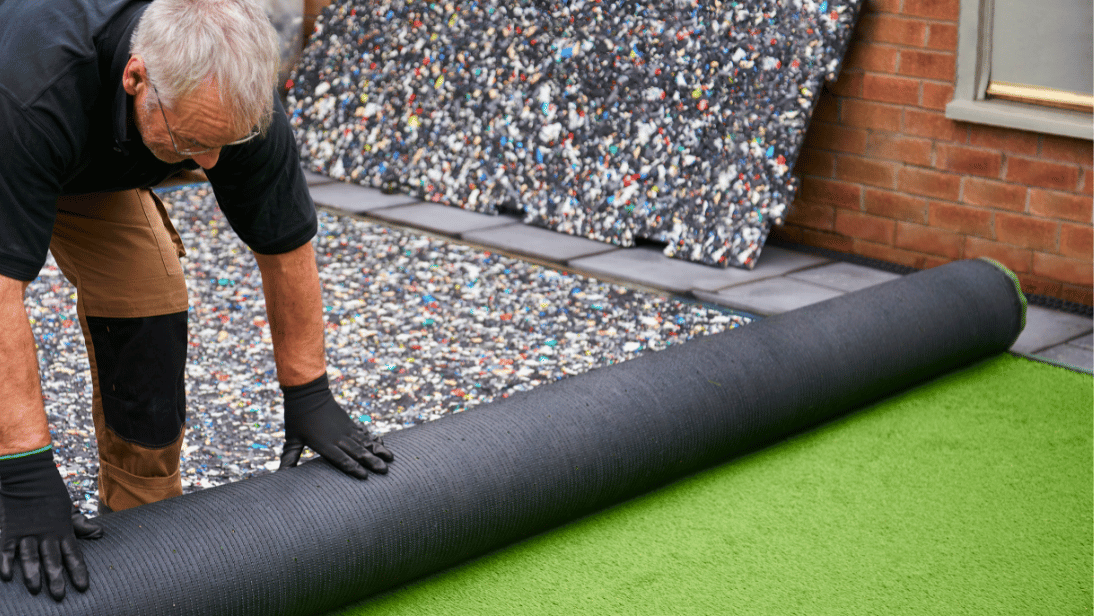
Airstep is a proud Australian brand specialising in quality flooring underlay. Going beyond conventional flooring, they offer a unique blend of support and resilience that transforms the foundation of your floors. Additionally, Airstep has partnered with Ripcurl, repurposing waste from wetsuit production to create more sustainable underlays.
Dunlop Flooring is Australia’s largest supplier of underlays. Crafting premium underlays that focus on comfort and durability, they are proudly Australian-made. Always innovating, their underlays embody a commitment to quality that transforms every step you take into a luxurious experience.
Buying Australian-made products has many benefits, from supporting local communities, being more sustainable than importing, and having an overall quality product.
The next time you’re contemplating your next purchase, be it a flooring upgrade or anything else, consider buying Australian and enjoying all its long-term and short-term benefits.
If you’d like to learn more about the latest flooring trends, sustainability, and maintenance tips, please request an e-book below.
Your saved products will appear here.
Add floors you love to compare and share with your nearest Floorworld store.