


Reviewed by Brett Talbot, National Sales and Operations Manager, Floorworld · Last reviewed [2 November 2026]
Reviewed by Brett Talbot, National Sales and Operations Manager, Floorworld · Last reviewed [2 November 2026]
Nylon is the more durable of the two, holding its shape and colour under heavy traffic, which makes it the better choice for hallways, stairs and living areas. Polyester feels just as soft underfoot and is generally the more accessible of the two fibres, making it a genuinely good option for bedrooms and other lower-traffic rooms. Neither is the best carpet fibre type for every room in the house, the right pick depends on how much wear that room actually gets.
Both are common, well-established synthetic fibres and both will look good on day one. The difference shows up two or three years in, once furniture, foot traffic and everyday spills have had time to test them.
| Nylon | Polyester | |
|---|---|---|
| Durability | Excellent, recovers well from crushing | Moderate, flattens faster under heavy use |
| Stain resistance | Very good, especially solution-dyed | Good for water-based stains, oil-based stains are harder to shift |
| Softness | Firm, durable feel | Notably soft underfoot |
| Best suited to | Hallways, stairs, living areas, high-traffic homes | Bedrooms, guest rooms, lower-traffic spaces |
| Typical price tier | $$ to $$$ | $ to $$ |
Price tiers above are as follows: $ = entry level, $$ = mid-range, $$$ = premium, $$$$ = luxury. Ask in-store or book a free measure and quote for exact pricing on your space.
Nylon’s biggest strength is resilience. Its fibres bounce back after being compressed by furniture or footfall, so it keeps its texture and appearance far longer than most synthetics under heavy use. Solution-dyed nylon adds strong fade resistance and holds colour well in sun-exposed rooms, which matters in Australian homes with large windows or open-plan living.
The trade-off is feel and flexibility. Nylon is a firmer fibre underfoot than polyester, which some people love for its durable character and others find less plush. While it resists staining well, it isn’t stain-proof, so spills still need attention reasonably quickly, and the colour and pattern range tends to be narrower than polyester’s.
Polyester’s main appeal is how soft it feels underfoot. It’s generally the more accessible of the two fibres, takes dye well so colours tend to look rich and true, comes in a wide range of shades and patterns, and some ranges are made partly from recycled PET, which is worth asking about if sustainability matters to you.
The downside shows up over time in busier rooms: polyester doesn’t recover from crushing as well as nylon, so pile can start to flatten in high-traffic areas within a few years. It also tends to hold onto oil-based stains, such as cooking splashes or makeup, more stubbornly than nylon does, and water-based spills need a reasonably quick clean-up to avoid marking.
For a home with kids or pets, the difference between nylon and polyester tends to show up fastest.
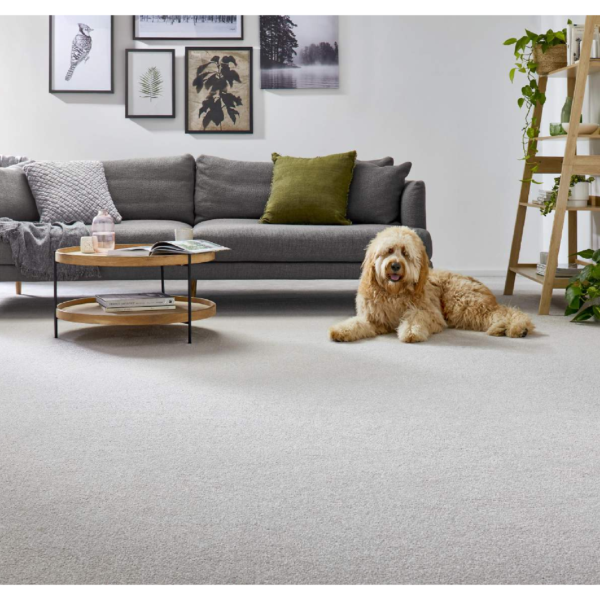
Nylon’s resilience makes it more forgiving of claws, toy trucks and the general wear of a busy household, and solution-dyed nylon in particular shrugs off most everyday stains without losing colour. Polyester can still work in a family home, but it’s better suited to a bedroom or playroom with moderate use than a main living area that copes with pets, meals and constant foot traffic every single day.
There’s no single best carpet fibre type, only the right one for the room. Choose nylon where the carpet will take a hard-working, everyday beating: hallways, stairs, family rooms and homes with kids or pets. Choose polyester where comfort matters more than heavy-duty performance, such as a spare bedroom or formal lounge that sees occasional use.
If you want both durability and built-in stain resistance without stretching to wool, triexta is worth a look too, and our full carpet buying guide covers where it fits in.
The best way to judge softness and colour is to see and feel the carpet yourself. Find your nearest Floorworld store or book a free measure and quote, and we’ll help you weigh up nylon, polyester and everything in between for your actual rooms.
Which carpet is better, nylon or polyester?
Nylon is better for durability and holds up longer under heavy traffic. Polyester is softer for the price and works well in rooms that don’t see much daily wear.
What are the main polyester carpet pros and cons?
Polyester’s pros are softness, affordability and a wide colour range. Its main con is that it crushes and flattens faster than nylon in high-traffic areas, and it holds onto oil-based stains more stubbornly.
Is polyester carpet good enough for a living room?
It can work in a lower-traffic or formal living room, but for a living room that gets daily family use, nylon or triexta will hold their appearance for longer.
Does nylon carpet feel less soft than polyester?
Nylon has a firmer, more durable feel, while polyester is generally softer underfoot. Neither is right or wrong, it’s a matter of personal preference alongside how much wear the room gets.
Your saved products will appear here.
Add floors you love to compare and share with your nearest Floorworld store.