

Reviewed by Brett Talbot, National Sales and Operations Manager, Floorworld · Last reviewed [27 Nov 2026]
Both options put real timber underfoot. The right choice depends on your subfloor, the product’s construction and how you expect to use the room. Engineered timber is often easier to specify over a concrete slab; solid timber offers more scope for future sanding where the installation conditions suit it. Here is how to compare them without choosing on appearance alone.
Solid timber boards are made from one piece of wood. Engineered timber boards have a genuine timber surface bonded to a stable, layered core. Both can show the natural grain of species such as blackbutt or spotted gum. The construction below that surface affects installation options and how the boards respond to changes in humidity.
| Consideration | Solid timber | Engineered timber |
| Construction | One piece of timber throughout | Real timber surface over a layered core |
| Subfloor | Installation method and preparation depend on the site | Many products can be installed over a suitably prepared concrete slab |
| Refinishing | Can generally be sanded more times, depending on board thickness and condition | May be refinished, depending on the wear layer and manufacturer’s instructions |
| Moisture | Expands and contracts as conditions change | More dimensionally stable, but still vulnerable to excessive moisture |
If your home has a concrete slab, an engineered timber product may offer a practical installation route. The slab still needs to be assessed for moisture, levelness and the preparation required by the product. Some solid timber systems can also be installed over concrete using an appropriate method and substrate preparation, so avoid ruling them out without a site assessment.
A suspended timber subfloor can accommodate solid or engineered boards, depending on its condition, ventilation and the chosen installation method. The age of a home alone does not confirm its subfloor type. Ask your Floorworld store to check what is under the existing floor before you settle on a product.
All real timber moves with humidity. Engineered boards are generally more stable than solid boards, which can suit coastal or humid homes, but suitability still depends on the product, indoor conditions and installation. Neither is waterproof, so wipe up spills quickly and investigate any persistent damp.
Moisture can also come from below. Australian industry guidance treats a concrete slab as dry when in-slab relative humidity is up to 75%, or an impedance meter reads up to 2.0%. Even then, the slab needs moisture protection: either a 200-micron polyethylene film or an applied moisture barrier, as the flooring manufacturer specifies.
Solid timber’s full depth gives it more scope for repeated sanding, provided enough sound timber remains. Solid boards typically have 5mm to 6mm of usable timber above the tongue-and-groove joint, and each full sand removes roughly 1mm to 2mm. That usually allows several sand-and-refinish cycles over the floor’s life.
Engineered timber can also be sanded, but how often depends on the thickness of its wear layer and the manufacturer’s guidance. Thin wear layers, under about 2.4mm, generally shouldn’t be sanded at all. Thicker layers, such as the 4mm wear layer on GrandOak Regal, can allow several sands. A timber veneer doesn’t automatically mean a board can be sanded.
Everyday wear also depends on species, finish, foot traffic and care. For busy homes or pets, compare the finish and care instructions of actual products. A matt finish can make small marks less noticeable, but no real timber floor is scratch proof.
There is no reliable price winner based on construction alone. Species, board grade, wear layer, finish, installation method and subfloor preparation all affect the installed price. A premium engineered board can cost more than a solid timber alternative, while preparation work can change either quote substantially. Compare like for like on the full installed cost, including any required moisture control and finishing work.
Consider solid timber if you value the option to restore the surface repeatedly and the product and installation method suit your subfloor. Consider engineered timber if you want a real timber look and a product designed for your slab or the conditions of your home. In either case, start with the subfloor assessment and the manufacturer’s specifications, then choose the species and finish you enjoy living with.
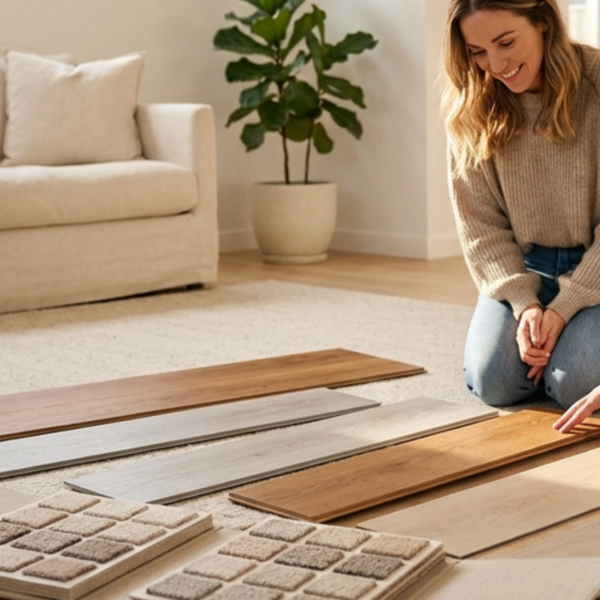
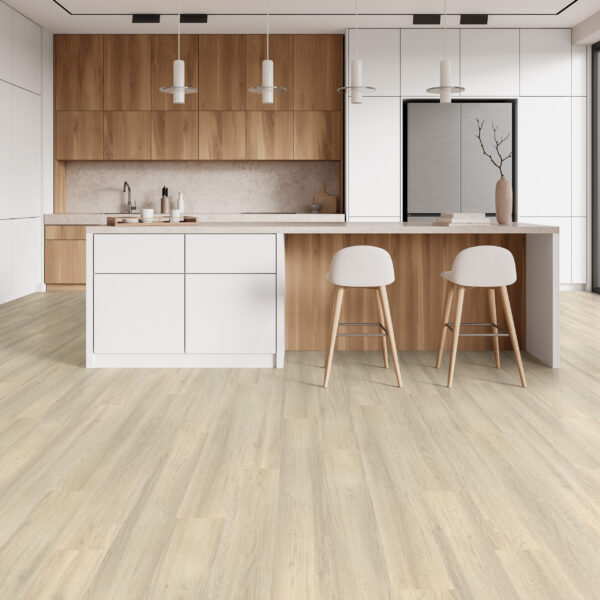
For a Luxury Lifestyle look, compare the grain, board width and finish of the actual timber samples. For a Renovators Delight project, focus on floor height, preparation and the total installed quote. Your local Floorworld store can help you compare suitable products, including options from Australian Select Timbers where available.
Book a free in-home measure and quote, or find your nearest Floorworld store.
Yes. It has a genuine timber top layer over a layered core. Check the product specification for the species and thickness of that top layer.
Many engineered products can, once the slab is assessed and prepared to meet the product’s installation instructions. The suitable method may be floating or direct stick, depending on the system.
Sometimes, with the right product, moisture management and installation system. A flooring specialist should assess the slab and confirm the method before you order.
Compare product finish, care requirements and likely wear, then choose a look that can accommodate everyday marks. Both constructions have a real timber surface that pets can scratch.
Your saved products will appear here.
Add floors you love to compare and share with your nearest Floorworld store.