


Reviewed by Brett Talbot, National Sales and Operations Manager, Floorworld · Last reviewed [12 October 2026]
Reviewed by Brett Talbot, National Sales and Operations Manager, Floorworld · Last reviewed [12 October 2026]
The language around water-resistance, waterproof and how that actually translates in a practical sense for your home can get a bit confusing.
Kitchens and bathrooms get wet in very different ways, so the right floor for one isn’t always right for the other. A kitchen deals with spills and the odd leak. A bathroom or laundry deals with water every day, and what you may not know is that there are clear Australian building rules underlying all these factors to be considered when choosing the right flooring for your spaces.
This guide explains why, what to check before you choose, and the questions worth asking your local Floorworld store.
Not quite, and the difference matters most in a bathroom. When a product says “waterproof”, it usually means the plank itself won’t swell or break down when it gets wet.
What the product can’t promise is what happens at the joins, the edges and the subfloor underneath. Water that gets through a click joint or around the edge of a room can sit unseen beneath the floor and cause damage.
That’s why we use the term water-resistant here at Floorworld. Sheet vinyl is the only option in this guide that’s laid as a continuous surface with sealed seams. Planks, however water-resistant the material, still have joins which you need to be mindful of.
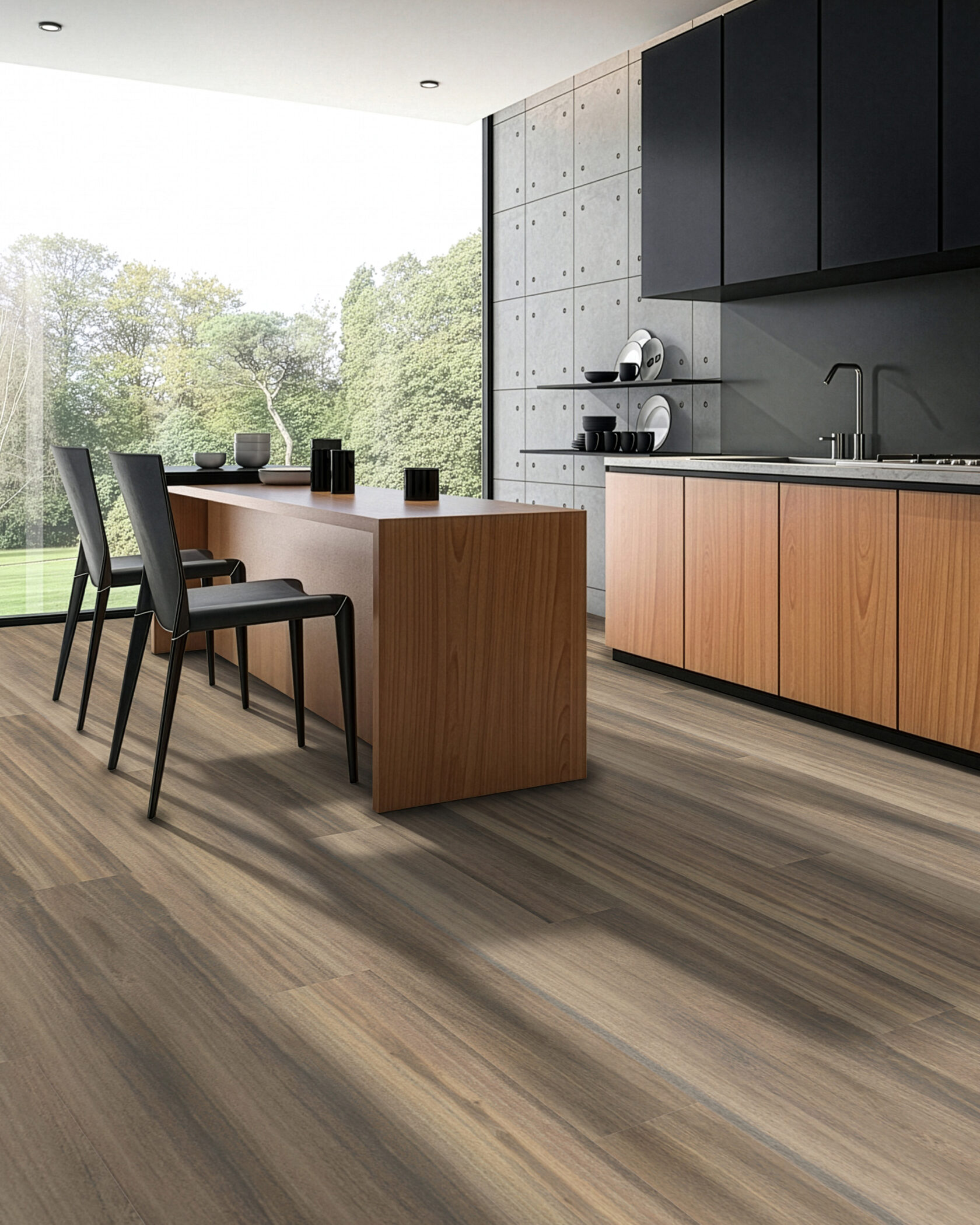
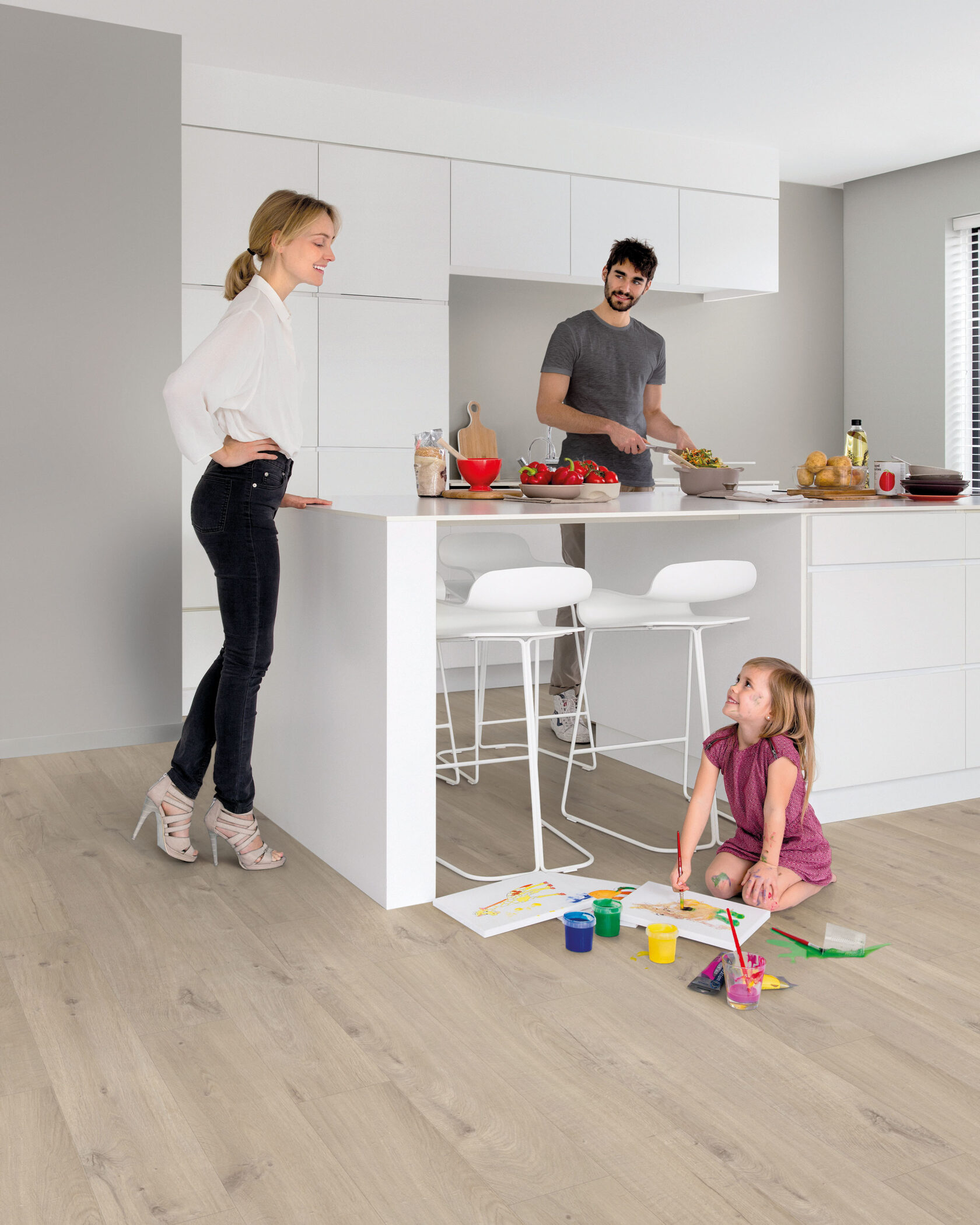
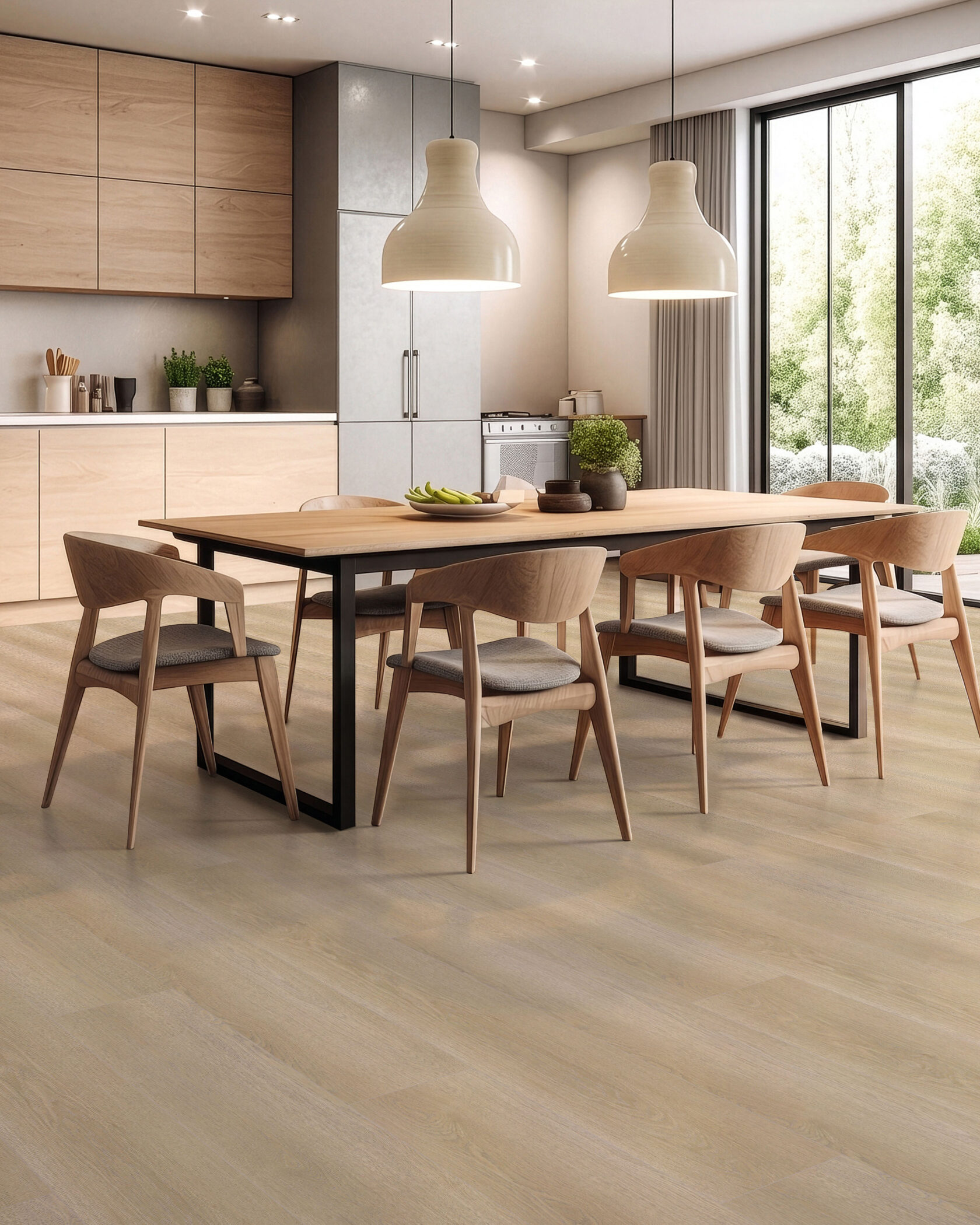
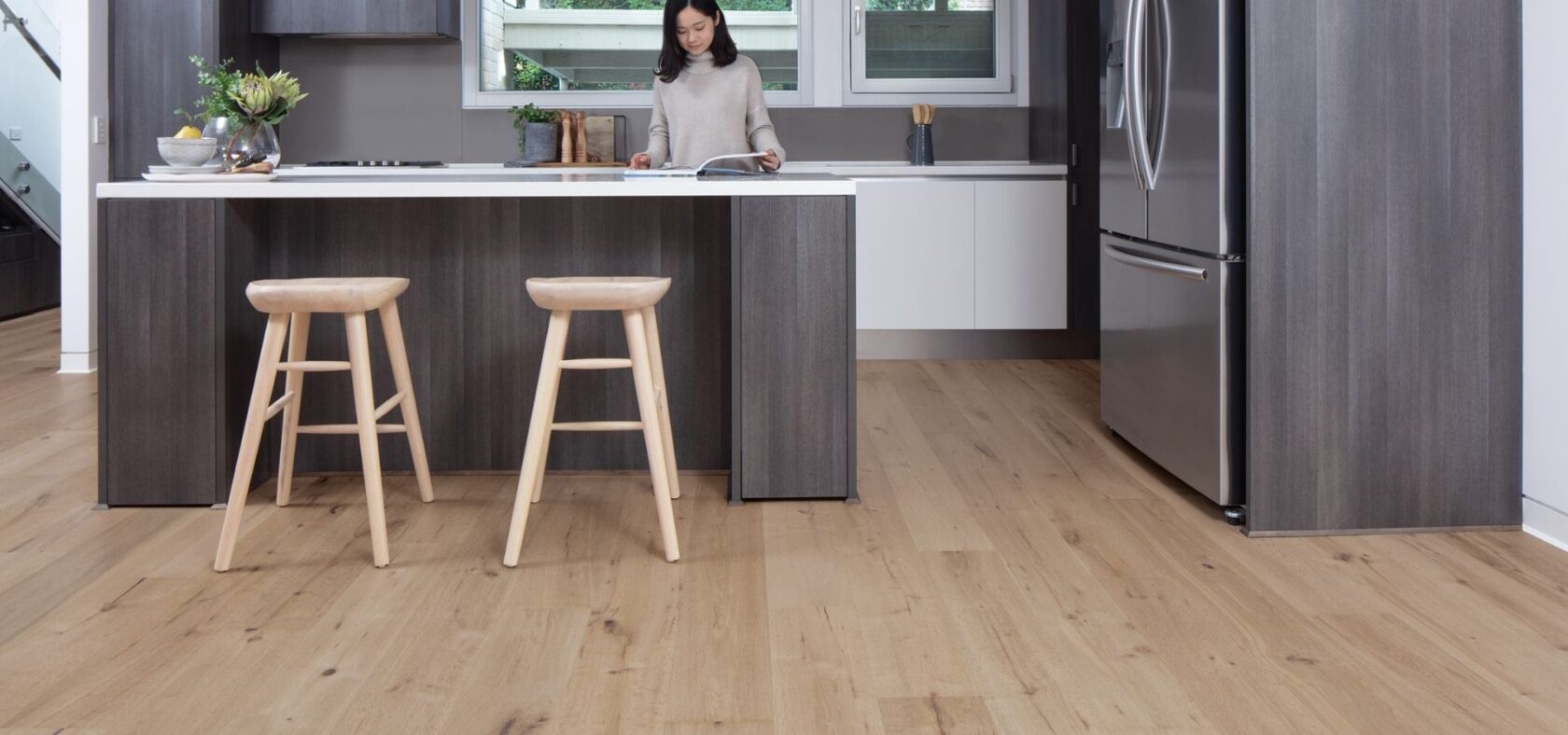
For most kitchens, vinyl plank or sheet vinyl is the safest all-round choice, and you have more options than in a bathroom because Australia’s building code doesn’t class kitchens as wet areas. Everyday spills are easy for most hard floors. The real test is a slow leak, from a broken hose, a badly fitted tap or a pipe behind the wall, which can go unnoticed for days.
Vinyl plank is glued flat to the subfloor, quiet and slightly softer underfoot than rigid floors. It handles spills well. Being flexible, it can dent under point loads like chair legs or appliance feet, so use furniture protectors.
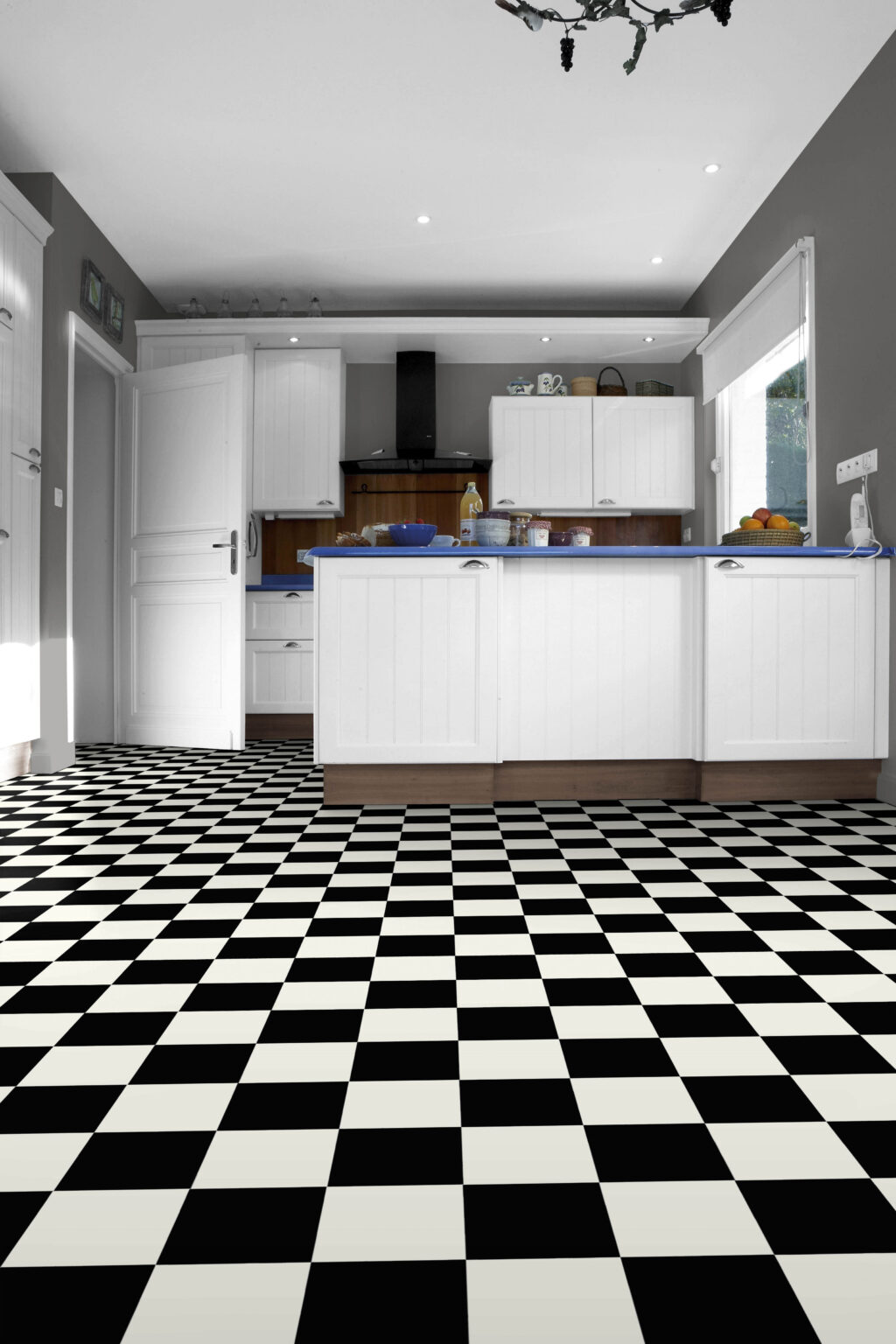
Sheet vinyl has the fewest joins of any option. It’s sold in rolls 3m or 4m wide, so many kitchens need one seam or none. It’s worth a look if your kitchen opens onto a laundry or you want to be extra cautious about water.
Hybrid has a rigid core that handles impact, like a dropped pot, better than flexible vinyl. It’s a floating floor, so it’s laid around your cabinetry and island bench with expansion gaps, not underneath them. Godfrey Hirst, for example, specifies at least 10mm gap. Manufacturers also limit very heavy furniture, such as again Godfrey Hirst’s limit at 200kg, which need to be considered. Wipe up spills promptly.
Water-resistant laminate can work in a kitchen, but it isn’t our first recommendation and your floor will need more care with spills and leaks than vinyl or sheet vinyl. More on that below.
Most water leaks come from broken hoses or incorrectly fitted taps. Slow leaks behind plaster can often cause more damage than obvious leaks, as they can get under the floor and cause massive issues before they’re discovered. They happen with all kinds of flooring, but often travel further in floating floors, as there is a gap under the flooring for water to move around.
Rachel’s honest take is that there is not much can stop a leak from ever happening, so check your home and contents insurance covers this type of damage before you need it. The only thing you can do is be mindful and observant to address any issues before they cause significant damage.
Not sure what’s under your current kitchen floor? It affects which options will work, so mention it when you talk to your local Floorworld store.
For most bathrooms, it’s sheet vinyl. It’s laid in one continuous piece with sealed seams, and the edges can be turned up the wall or finished neatly at the bath and vanity. That’s why the Australian Standard for wet areas lists it as an accepted floor finish, alongside tiles.
What’s a floor waste? It’s a drain set into the floor itself, usually a small round or square grate, separate from the drain inside your shower. It’s there to carry water away if a basin, bath, toilet or washing machine overflows. Not every bathroom or laundry has one, and it changes which floors you can use.
Why not vinyl plank or hybrid? Their joins aren’t sealed, so they aren’t on that accepted list (QBCC). Using them in a bathroom generally needs sign-off from a building certifier. Manufacturers also commonly rule them out in rooms with a floor waste (a drain in the floor) and inside showers.
A quick check: does your bathroom have a floor waste? If it does, planks are usually off the table, and sheet vinyl or tiles are the way to go.
The shower area needs a purpose-made wet-area system, installed over proper waterproofing by a qualified professional. Ask your store what’s suitable for your layout.
“The mistakes I see most are incorrect selection of flooring and failures in waterproofing. A product that is fit for purpose is essential. You can’t run a floating floor into a stepless shower.”
Treat a laundry like a bathroom. Australia’s building code classes laundries as wet areas, and many have a floor waste. Sheet vinyl is the first choice for the same reasons: continuous surface, sealed seams, easy to clean.
If your laundry has no floor waste and no shower, ask your store whether a plank product is suitable and what the manufacturer’s warranty allows.
Each suits a different room. None is the best choice everywhere.
| Sheet vinyl | Vinyl plank | Hybrid | |
| Construction | Continuous flexible sheet | Thin flexible planks, glued down | Planks with a rigid stone-polymer core, floating |
| Joins | Few, sealed or welded | Unsealed plank joins | Unsealed click joins |
| Feel underfoot | Soft, warm | Slightly softer, quieter | Firmer, closer to timber |
| Impact and dents | Can dent under point loads | Can dent under point loads | Handles impact better |
| Kitchens | Yes | Yes | Yes |
| Bathrooms and laundries | First choice | Generally not with a floor waste; check with your store | Generally not with a floor waste; check with your store |
| Typical cost | Varies by range | Lower | Slightly higher |
For an open-plan kitchen and living area, the choice between vinyl plank and hybrid comes down to feel, budget and how much impact the floor will take. For a bathroom or laundry, sheet vinyl is the safer pick.
Both can work in a kitchen, but neither is our first recommendation where water is a concern. Laminate needs more care than vinyl or sheet vinyl, and timber needs the most care of all.
Laminate has a wood-fibre core that can swell if water sits on it or gets into the joins. Water-resistant ranges give you more time, rated in hours, but spills still need wiping up straight away, and a slow appliance leak can still cause damage. It isn’t recommended for bathrooms or laundries, and standard laminate warranties often exclude them.
Timber reacts to moisture and can cup, swell or stain if water sits on it. In a kitchen it needs extreme care: wipe spills straight away, put mats at the sink and dishwasher, and keep the finish maintained. It isn’t recommended for bathrooms or laundries.
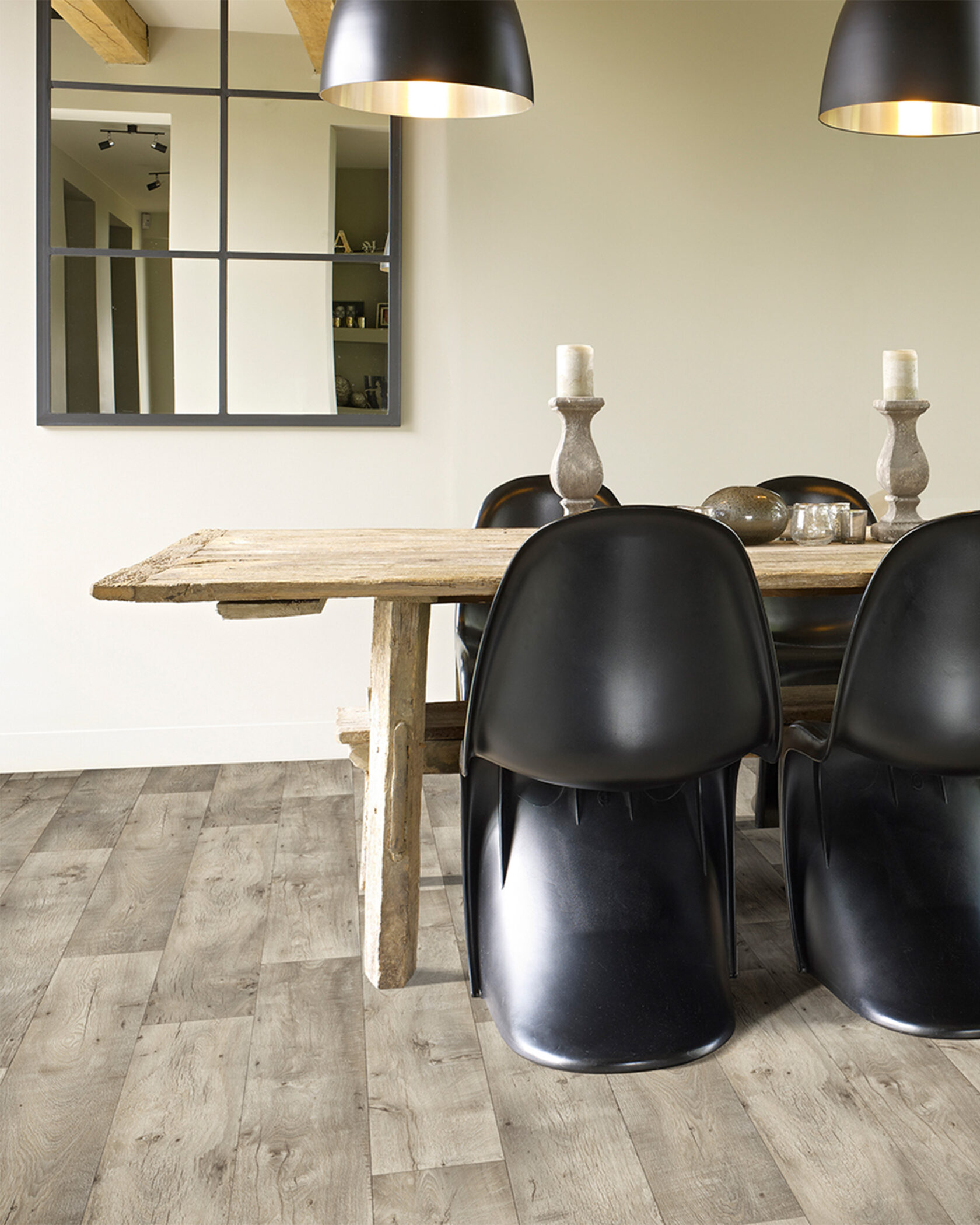
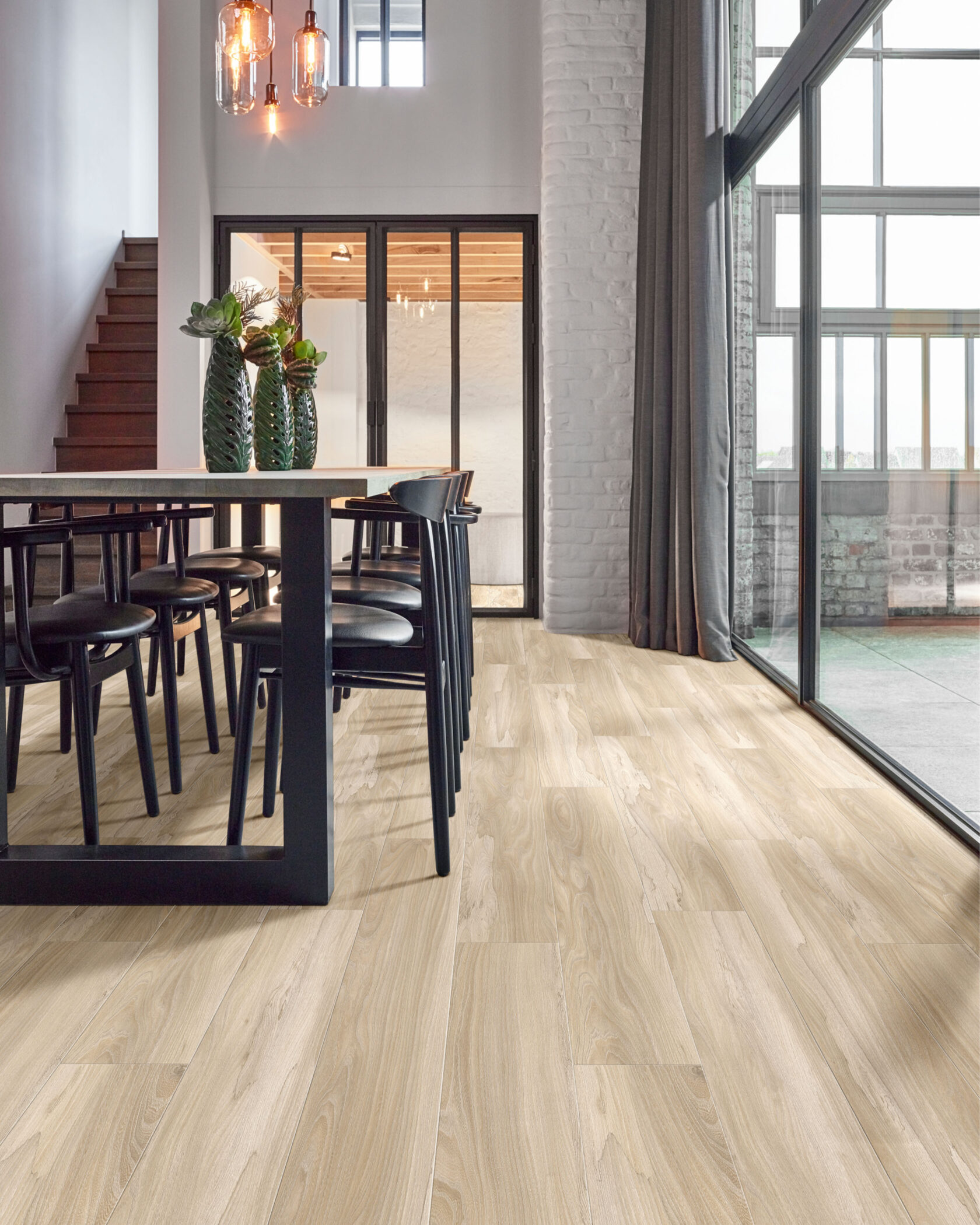
Love the timber look? Vinyl plank and sheet vinyl both come in realistic timber designs, with far less risk around water.
It depends on the product, so ask for its slip rating before you choose a bathroom or laundry floor. In Australia, flooring is tested wet and given a P rating from P0 to P5; the higher the number, the more grip. Industry guidance commonly points to P3 for wet areas.
Matte and textured finishes generally grip better than glossy ones. Slip resistance matters most if young children or older family members use the room.
Even the right floor can fail if it’s installed or used outside the manufacturer’s conditions. Before you commit, check these:
When Rachel measures and quotes a wet area, she starts with how the homeowner needs the floor to perform. Only then does she match a product that’s fit for purpose to their budget and colour choice.
Sometimes, but it isn’t the standard option. Plank joins aren’t sealed, so planks aren’t on the accepted list of wet-area floor finishes, and using them generally needs certifier sign-off. Manufacturers commonly exclude rooms with a floor waste and shower areas. Sheet vinyl is the safer choice.
Sheet vinyl or tiles. Both are accepted wet-area floor finishes, and sheet vinyl can be finished neatly around the floor waste and up the walls.
Often, if the tiles are sound, flat and well bonded. Godfrey Hirst’s hybrid instructions, for example, allow installation over ceramic tiles when grout lines are no more than 3mm wide and 3mm deep; deeper grout needs levelling first. Your store will check the floor during the measure and quote.
You can, but check the warranty first. Manufacturers commonly make professional installation a condition; Godfrey Hirst’s hybrid warranty, for example, applies to floors professionally installed to its instructions. In a bathroom or laundry, waterproofing must also meet building rules.
In a bathroom or laundry, yes. Building rules require waterproofing under the floor regardless of the floor covering.
Not anymore. Current sheet vinyl ranges include realistic timber and stone looks. Ask to see samples at your local store, or browse sheet vinyl.
About the reviewer
Brett Talbot is National Sales and Operations Manager at Floorworld, with 25 years’ experience in the flooring industry across multiple roles and organisations. He reviewed this guide for product suitability wording, installation considerations, and claims about water resistance and wet-area suitability. Last reviewed [12 October 2026].
Your saved products will appear here.
Add floors you love to compare and share with your nearest Floorworld store.